



Boning Knife vs Fillet Knife: Which to Use
A plain comparison of the two knives: what each blade is built to do, which sizes suit fish and meat, and how to keep carbon steel from rusting after a day at the cleaning table.
Boning knife vs fillet knife comes down to blade thickness and stiffness. A boning knife has a narrow, sturdier blade for working around bone, joints and cartilage in meat and poultry. A fillet knife has a thinner blade that follows the backbone and skin of a fish. Pick by the job you do most.
What is the difference between a boning knife and a fillet knife?
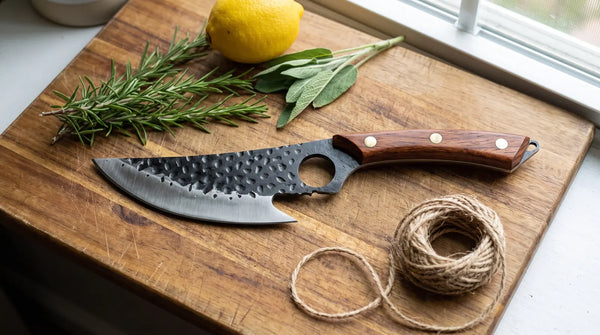
A boning knife is built to push through resistance. Its blade is usually 5 to 7 inches long, narrow, with a thicker spine and a sharp point, so you can steer it around a joint or along a rib without the blade bending away from the cut.
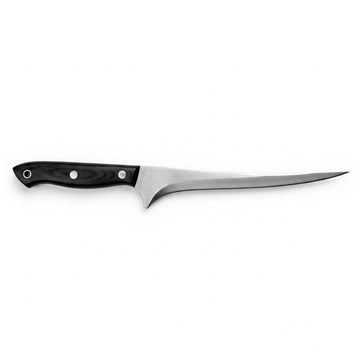
A fillet knife is built to glide. Its blade is thinner, often 6 to 11 inches long, and gives a little more under pressure, which lets the edge follow the curve of a fish backbone and slide between skin and flesh. The thinner steel wastes less meat on the cut.
Both are narrow, pointed, hand-held knives, and both are sold under overlapping names. A knife marked "fillet and boning" usually sits in the middle of the two. These are general descriptions. We record no flex rating for any of our blades, so on our pages we describe a blade by its steel, length, edge and handle, and you judge the rest from the job.
Boning knife vs fillet knife side by side
This table compares the two knives in general terms, from common knife-making practice. It is not a measurement of any one knife.
| Feature | Boning knife | Fillet knife |
|---|---|---|
| Typical blade length | 5 to 7 inches | 6 to 11 inches |
| Blade thickness | Thicker spine, narrow blade | Thin blade, thin spine |
| Give in the blade (general) | Little | More |
| Tip | Sharp, strong point | Fine point |
| Best jobs | Poultry, pork, beef, trimming around joints | Whole fish, skinning a fillet, thin slicing |
| Poor jobs | Long fillets from large fish | Joints, cartilage, dense bone |

Can you use a boning knife to fillet fish?
Yes, you can use a boning knife to fillet fish, and it works well on small fish such as trout and panfish. The narrow blade and strong point cut around the head and along the backbone cleanly when the fish is under about a foot long.
On larger fish a boning knife is slower. The blade is thicker and shorter than a fillet knife, so it takes more passes along the backbone and leaves a little more meat on the frame. It is a sound compromise if you fillet a few fish a season and do not want two knives.
Can you use a fillet knife on meat and poultry?
You can use a fillet knife on meat and poultry for trimming fat, removing silver skin and skinning a cut, where its thin blade slices cleanly. A fillet knife is the wrong tool for joints, cartilage and bone, because the thin steel can chip or bend when it meets resistance.
For a whole chicken or a pork shoulder, a boning knife is the safer pick. Is a filet knife a boning knife? Not quite: the two share a shape, but the fillet knife trades strength for thinness.
What size boning or fillet knife should you choose?
Choose the blade length by the size of what you cut. A blade about as long as the fish is wide, or a little longer than the cut of meat is deep, gives one clean stroke. This table shows typical lengths, then the blade lengths on our fillet and boning knives, taken from each product record.
| What you cut | Typical blade length | Our knife that fits |
|---|---|---|
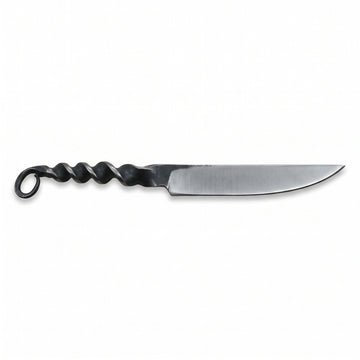
| Trout, panfish, small fish | 6 inches | 6" Carbon Steel Fillet Knife | Black Pakkawood, 6 inch blade |
| Bass, walleye, larger fish | 7 inches or longer | 7" Damascus Fillet Knife | Two-Tone Rosewood, 7 inch blade |
| Poultry, pork, beef, trimming | 5 to 7 inches | 6.5" Carbon Steel Boning Knife | Rosewood, 6.5 inch blade |
Our fillet and boning knives run about 6 to 7 inches in the blade. If you often fillet fish over 20 inches long, a longer fillet knife from another maker will suit you better. We do not sell one.

Which steel suits a fillet or boning knife?
A fillet or boning knife from us is either pattern-welded Damascus (1095 and 15N20) or forged carbon steel. Both take a fine edge and both rust if left wet. That matters with fish, because fish slime, salt and water sit on a blade for the length of a cleaning session.
The carbon steel knives are a plain choice at a lower price: the 6" and 6.5" carbon steel models are $99 as listed on October 11, 2026. The 7" Damascus fillet knives run $129 to $139. All are full tang, and each comes with a Crownridge leather belt sheath or blade guard as its page records. You can browse them in the Fillet & Boning Knives collection or the Damascus kitchen knives.
How do you care for a carbon steel or Damascus fillet knife after fish?
Rinse the blade in cold water straight after cutting, wash it by hand with mild soap, dry it fully with a towel and wipe on a thin coat of food-safe oil. Salt and moisture start rust on carbon steel and Damascus within hours, so do not leave the knife in the sink or a wet bag.
- Never put a fillet knife in the dishwasher.
- Let the leather sheath dry before the knife goes back in, because a damp sheath holds water against the steel.
- Oil the blade again before storing it for a season.
- Keep the edge keen: a dull fillet knife tears flesh. Our guide to how to sharpen a knife covers the method. We sell no stones or rods.
The full routine is on our care guide. For the wider range of kitchen shapes, see our guide to types of kitchen knives. A fillet knife also makes a practical gift for a cook or an angler, and the gifts for cooks collection has more.