



Our Forge
Crownridge Knives is a two-partner company: one of us runs the brand, the store and the way you find us, and the other is the bladesmith and quality lead who forges every knife and signs off on it before it ships. Together we make hand-forged Damascus and satin-steel knives for hunting, camp and the kitchen.
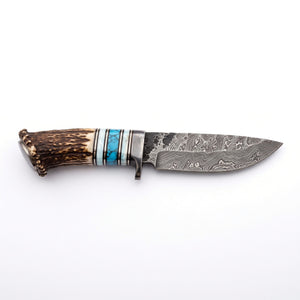
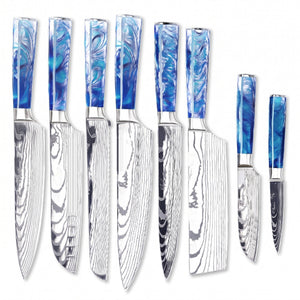
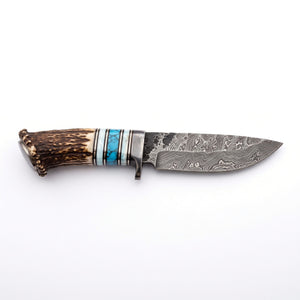
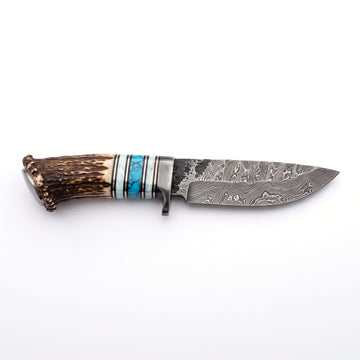
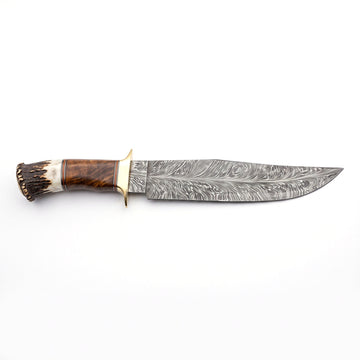
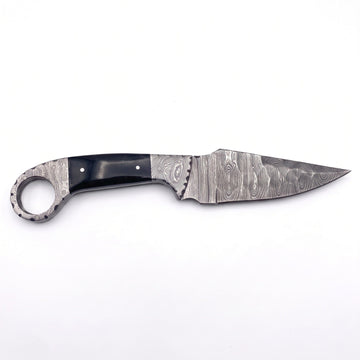
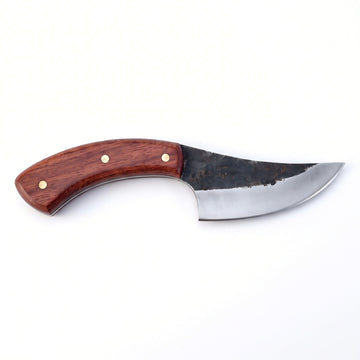
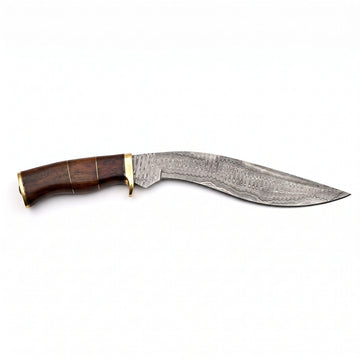
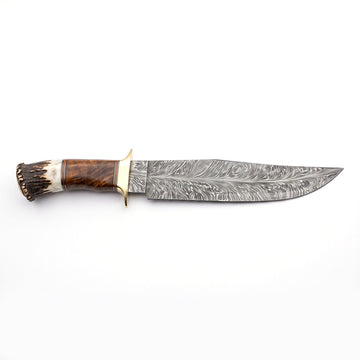
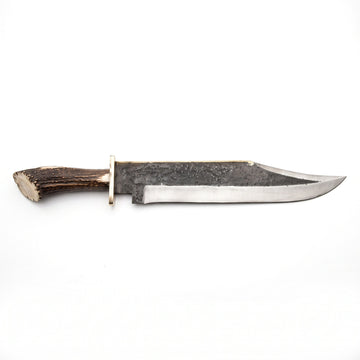
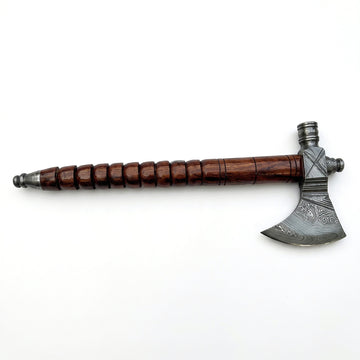
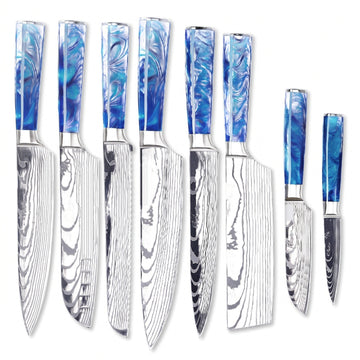
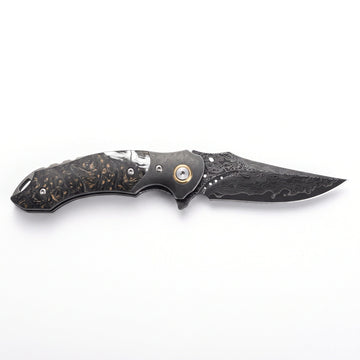
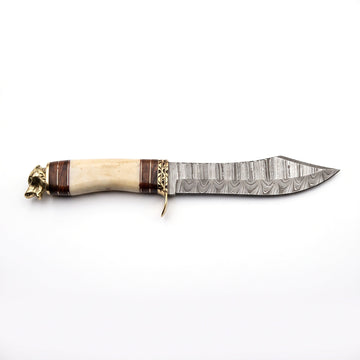
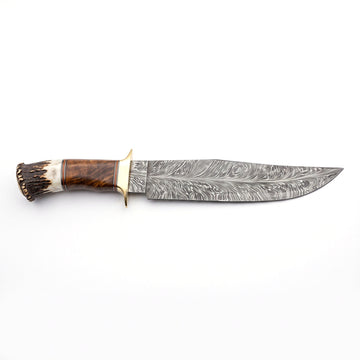
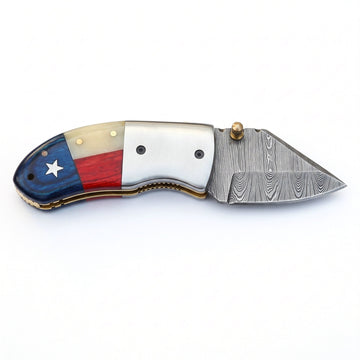
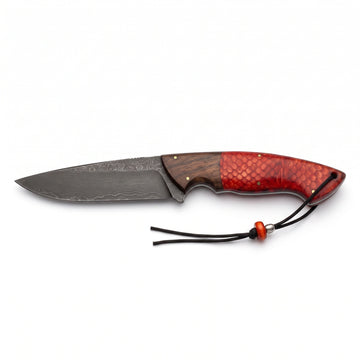
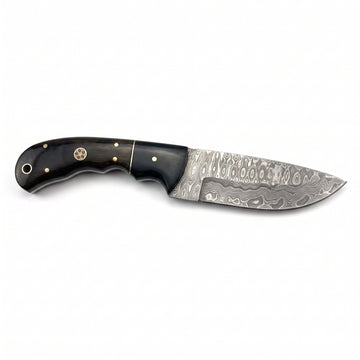
The pictures illustrate each stage of the work. Photographs from the forge replace them as they are taken.
What we make
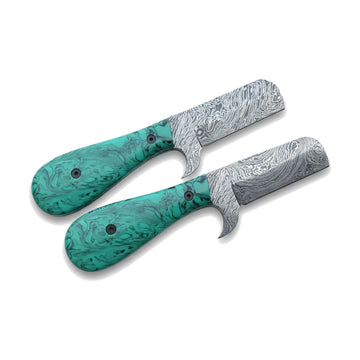
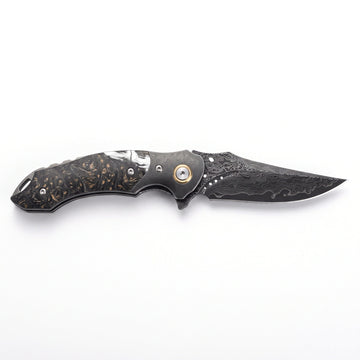
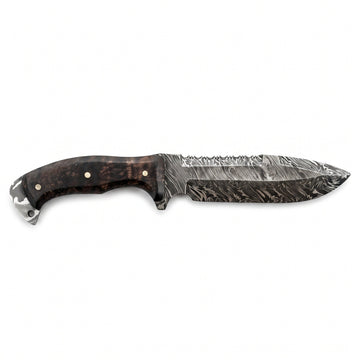
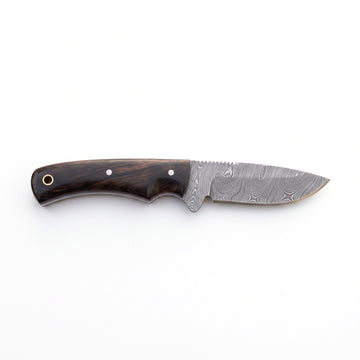
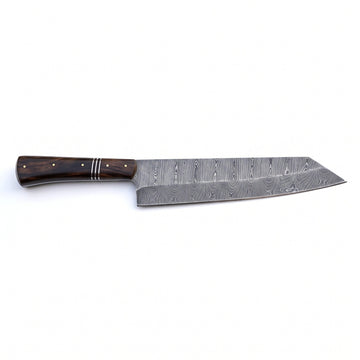
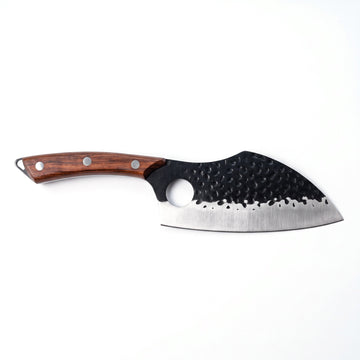
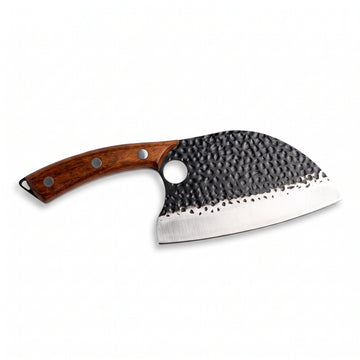
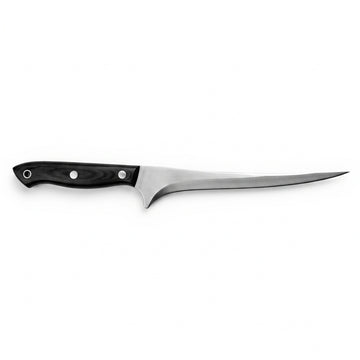
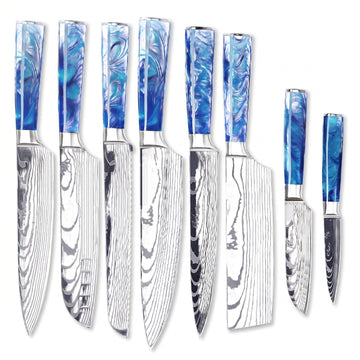
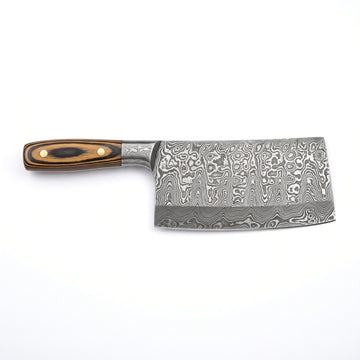
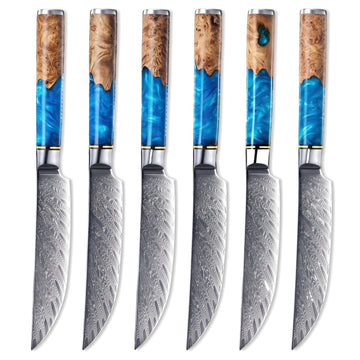
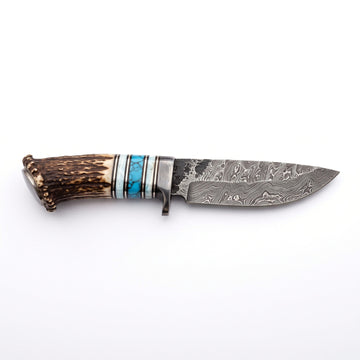
Every knife starts as a fixed blade meant to be used: hunting and camp knives, bowies, skinners, and a kitchen line of chefs, cleavers and sets. Some are pattern-welded Damascus of 1095 and 15N20 steel; others are plain satin steel, priced and labeled honestly for what they are. Hunting and camp knives ship with a hand-stitched leather sheath.
One written standard, checked on every piece
We do not leave the steel, the tang or the fit to chance. The spec standard is the document our bladesmith forges to and the one every listing is measured against. It covers the steel, the measurements, the tang, the handle fit and the sheath, and it is public so you can check any knife against it yourself.
How a knife gets made
Four stages take a bar of steel to a finished knife.

Stack and weld
A billet starts as alternating layers of 1095 high-carbon steel and 15N20 nickel steel, cleaned, stacked and clamped. Under heat and pressure the layers forge-weld into a single solid bar. This step decides whether a Damascus blade holds together for life: a weld that does not fully take shows up later as a seam, so it gets the most attention and the most time on the anvil.

Fold and draw
The welded billet is folded back on itself and drawn out under the hammer again and again, doubling the layer count each time and mixing the two steels into a pattern. How the smith folds, twists or presses the billet at this stage decides the pattern in the finished blade: straight layers, a ladder, or a twist. The bar is then drawn out to roughly the length and profile of the finished knife before it is cut to shape.


Grind and heat treat
The rough blade is ground to its final profile and edge geometry, then heat treated: heated to a precise temperature, quenched and tempered. An acid etch follows, which is what reveals the pattern in the steel; on a genuine Damascus blade that pattern runs all the way through, not just on the surface.


Handle fitting and sheath
Scales of stabilized wood, stag, camel bone or micarta are fitted to the tang with brass or steel pins and a bolster, sanded flush so there is no gap where moisture can collect. Each knife then gets a hand-stitched sheath in 3.5 mm vegetable-tanned leather with a belt loop, built to hold the knife securely even upside down.
Quality control before anything ships
Before a knife leaves, the forge team checks that the edge shaves paper along its full length, there are no gaps at the bolster or scales, the pins sit flush, the sheath retains the knife inverted, the etch is even, and every length is within 3 mm of the listing.

A warranty that matches how we build
Every knife carries our Limited Lifetime Warranty on the forge welds and the handle fit, for the original purchaser. To see the difference between a real forge-welded pattern and a printed one, read real vs fake Damascus.