


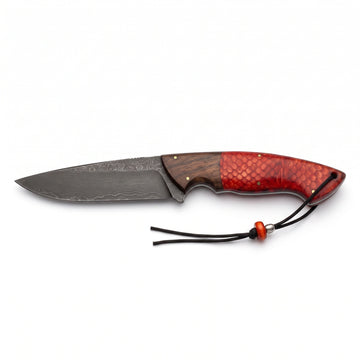
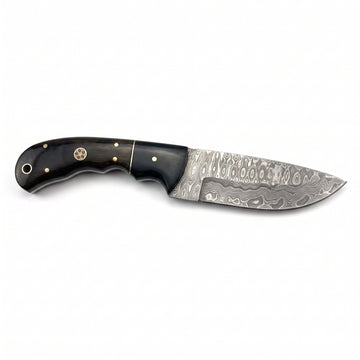
The Crownridge Spec Standard
The written standard every Crownridge knife is made to and checked against before it ships.
- 1095 + 15N20the two steels in every Damascus blade
- Within 3 mmon every listed length, blade plus handle
- 6 checkson every knife, one at a time, before it ships
- Leather freea sheath, slip, guard, roll or head mask
Every Crownridge knife is made to this written standard and checked against it, piece by piece, before it ships. It sets out what the steel is, how we measure, what leather comes with each knife and what we check. Where a figure is not on this page, we have not measured it, and we do not guess.
Steel
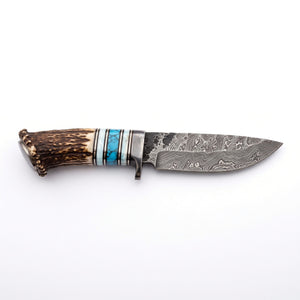
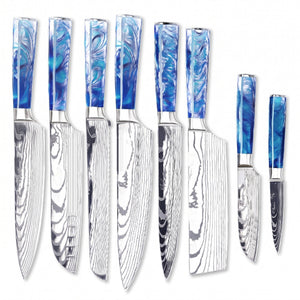
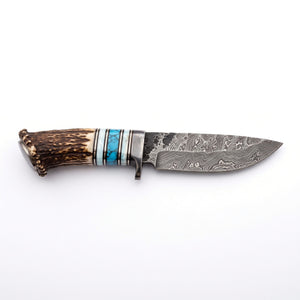
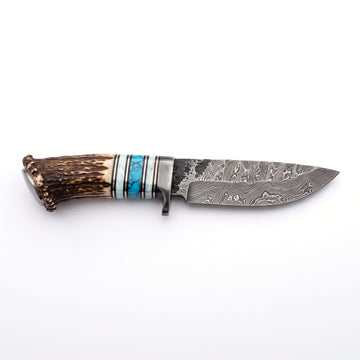
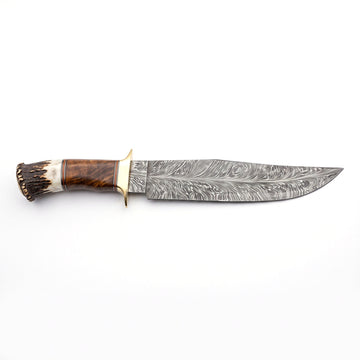
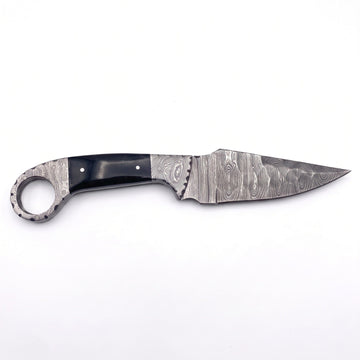
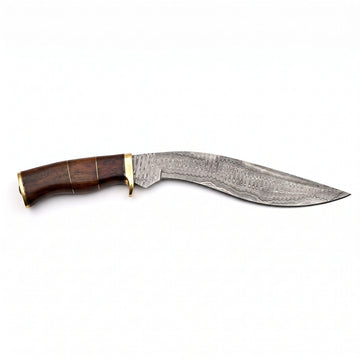
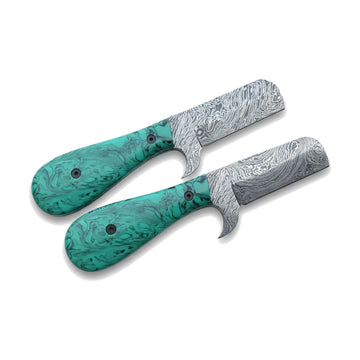
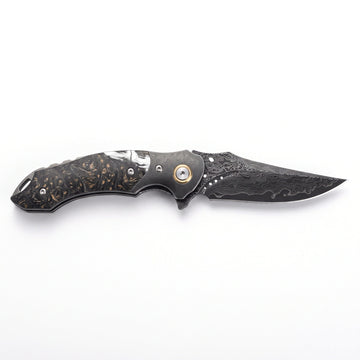
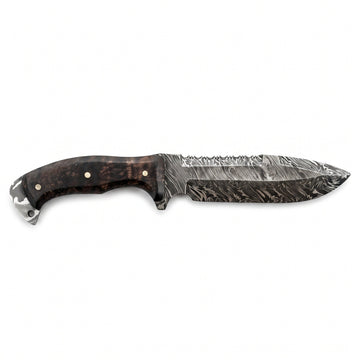
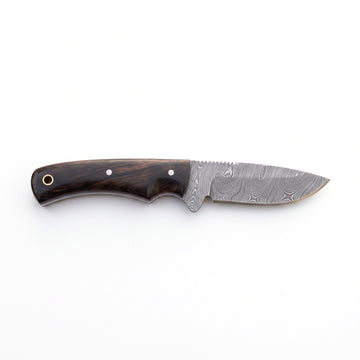
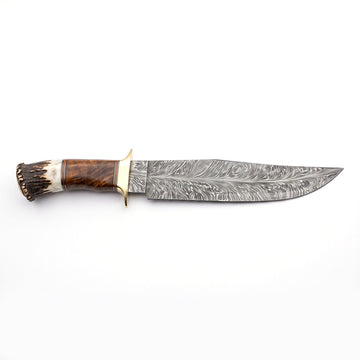
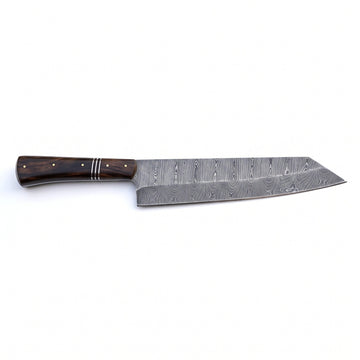
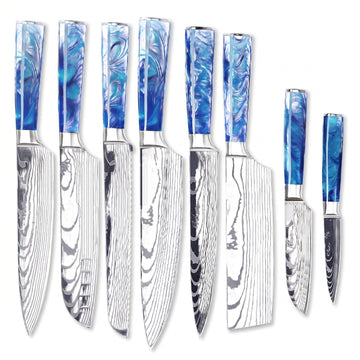
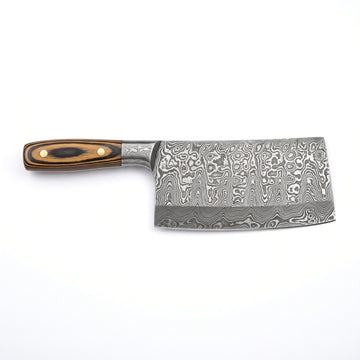
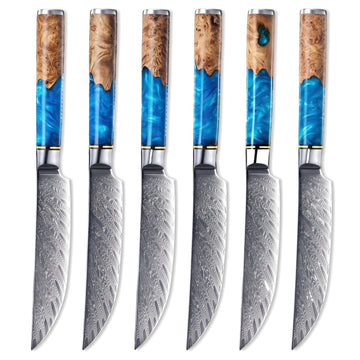
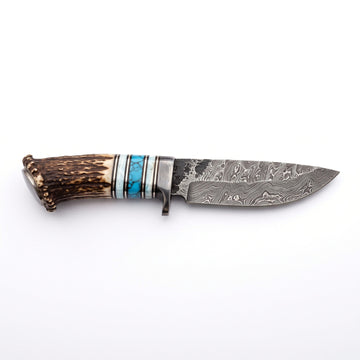
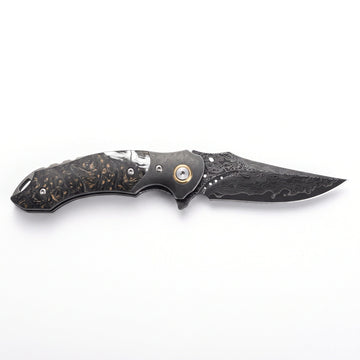
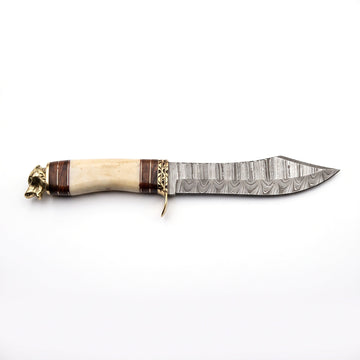
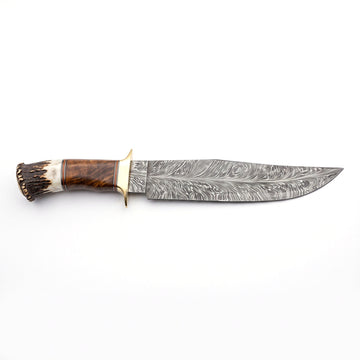
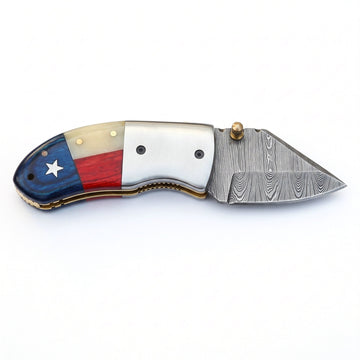
Most of our knives are pattern-welded Damascus: 1095, a plain high-carbon steel, and 15N20, a carbon steel with about 2 percent nickel, forge-welded into one bar, drawn out and folded, then etched so the two steels show as dark and bright layers. The pattern runs through the steel, so it shows on the spine and stays after sharpening. It is never laser-marked or printed on.
The rest are forged carbon steel, a few are reforged from farrier rasps, and a few are J2 stainless. Every product page names its steel, and "Damascus" appears only on a Damascus knife.
| Steel | What it is | Care it needs |
|---|---|---|
| Pattern-welded Damascus (1095 and 15N20) | Two carbon steels forge-welded into one blade, the pattern running through it | Dry it after use and oil it; it rusts if left wet |
| Forged carbon steel, satin finish | One high-carbon steel, forged, ground and polished | The same as Damascus; it darkens to a gray patina with use |
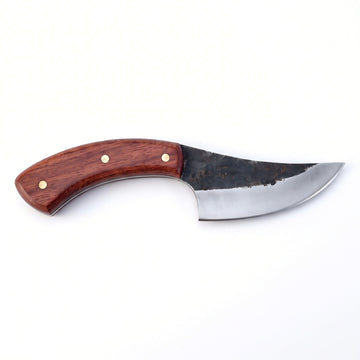
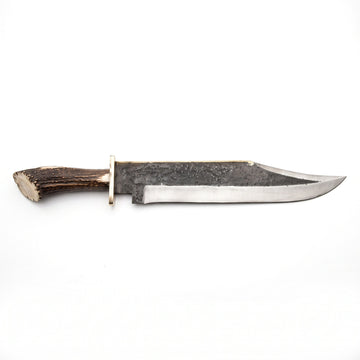
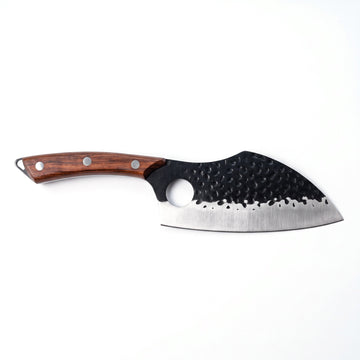
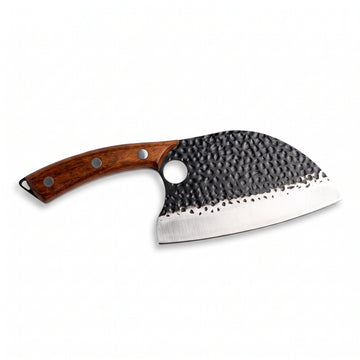
| Forged carbon steel, forge-scale finish | The same steel with the dark forge scale left on the upper blade | The same; the scale is part of the finish |
| Farrier rasp steel, forge finish | A horseshoe rasp reforged into a blade | The same as carbon steel |
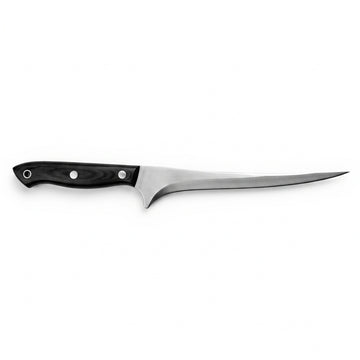
| J2 stainless steel, satin finish | A stainless steel | The least care; still wash it by hand |
Tang and handle
Most fixed blades are full tang: one piece of steel runs to the end of the handle under the scales. A few use a hidden tang, and folding knives pivot on a lock. Each product page states the tang for that knife.
The handles in the range today are woods (rosewood, walnut, olive wood, pakka wood, stabilized wood, burl and others), natural materials (stag, bone, camel bone, horn, mother of pearl, stacked leather) and synthetics (resin, micarta, G10). Scales, pins and bolsters sit flush, with no gap at any joint.
The edge
Every knife is sharpened by hand before it ships, and the edge must shave paper cleanly along its full length. Hunting and camp knives have a plain edge and kitchen knives a straight one; some hunting knives add a sharpened gut hook on the spine or a sharpened swedge, and the bread knives are serrated. Each product page describes its edge.
How we measure
Every listing gives the blade length, the handle length and the overall length, and draws them against a ruler, in inches with a centimeter switch.
- Blade length: from the tip to the guard or bolster.
- Handle length: from the guard or bolster to the end of the handle.
- Overall length: tip to butt, always the blade plus the handle, so the three figures add up.
- Folding knives are measured open; the closed length is the handle length.
Every length holds to within 3 mm (about 1/8 inch) of the listing. Because every knife is forged by hand, the Damascus pattern, the wood grain, the color and the weight differ from knife to knife and from the pictures, which are digital renders. Our size guide shows which length suits which job.
The leather
Every knife comes with its leather, free: a belt sheath on a fixed blade, a belt slip on a folding knife, a blade guard on a kitchen knife, one roll that holds a whole set, and a head mask on a hatchet. All of it is our house design in char-dyed leather, with a pale, undyed welt along the edge and straw-gold saddle stitching.
The belt sheath closes with a brass stud and rides vertical on its belt loop, or horizontal with the belt run under its back plate. It must hold its knife when turned upside down.
Checked before it ships
Every knife is checked against this list, one at a time:
| Check | Pass mark |
|---|---|
| Edge | Shaves paper cleanly along its full length |
| Handle fit | No gap at the bolster or the scales; pins flush |
| Etch, on Damascus | Even across both faces of the blade |
| Leather | Holds the knife upside down; stitching complete and tight |
| Measurements | Blade, handle and overall length within 3 mm of the listing |
| The order | Steel, handle and any engraving exactly as ordered |
What we do not state yet
Two figures are common on knife listings and missing from ours: a hardness number (HRC) and a layer count. Weight and spine thickness are missing too. We publish a figure only once we have measured it on that model, so until then none of the four appears on this page or on a product page.
Never in our range
We do not make or sell automatic, assisted-opening, gravity, out-the-front or ballistic knives, push daggers, karambits, throwing knives or swords, and nothing we sell is designed or described as tactical.
If a knife falls short
If your knife does not meet this standard, our Limited Lifetime Warranty covers defects in materials and workmanship for as long as you own it, and a knife without engraving can be returned within 30 days of delivery under our refund policy. Email support@crownridgeknives.com with your order number and a photo, and we reply within one business day.