


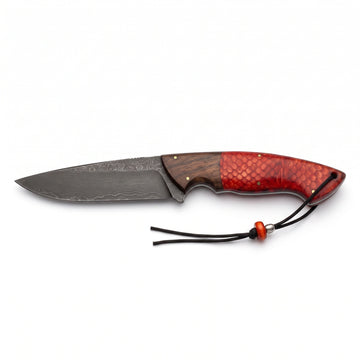
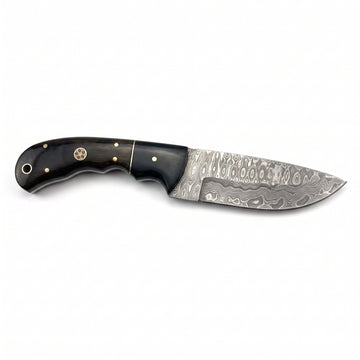
Size Guide
How we measure every knife, and which size suits which job.
- 3 figuresoverall, blade and handle on every product page
- Blade + handlealways adds up to the overall
- 3 mmthe tolerance on every length
- Made to fita sheath cut for each blade, nothing to size
Every Crownridge product page lists the overall, blade and handle length, and draws each one against a ruler. This guide explains how we measure, and which size suits which job.
How we measure
- Blade length: from the tip to the guard or bolster, where the handle begins.
- Handle length: from the guard or bolster to the end of the handle.
- Overall length: tip to butt. On every knife it is the blade plus the handle, so the three figures always add up.
- Folding knives are measured open. The closed length is the handle length.
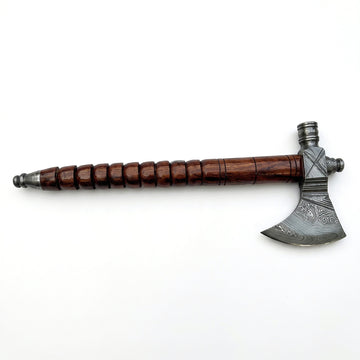
- Hatchets and tomahawks: the overall length runs from the top of the head to the foot of the handle. Where the cutting edge runs across the head, the page gives the edge length instead of a blade length, because edge and handle do not add up to the overall.
Every figure holds to within 3 mm on lengths, as our spec standard sets out. Each product page has an inch and centimeter switch.
Which size for which job
Typical blade lengths across the trade. Each product page gives the exact figures for that knife.
| Knife | Typical blade | Best for |
|---|---|---|
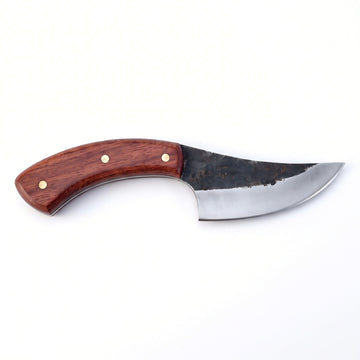
| Skinning knife | 3 to 4.5 in | Skinning and caping game, fine control close to the hand |
| Gut hook knife | 3.5 to 5 in | Field dressing: the hook opens the hide without cutting deeper |
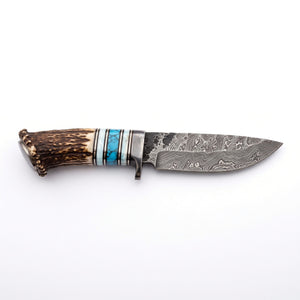
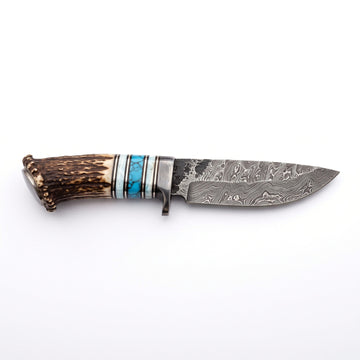
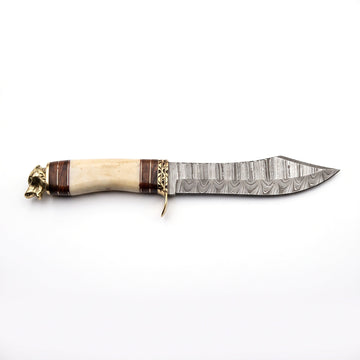
| Hunting knife | 3.5 to 6 in | General field work, from dressing to camp chores |
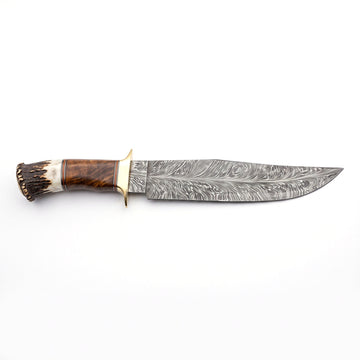
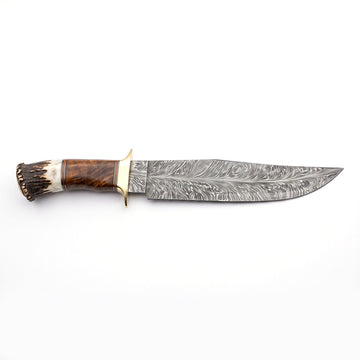
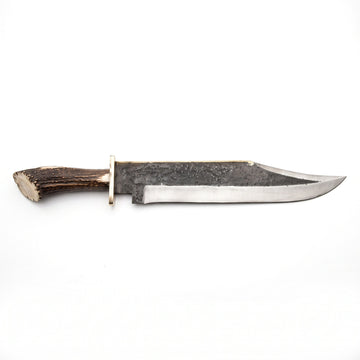
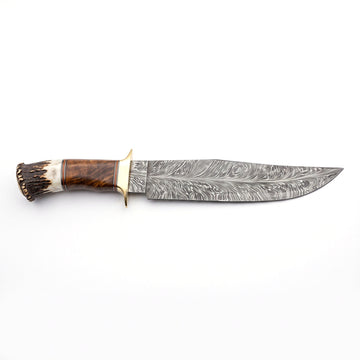
| Bowie knife | 6 to 10 in | Heavy camp work and chopping, and display |
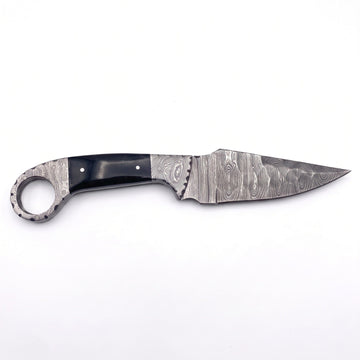
| Camp and bushcraft knife | 4 to 6 in | Carving, feathering sticks, food prep at camp |
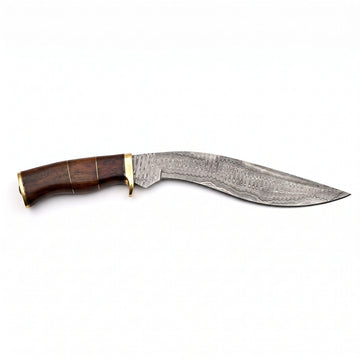
| Kukri | 10 to 13 in | Chopping and clearing brush, where the forward weight helps |
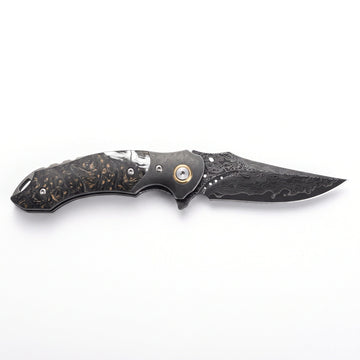
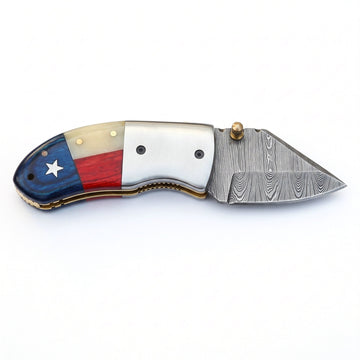
| Folding pocket knife | 2.5 to 3.5 in | Everyday carry in a pocket or belt slip |
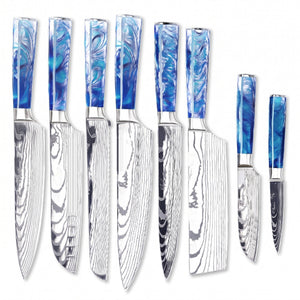
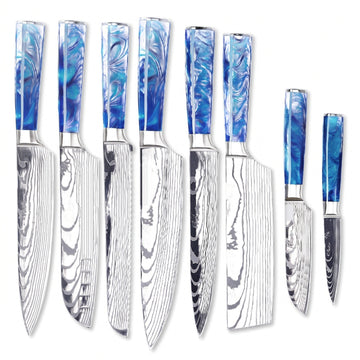
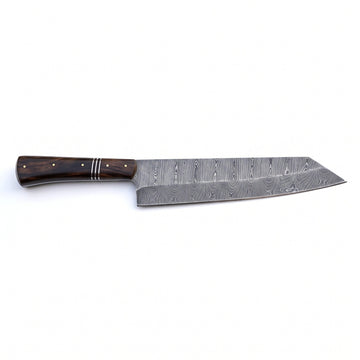
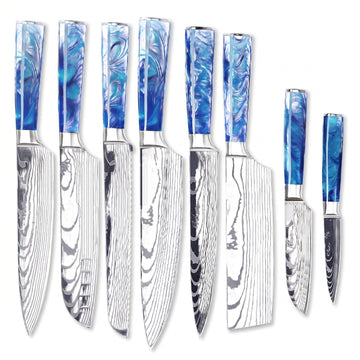
| Chef knife | 8 in (6 to 10 in) | Most kitchen work: slicing, dicing, mincing |
| Santoku | 6 to 7 in | Thin, even slices of vegetables and boneless meat |
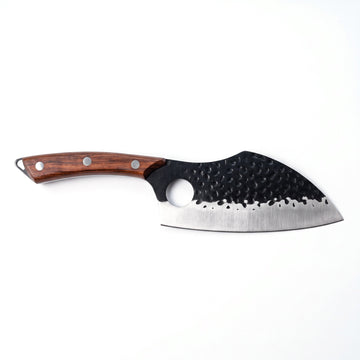
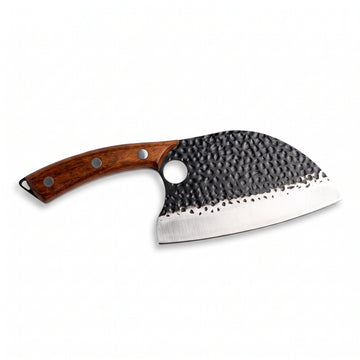
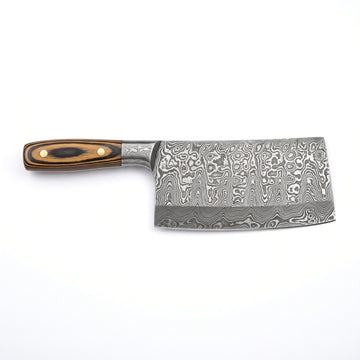
| Cleaver and Serbian chef knife | 6 to 8 in | Heavy chopping, crushing garlic, scooping from the board |
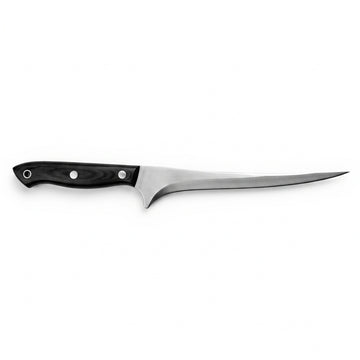
| Fillet and boning knife | 5 to 7 in | Following bones and skin with a flexible or stiff blade |
| Utility and paring knife | 3 to 6 in | Peeling, trimming and work in the hand |
Handle length and your hand
A handle should be a little longer than your palm is wide. Measure across your palm at its widest, without the thumb, and add about half an inch: most adult hands want a handle of 4 to 5 inches. A shorter handle gives more control on a small blade; a longer one gives reach and leverage on a bowie or a hatchet.
Blade length and the law
Limits on blade length and on carrying a fixed blade differ from state to state, and sometimes from city to city. Check the law where you live and where you carry before you choose a length. Our terms of service cover this in section 2.
The sheath fits the knife
Every knife ships with a Crownridge sheath, blade guard or slip made to its own blade, and every hatchet with a head mask, so there is no sheath size to choose. A set travels in one leather roll.
Inches and centimeters
| Inches | Centimeters |
|---|---|
| 3 in | 7.6 cm |
| 4 in | 10.2 cm |
| 5 in | 12.7 cm |
| 6 in | 15.2 cm |
| 8 in | 20.3 cm |
| 10 in | 25.4 cm |
| 12 in | 30.5 cm |
| 15 in | 38.1 cm |