

How to Sharpen a Knife: Whetstone and Honing Guide
A working guide for anyone holding a dull blade: which stone to use, how to find the angle, how honing differs from sharpening, and how to look after Damascus and carbon steel.

To sharpen a knife, wet a whetstone, rest the bevel flat on it at the angle already on the edge, and work each side until a thin burr of metal forms along the whole length. Then refine the edge on a fine stone, remove the burr and test the blade on a sheet of paper.
What do you need to sharpen a knife on a whetstone?
One whetstone, something to stop it sliding, and a way to check your work. A combination stone with a coarse side of 400 to 1000 grit and a fine side of 3000 to 6000 grit handles nearly every knife. Set the stone on a damp towel and keep water and a permanent marker within reach.
Water stones take water, either soaked or splashed on as the maker directs, and oil stones take honing oil. Keep each stone to one liquid, because oil that has soaked into a water stone cannot be washed out. A lower grit number means a coarser stone that removes steel faster.
| Grit | What it does | When you need it |
|---|---|---|
| 120 to 400 | Repairs chips and rolled tips, or reshapes a bevel | Rarely. Most kitchen and hunting knives never need it |
| 400 to 1000 | Sets a new edge on a dull knife; the main sharpening stone | When honing no longer brings the edge back |
| 3000 to 6000 | Refines the edge and polishes away the coarse scratches | After every session on the coarse stone |
What angle should you sharpen a knife at?
Use the angle already on the knife. A stone only sharpens the part of the bevel it touches, so holding one angle matters more than which angle you pick. For knives in general, kitchen blades are often sharpened at 15 to 20 degrees a side and outdoor blades at 20 to 25. Those are general ranges, not a figure for our knives: we do not record an edge angle for any Crownridge knife.
The marker test finds your angle. Color the bevel, the slanted strip behind the edge, on both sides with a permanent marker. Rest the knife on the stone, make two light strokes and look at the ink. Ink gone from the upper bevel but left along the edge means the angle is too low, so raise the spine. Ink gone only at the edge means the angle is too high, so lower the spine. Ink gone evenly across the bevel means the angle matches.
How do you sharpen a knife on a whetstone, step by step?
- Set up. Wet the stone, seat it on a damp towel and turn the coarse side up.
- Raise a burr on the first side. Lay the bevel on the stone at your angle and push the edge across it from heel to tip, sliding the knife sideways so every part of the edge meets the stone. Pulling with the edge trailing also works, so pick one direction and keep it. Use fingertip pressure, because pressing harder only deepens scratches. Continue until a burr forms along the full length of the opposite side. Feel for it by drawing a fingertip from the spine toward the edge, never along it.
- Raise a burr on the second side. Flip the knife and repeat until the burr moves back to the first side.
- Alternate with fewer strokes. Swap sides at five strokes, then three, then one, to even out the edge.
- Move to the fine stone. Make a few light alternating strokes a side to remove the coarse scratches.
- Finish. Remove the burr, rinse, dry and test the edge on paper.
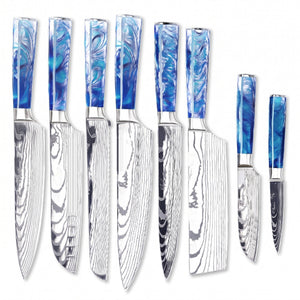
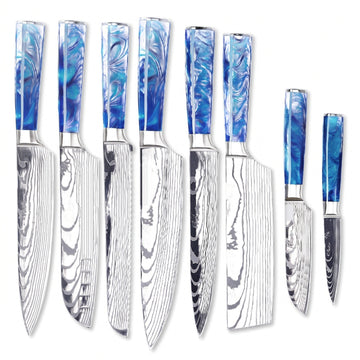
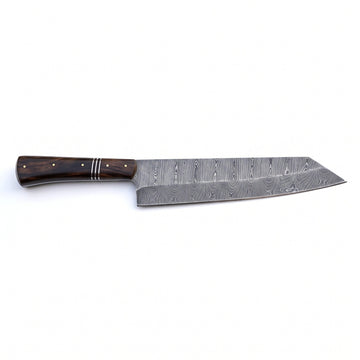
The same steps suit a kitchen knife such as our 8 inch Damascus chef knife with a walnut handle.

What is a burr, and what do you do after sharpening?
A burr is a thin ridge of steel that folds over to the far side of the edge as the stone grinds. Left in place, the burr snaps off within a few cuts and the knife feels dull again. Remove it with two or three very light trailing strokes on the fine stone.
Then rinse off the slurry, dry the blade at once and, on carbon steel or Damascus, wipe a thin film of oil over both faces. Test by slicing a sheet of printer paper held by its top edge: a sharp blade cuts it cleanly from heel to tip without snagging. Our spec standard requires every Crownridge knife to shave paper cleanly along its full length before it ships.
What is the difference between honing and sharpening?
Honing straightens an edge that has bent over, and sharpening removes steel to cut a new one. A bent edge feels dull but keeps its shape, so a few strokes on a rod bring it back. A worn edge has lost its shape, and only a stone, or a ceramic or diamond rod, restores it. Hone as maintenance between sharpenings, even before each use, and sharpen when honing stops working.
To use a rod, stand its tip on a folded towel with the rod upright. Place the heel of the blade at the top of the rod at 15 to 20 degrees, or at the angle already on the edge, and sweep the blade down the rod from heel to tip. Use light pressure and make four or five passes a side, alternating.
How do you sharpen a hunting knife, a gut hook or a serrated edge?
A hunting knife takes the same angle and a lighter touch in the field. Carry a pocket stone or a small ceramic or diamond rod, make a few light strokes a side once the edge starts to drag, then finish with a few trailing passes on the rough side of a leather belt. Touch up early, while a few strokes still restore the edge.
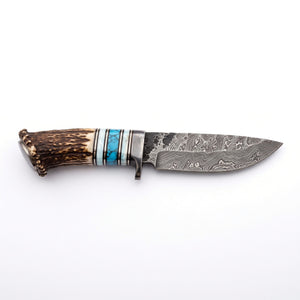
A gut hook needs a tool that fits its curve. Rest a small tapered round rod, ceramic or diamond, in the hook against the bevel and draw it along the curve with light pressure for a few strokes. A flat stone only reaches the main edge. Some of our hunting knives, like the Ridgeback 8 inch Damascus gut hook knife, carry a sharpened hook on the spine. See them in the skinning and gut hook knives collection.

A serrated edge is sharpened one scallop at a time. Match a tapered rod to the scallop, rest it at the bevel angle and stroke from the beveled side. If only one side is beveled, finish by laying the flat side on a fine stone and drawing it once or twice to knock off the burr. Our 8 inch Damascus bread knife is serrated. A straight stone touches only the tips of the serrations.
How do you sharpen Damascus and carbon steel?
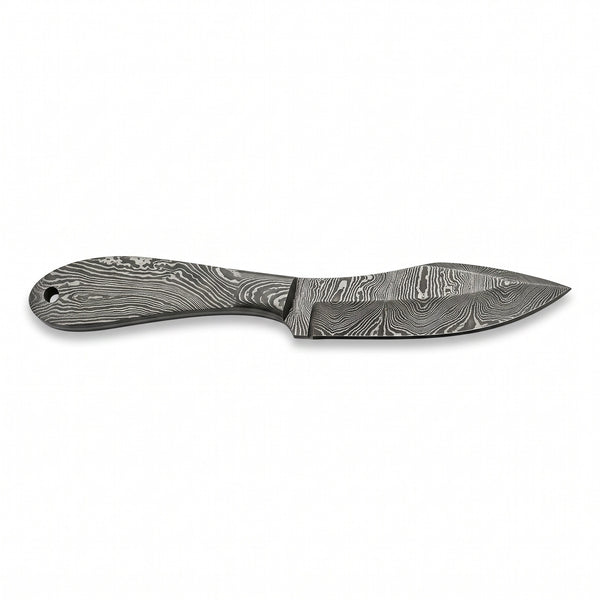
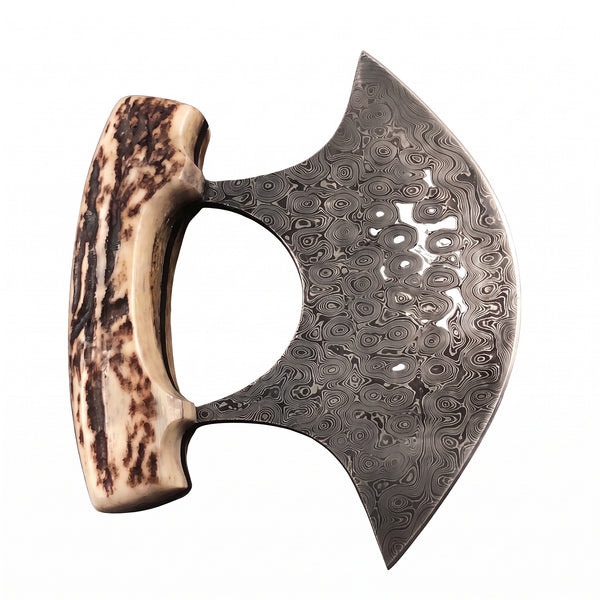
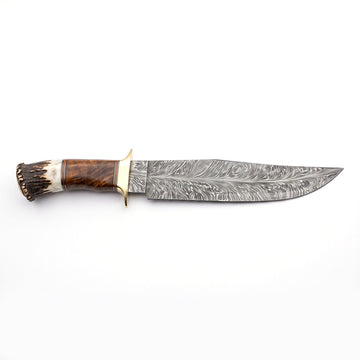
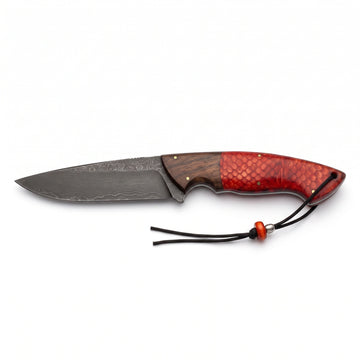
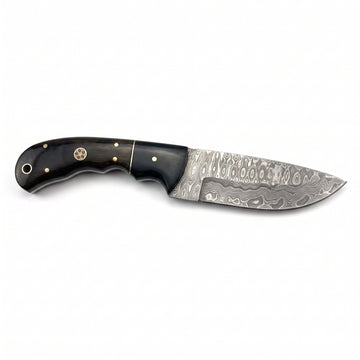
Sharpen Damascus and carbon steel the way you sharpen any knife, with a little more care afterward. Our Damascus is 1095 and 15N20, two carbon steels that take an edge easily on a stone and rust if left wet.
Expect a bright bevel. The stone removes the dark etched surface along the bevel, so the fresh edge shows bright steel against darker flats. That is normal: the etch is only on the surface and the pattern runs through the blade, so the pattern stays. Keep abrasives on the bevel, because steel wool, a scouring pad or metal polish on the flats of a Damascus blade rubs off the etch, as our care guide explains.
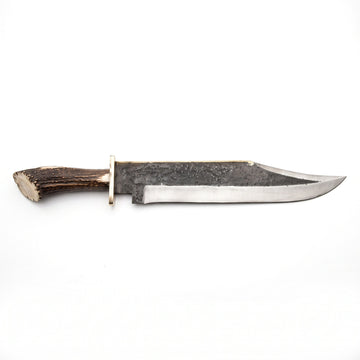
Dry the blade, then wipe on a thin film of oil, food-safe mineral oil on a kitchen knife. A satin carbon steel blade, like the Trailhead 9 inch carbon steel skinning knife, darkens to a gray patina with use, which is normal. Carbon steel vs stainless steel knives compares the two.

Sharpening by hand on a stone or a rod never affects the warranty; damage from a powered grinder or wheel is not covered.
What dulls a knife fastest?
These habits dull a knife quickly:
- Glass, stone, marble, ceramic or metal boards and plates. One stroke can chip or roll an edge. Cut on wood or plastic.
- The dishwasher. Heat, detergent and standing water rust carbon steel and Damascus. Wash by hand.
- Pull-through sharpeners with carbide slots. They grind away steel fast and leave a ragged edge.
- A powered grinder or wheel. Friction heat can discolor and soften thin steel at the edge.
- Bone, frozen food and prying. They chip a thin edge.
- Loose storage in a drawer. Metal against metal nicks an edge.
Every Crownridge knife is sharpened by hand before it ships, so you start from a good edge. See the Damascus chef knives, the Damascus hunting knives and the carbon steel knives.