

What Is a Good Hunting Knife? Size and Steel
Pick a hunting knife by the game you dress: blade length by job, the shape, steel, tang, handle and sheath that matter, with our own knives as examples.

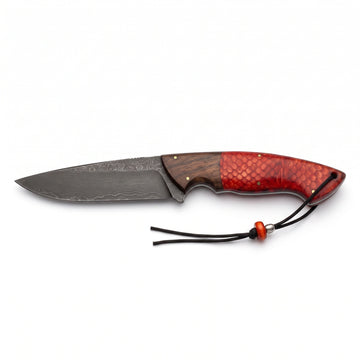
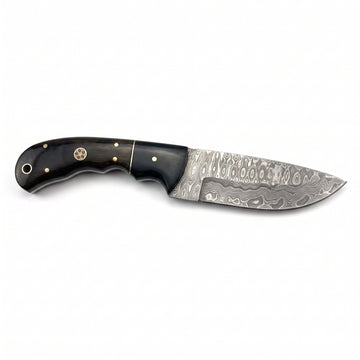
A good hunting knife is a fixed blade with a blade of about 3.5 to 4.5 inches, a drop point or skinner shape, a full tang, a handle that stays grippy when wet and a sheath that holds it upside down. Match the length and shape to the game you dress and the jobs you do in camp.
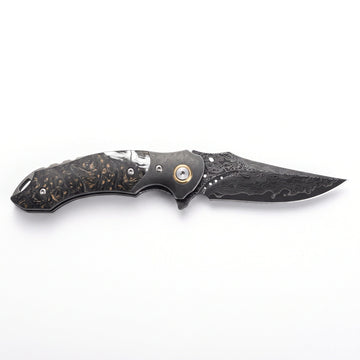
Should a hunting knife be a fixed blade or a folder?
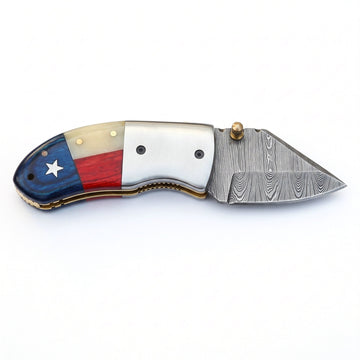
A fixed blade is the better hunting knife for most people. It has no hinge to pack with fat and debris, it rinses clean under a tap, and the blade is as strong as the steel itself. A folding knife is lighter in the pocket and suits a day hunt where you only trim and cut cord.
Most field dressing is done with a fixed blade for a plain reason: you work with wet gloves, and a fixed blade has one thing to hold. If you want a folder as a second knife, carry it as a backup and let the fixed blade do the work.
What blade length does each job and game need?
For deer, pronghorn and similar game, a blade of 3.5 to 4.5 inches is the working range. Shorter blades suit caping and small game. Longer blades suit elk, hogs and camp chores, but past about 5.5 inches a blade gets clumsy inside a body cavity. Use the table as general guidance, not a rule.
| Job or game | Blade length that suits it | Blade shape that suits it | Example from our range (blade length) |
|---|---|---|---|
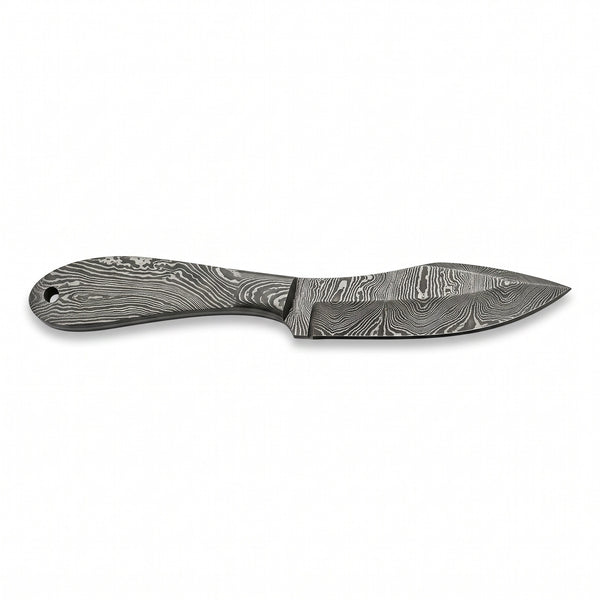
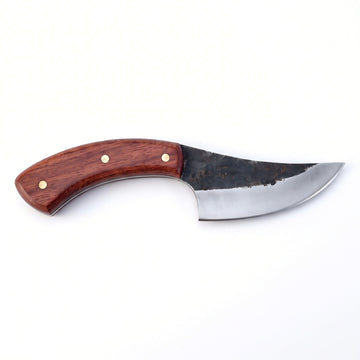
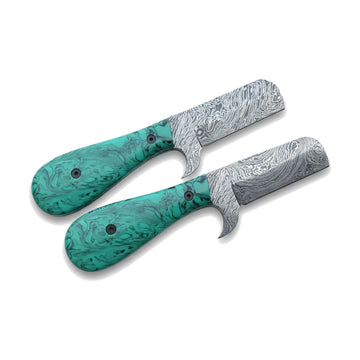
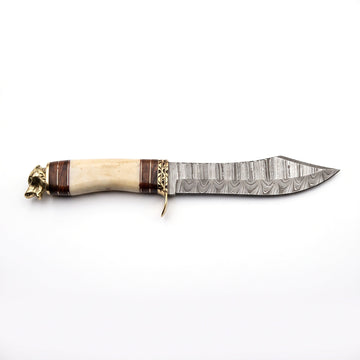
| Caping, birds and small game | 2.5 to 3.5 inches | Small drop point or skinner | Trailhead 7" carbon steel skinning knife (3.5 inches) |
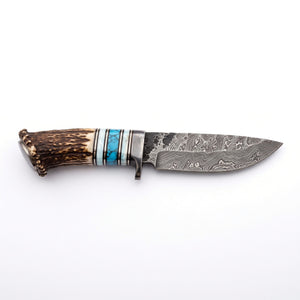
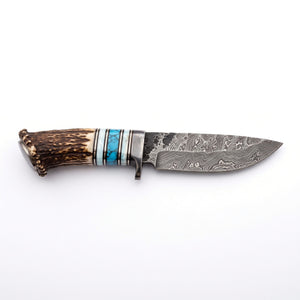
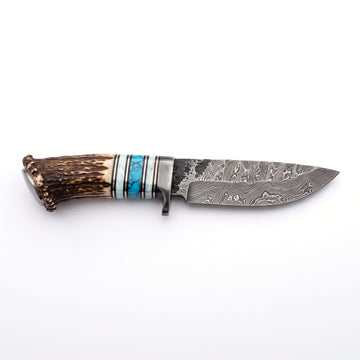
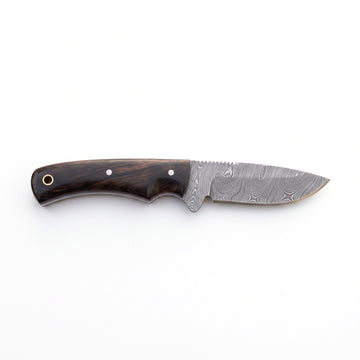
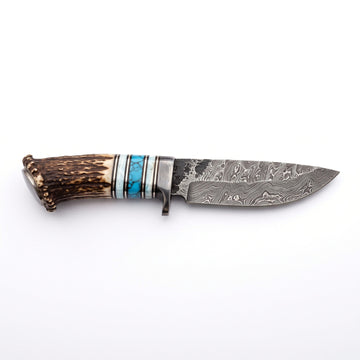
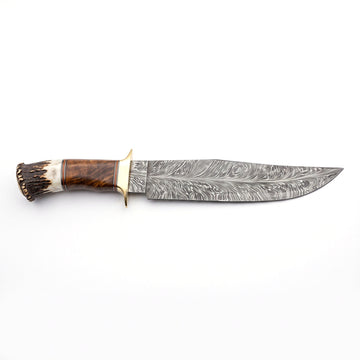
| Deer and pronghorn | 3.5 to 4.5 inches | Drop point, skinner or gut hook | Ridgeback 9" gut hook knife in stag (4.5 inches) |
| Elk, moose and hogs | 4.5 to 5.5 inches | Drop point or a broad skinner | Ridgeback 10" gut hook knife in bone and turquoise (5 inches) |
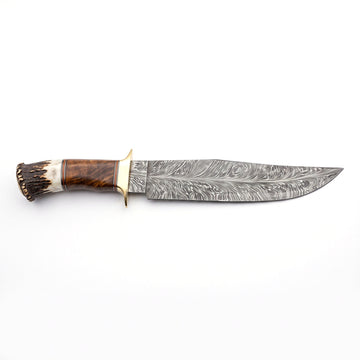
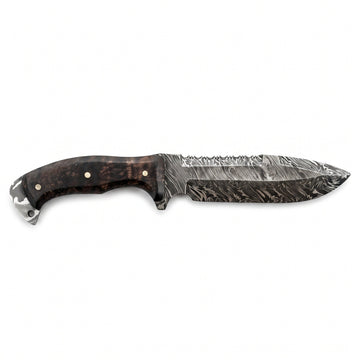
| Camp chores and light chopping | 5.5 inches and up | Bushcraft knife, bowie or camp knife | Highline 12" bowie knife in walnut (6.5 inches) |
The blade lengths in the last column are the recorded blade lengths on our product pages, checked on October 8, 2026. The first three rows are common hunting practice, not a measurement we made. The number in the name of one of our hunting knives is its overall length, so the 9" Ridgeback has a 4.5 inch blade. Lengths hold to within 3 mm (about 1/8 inch) of the listing, and our size guide shows how to read them.

Which blade shape is best for hunting?
A drop point is the best all-around hunting blade shape. Here is what each common shape does in the field:
- Drop point: the spine slopes down to a strong, controllable tip that is hard to push through the paunch by accident.
- Clip point: a finer tip for detail work, with a thinner point that is easier to break.
- Skinner: a deep, curved belly that sweeps along the hide and takes the cut in one pass.
- Gut hook: a sharpened notch on the spine that opens the hide without pushing a point into the body. It is also harder to sharpen than a plain edge.
Our guide to knife blade shapes covers each one in detail, and the best knife for skinning a deer goes through the hide work step by step. Some of our knives add a sharpened gut hook on the spine; browse them in the Skinning Knives and Gut Hook Knives collection.
What steel is best for a hunting knife?
Carbon steel and carbon-steel Damascus are the best choice if you will keep the knife dry and oiled, because they take a fine edge and are easy to sharpen. Stainless steel needs less care in wet weather but is harder to bring back to a keen edge in the field.
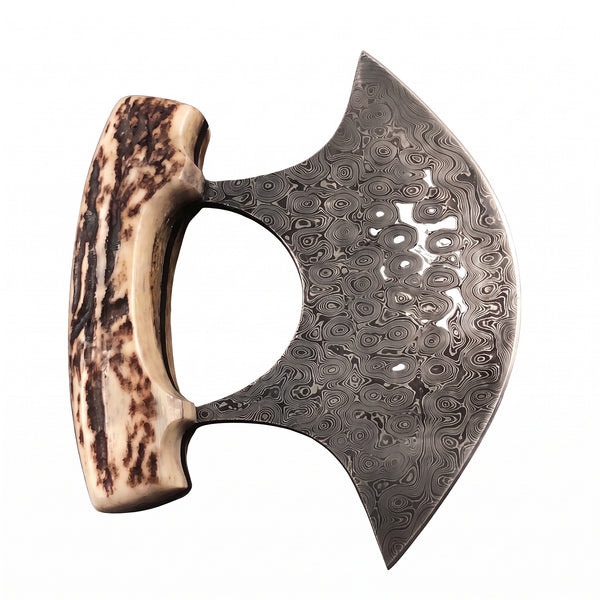
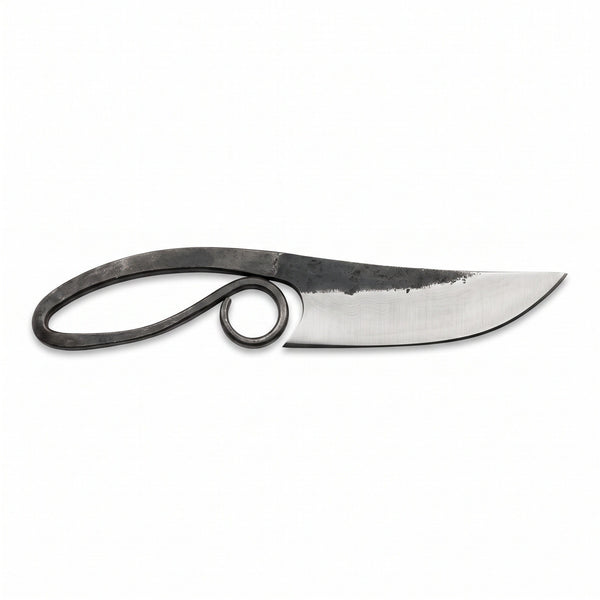
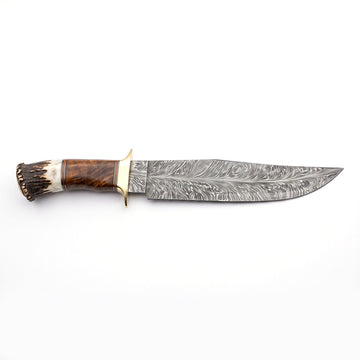
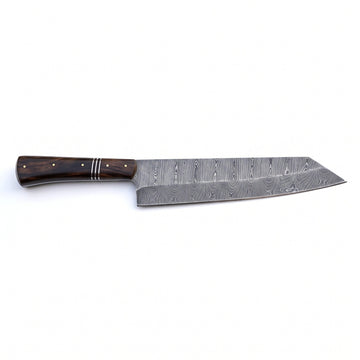
Our Damascus knives are pattern-welded from 1095 and 15N20 steel. Most of our plain-steel knives are forged carbon steel, and each product page names its steel. Carbon steel and Damascus both rust if left wet, so wipe the blade dry after every dressing and keep a light film of oil on it. We do not record a hardness figure for any knife, so we do not quote one. Read carbon steel vs stainless steel knives for the trade-off, and 1095 and 15N20 steel for what those two steels do together. The Carbon and Satin Steel Knives collection holds the plain-steel ones, and what is Damascus steel explains the pattern.
Does a hunting knife need a full tang?
A full tang is the safest choice for hard field work, because the steel runs the full length of the handle and there is no joint to loosen under hard use. Most of our fixed blades are full tang, and each product page states the tang. A few are hidden tang.
A hidden tang is not weak by nature, but it depends on the join. Our guide to full tang vs hidden tang shows how to tell them apart. The Full Tang Knives collection lists the ones with the tang running through.
What handle material grips best when wet?
Micarta, G10 and stabilized wood grip best when wet, and natural stag and bone give a good bite if the surface is textured. Smooth, polished handles are the ones to avoid with wet hands.
- Stag and bone: textured and natural, and they can chip if the knife is dropped on rock. Stag gives a rougher grip than polished bone.
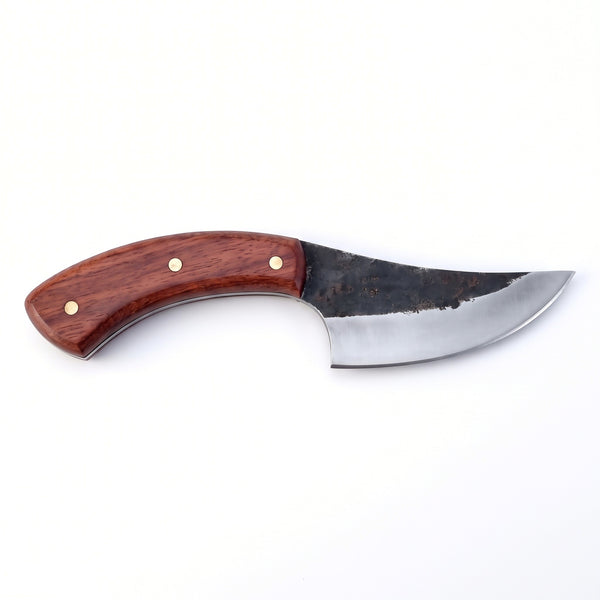
- Stabilized wood, walnut and rosewood: warm in the hand and sealed or oiled by the maker, but they need a wipe of oil now and then.
- Micarta and G10: synthetic, stable in all weather, and the least fussy.
- Pakkawood and resin: sealed against water, and slicker than stag if the surface is smooth.
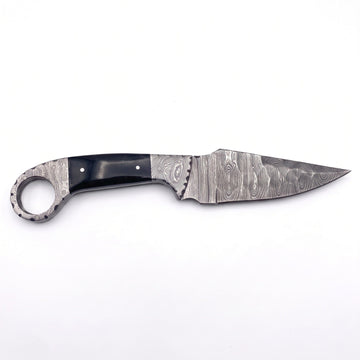
Our handles include stag, bone, camel bone, horn, rosewood, walnut, stabilized wood, pakkawood, micarta, resin and G10. Each product page names the handle on that knife, for example the Trailhead 7" Damascus Skinning Knife with a buffalo horn handle.

What should a hunting knife sheath do?
A hunting knife sheath should hold the knife upside down without it falling out, and ride where your hand finds it without looking. Leather is also quiet in the woods, where a hard shell can click against gear or a branch. Kydex wins in heavy rain, and we make leather sheaths only.
Every hunting knife we make ships in the Crownridge belt sheath at no extra cost. It is char veg-tan leather with a pale natural welt and straw-gold saddle stitching, and a strap that closes on a brass stud. It rides vertical on its belt loop, or horizontal with the belt run under its back plate. Our spec standard requires that the sheath holds its knife upside down; the spec standard page lists the rest.
What does a good hunting knife cost?
In the survey behind our cost guide, hunting and fixed-blade knives had a median price of $127 on September 20, 2026. On October 8, 2026, the Skinning Knives and Gut Hook Knives collection ran from $99 to $129, and the Damascus Hunting Knives collection from $99 to $319, with the highest prices on large bowies. A higher price mostly buys length and handle material.
Our guide to how much a Damascus knife costs breaks down where the money goes. Every edge is sharpened by hand and must shave paper along its full length before it ships.
How do you keep a hunting knife sharp in the field?
Carry a pocket stone or a small rod and touch up the edge whenever the blade starts to drag, not after it stops cutting. A few light passes on each side restore a working edge. Do not wait until the end of the hunt.
The full method is in how to sharpen a knife. We sell no stones or rods. Wipe the blade dry and oil it before you put it away; the care guide shows how. Rules on carrying and transporting a knife differ by state, so check your state's law before you carry.
Where does a bowie or a camp knife fit?
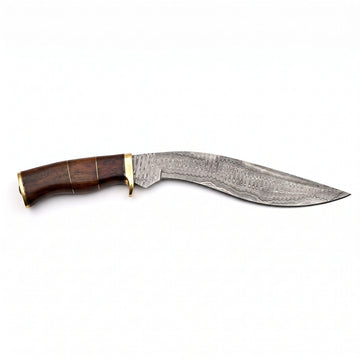
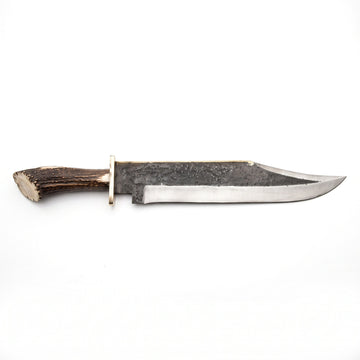
A bowie belongs in camp, not in the body cavity. Its blade of 6.5 inches and up is too long and too heavy for fine skinning, but it handles heavy chopping, splitting kindling and big camp chores. A kukri is the same: a poor skinner, a fine camp tool.
If you want one knife to carry on the belt and a second for camp, pair a skinner of about 4 inches with a bowie or a bushcraft knife. Read what is a bowie knife for the shape, then see the Damascus Bowie Knives and Camp and Bushcraft Knives collections. Our Damascus Hunting Knives collection holds the knives made for the field.