

Knife Blade Shapes Explained
Drop point, clip point, skinner, tanto and the rest, side by side, so you can pick the right blade shape for hunting, camp or the kitchen.
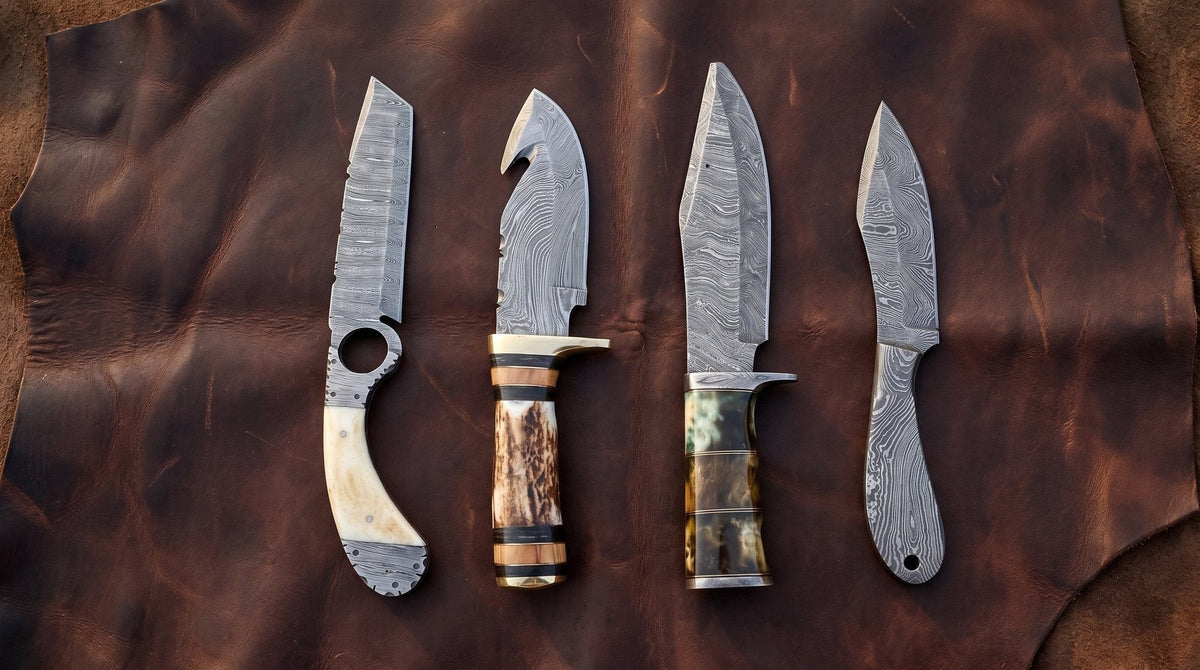
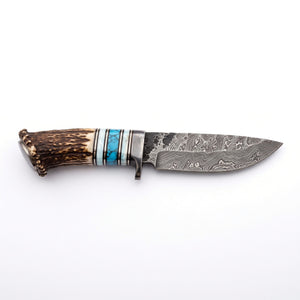
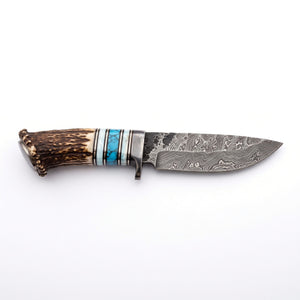
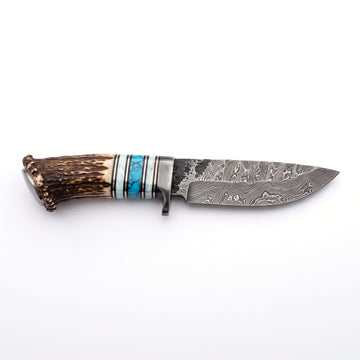
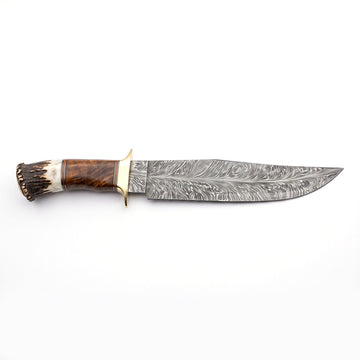
Knife blade shapes each trade off differently: a drop point suits general outdoor and hunting work because its lowered spine keeps the tip strong; a clip point trades tip strength for a finer point that pierces and does detail cuts; a skinner's upswept belly peels hide, and kitchen shapes like the chef and santoku are built for repeated slicing.
Blade Shapes at a Glance
| Shape | What it looks like | Best for | Weak spot | Typical blade length |
|---|---|---|---|---|
| Drop point | Spine curves down in a gentle convex line to the tip | General outdoor use, hunting, skinning | Tip is less pointed for fine piercing | 3 to 5 in, up to 12 in on a camp knife |
| Clip point | Spine is cut away near the tip, giving a thinner point | Piercing, detail work, camp chores | Thinner tip chips or breaks more easily | 4 to 12 in |
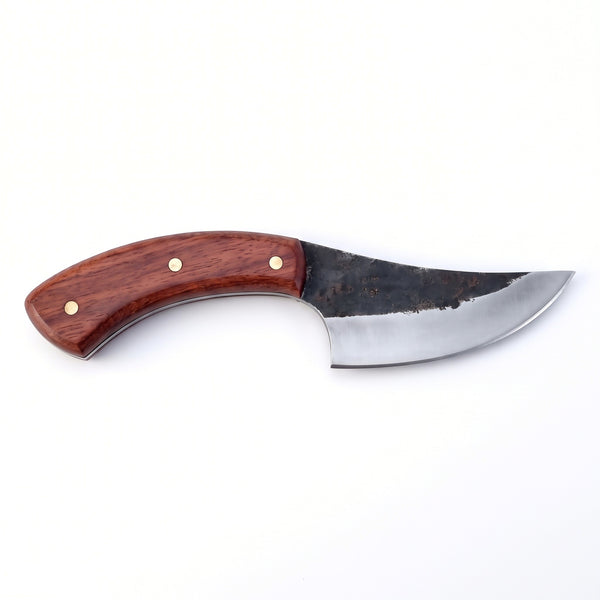
| Skinner | Deep, upswept belly, short tip | Skinning game, separating hide from meat | Tip too short for piercing or prying | 3 to 5 in |
| Trailing point | Spine sweeps up past the handle line | Slicing, filleting, skinning | Upswept tip is weak for prying | 4 to 8 in |
| Sheepsfoot | Straight edge, spine curves down to meet it, no point | Controlled push cuts, rope and strap work | No piercing tip at all | 2 to 4 in |
| Wharncliffe | Straight edge, spine curves down gradually the full length | Fine, controlled detail cuts | Shallow curve limits belly for slicing | 2 to 4 in |
| Tanto | An angled point where two straight edges meet | Piercing tough material | The corner can chip under sideways force | 3 to 5 in |
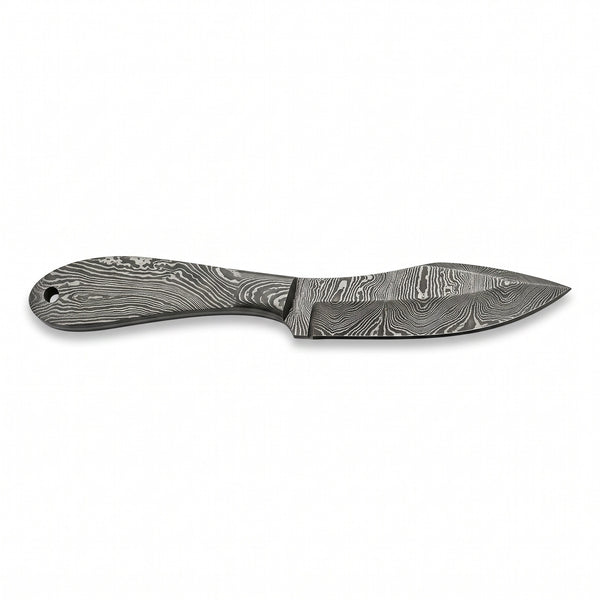
| Spear point | Symmetrical, spine and edge curve to meet at the center | Controlled piercing cuts | Symmetrical grind takes longer to sharpen evenly | 3 to 5 in |
Drop Point
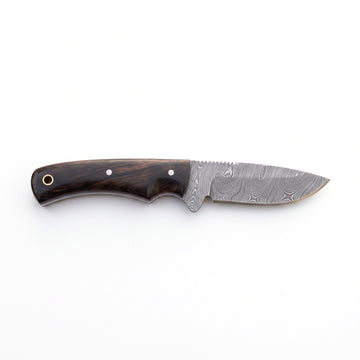
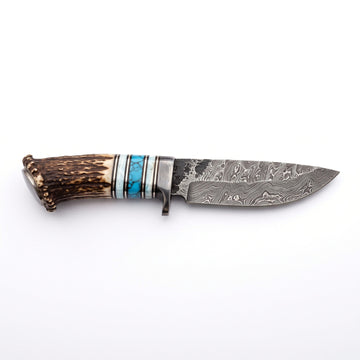
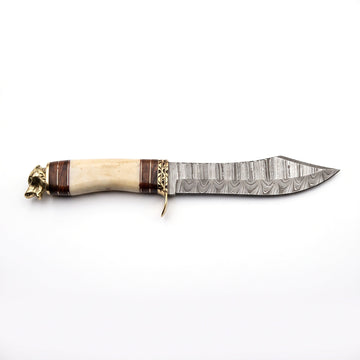
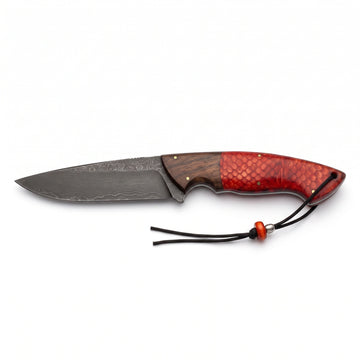
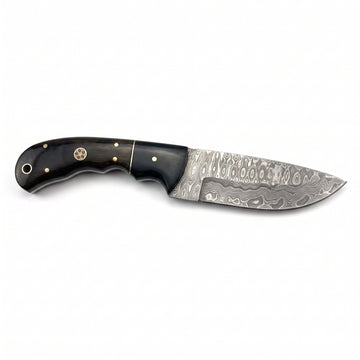
A drop point has a spine that curves down in a gentle, convex line from the handle to the tip, so the point sits at or below the centerline of the blade. That lower, thicker tip is harder to snap and easier to control, which is why it shows up on most general-purpose hunting and outdoor knives. When you dress game, a drop point's rounded tip is less likely to puncture the stomach or intestines by accident compared with a sharper, higher point.
Clip Point (the Bowie Shape)
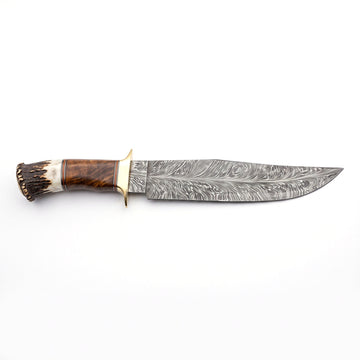
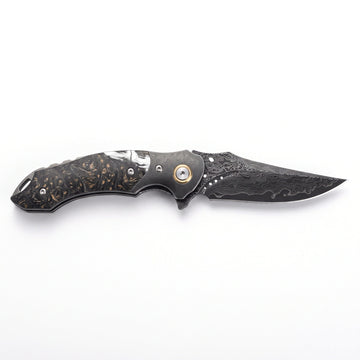
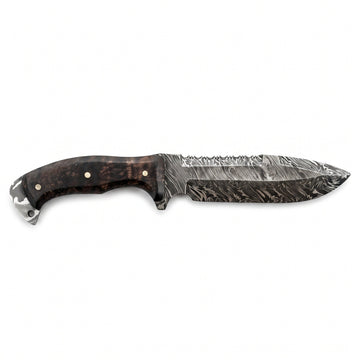
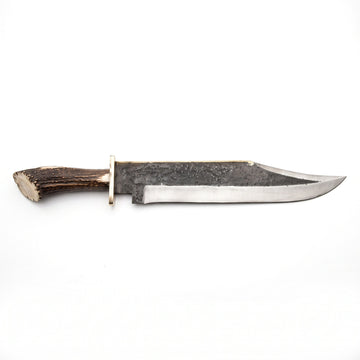
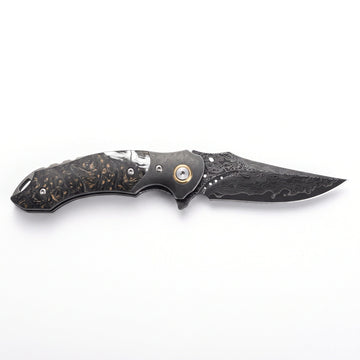
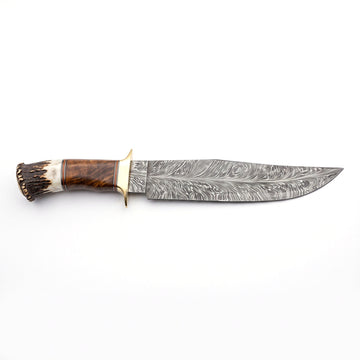
A clip point looks like the spine was clipped off near the front of the blade, either in a straight line or a concave curve, leaving a thinner, more acute tip above the centerline. That thin tip is good at piercing and fine detail work, and it is the profile most people picture on a Bowie-style knife, often with a false edge (a swedge) ground along the clipped section. The tradeoff is durability: a thinner cross-section near the tip chips or snaps more easily under side load than a drop point.
Drop Point vs Clip Point
Both start from the same spine height at the handle; the difference is what happens over the front third of the blade. A drop point keeps material behind the tip for strength, while a clip point removes it for a finer point. Pick a drop point for field dressing, camp chores and everyday cutting where the tip takes some abuse. Pick a clip point when you need to pierce cleanly, do detail work, or want the classic Bowie profile on a bigger fixed blade.

Skinner (Upswept Belly) and Gut Hook
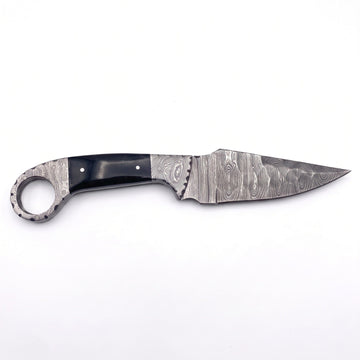
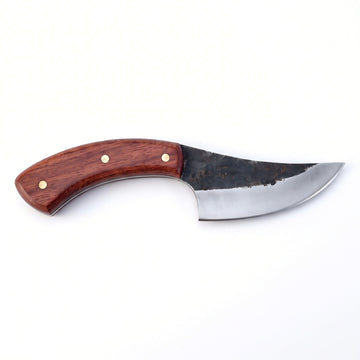
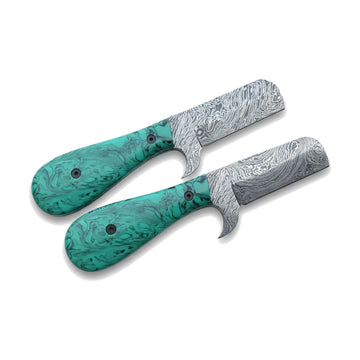
A skinner has a short, upswept belly built for one job: separating hide from meat in long, controlled strokes without poking through either. The short tip is a poor choice for piercing or prying, but that is not what it is for. Some skinning knives add a sharpened gut hook on the spine, a curved notch used to open the hide along the belly without driving the main edge in point-first; a few of our own skinning knives carry this feature and are listed in our skinning and gut hook collection. Across our skinning knives, blades run from 3 to 7 inches, most around 4 inches.

Trailing Point, Sheepsfoot, Wharncliffe, Tanto and Spear Point
A trailing point sweeps its spine up past the handle line, adding belly for slicing and filleting at the cost of a weak, upswept tip. A sheepsfoot runs a straight edge under a spine that drops to meet it with no point at all, useful for a controlled push cut where a sharp tip would be a hazard, such as cutting rope or a strap. A wharncliffe looks similar but curves the spine down gradually over the whole blade instead of dropping late, trading belly for a finer, more controlled edge. A tanto meets two straight edges at an angled corner instead of a curve, aimed at piercing tougher material, though that corner can chip under a sideways strike. A spear point is symmetrical, the spine and edge curving to meet in the center of the blade, giving a strong, centered point used for controlled piercing cuts.
Kitchen Shapes in Brief
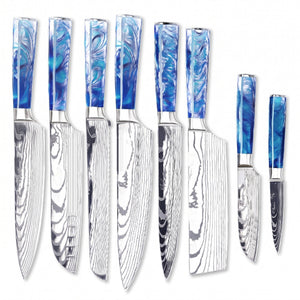
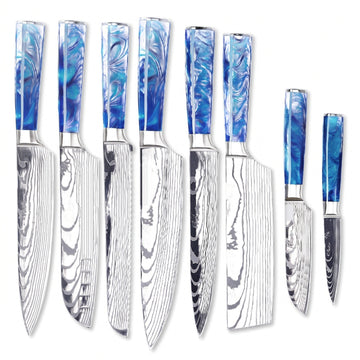
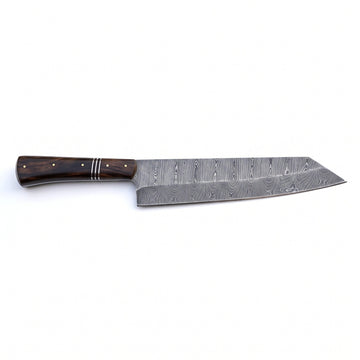
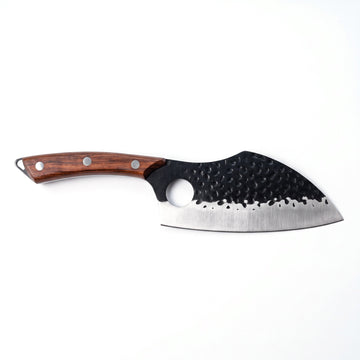
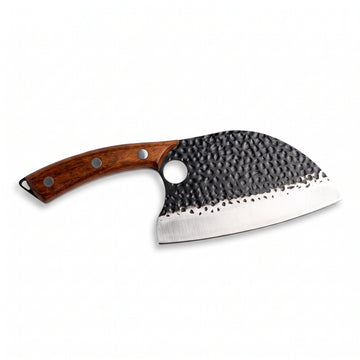
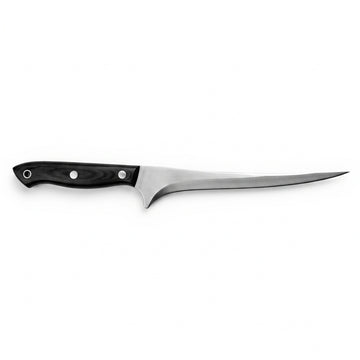
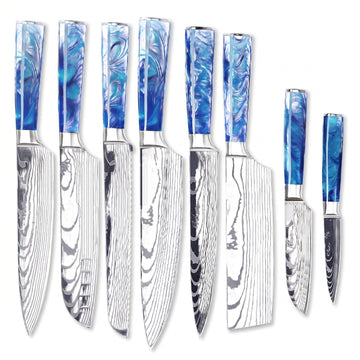
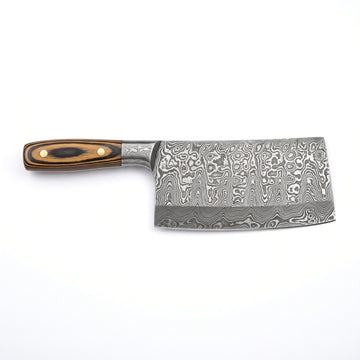
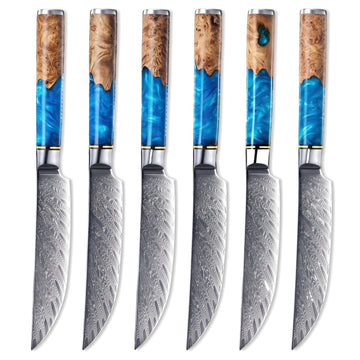
A chef's knife carries a broad, curved belly from heel to tip for a rocking chop. A santoku shortens that belly and drops the tip lower and flatter, favoring an up-and-down chop over rocking. A cleaver squares off into a tall, straight, heavy blade built to go through bone and joints with weight rather than a fine edge. A boning knife is thin, narrow and often slightly flexible, made to follow close along a bone rather than chop through anything.
How to Choose for Hunting, Camp and the Kitchen
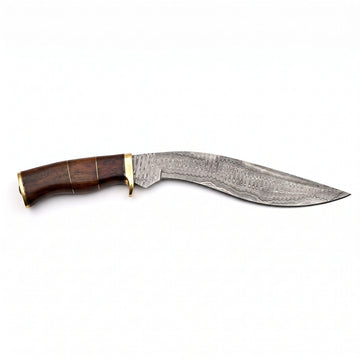
For hunting, a drop point in the 3 to 5 inch range covers general field dressing, and a dedicated skinner covers the hide work; our Damascus hunting knives run blades from 2 to 18 inches across the range, and our skinning knives are built specifically for the hide and gut work. For camp, a clip point or a general utility profile on a longer blade handles batoning and chopping; our camp and bushcraft knives run blades from 3 to 12 inches. For a bigger fixed blade built around the clip point profile, see our Damascus Bowie knives, with blades from 6 to 18 inches. In the kitchen, match the shape to the cut: a chef or santoku for most prep, a boning knife for close bone work. Read our size guide for handle and overall length before you order, and our Damascus steel guide if the blade you pick is pattern welded.