

What Is Damascus Steel?
A plain answer to what Damascus steel is, how it is forged and etched today, why wootz disappeared, and what a real Damascus knife should cost.

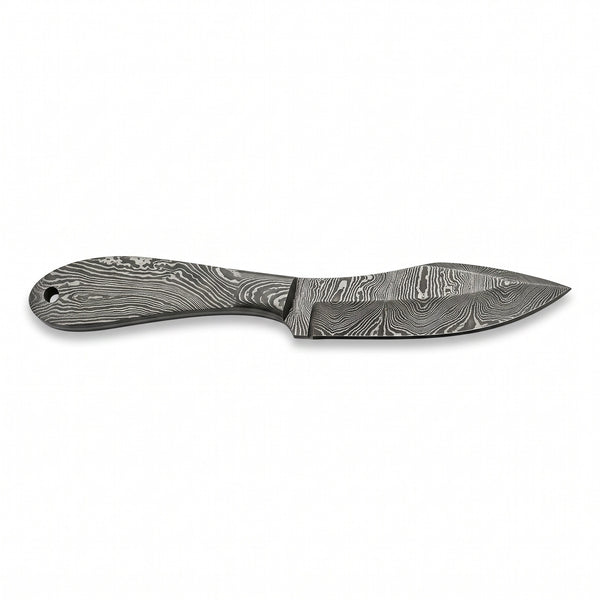
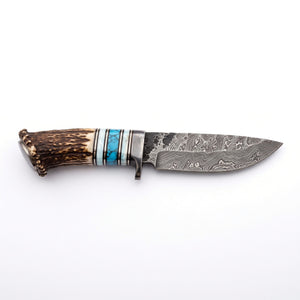
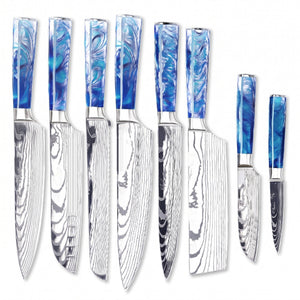
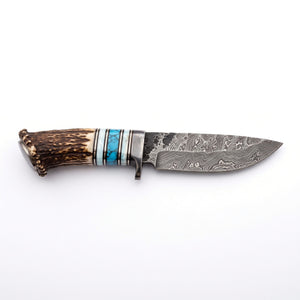
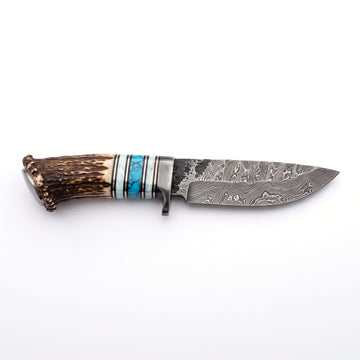
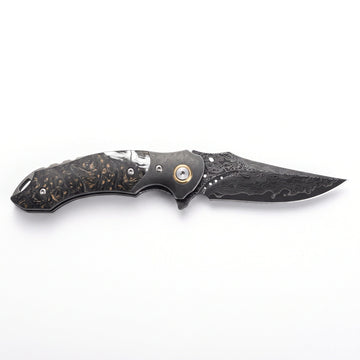
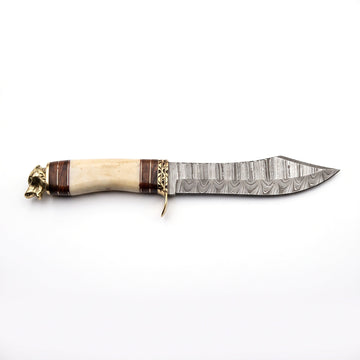
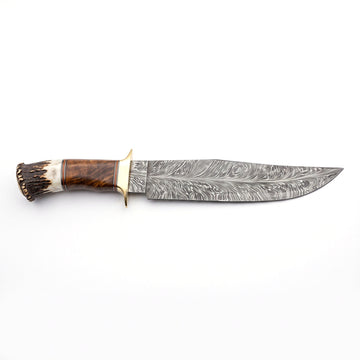
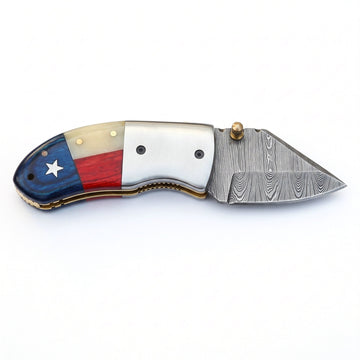
Damascus steel is a knife blade material made by forge-welding two or more kinds of steel into a solid bar, then folding or twisting it before grinding and etching the blade in acid so the different steels show up as a pattern. The name comes from Damascus, Syria, a historic trading city, not the place the steel is made.
Modern Damascus: Two Steels in One Bar
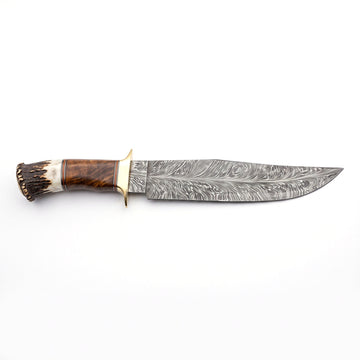
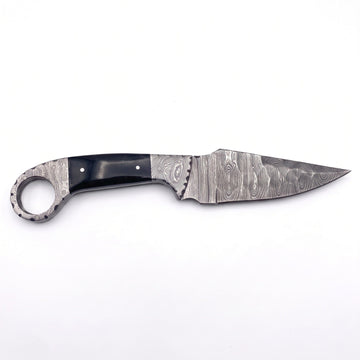
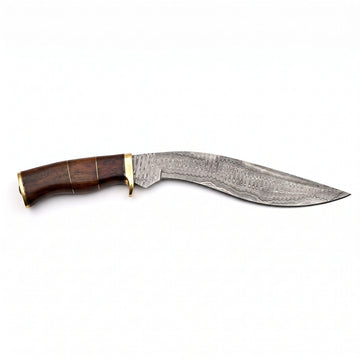
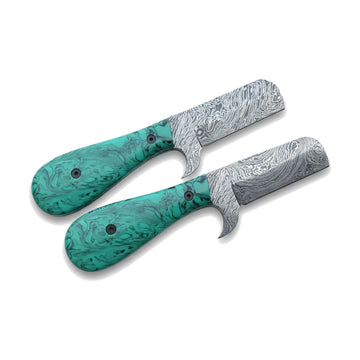
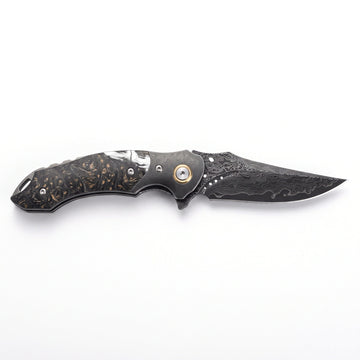
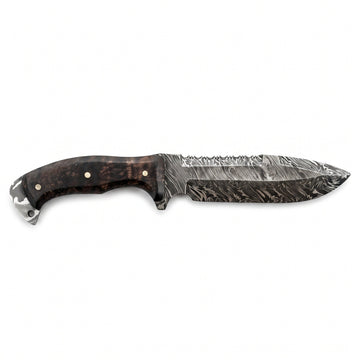
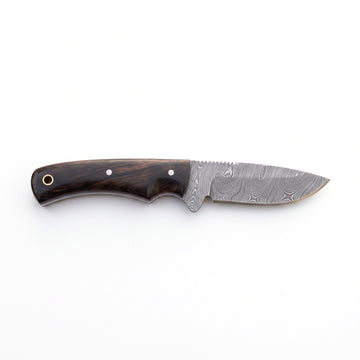
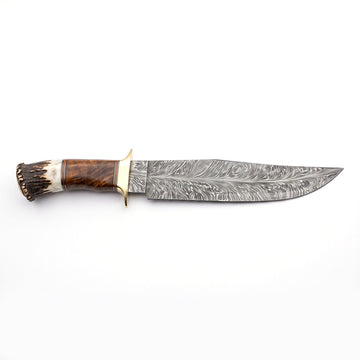
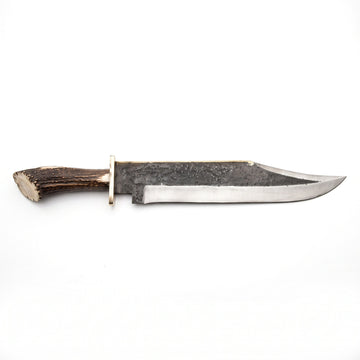
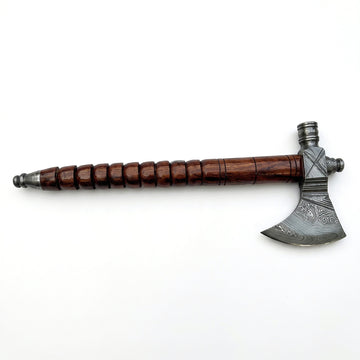
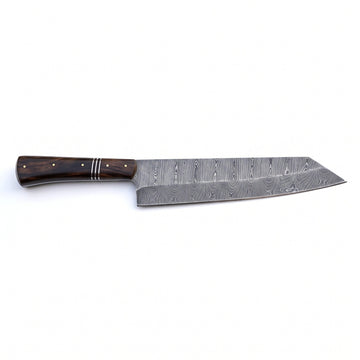
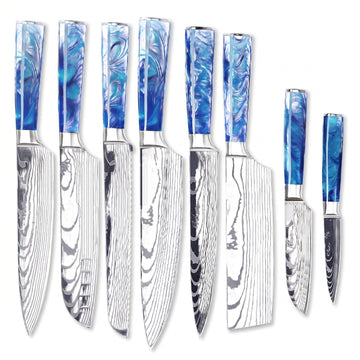
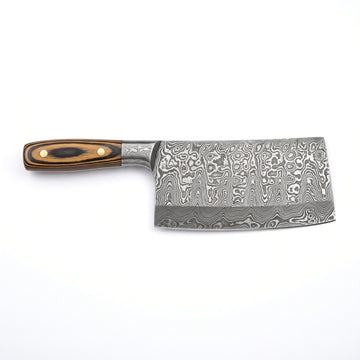
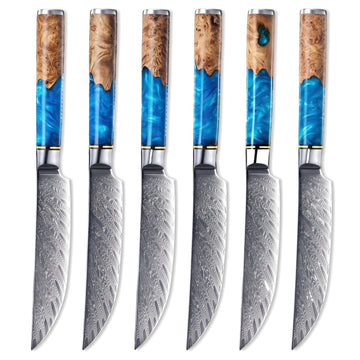
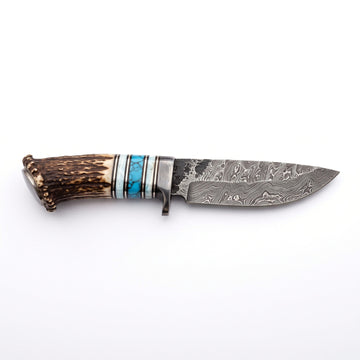
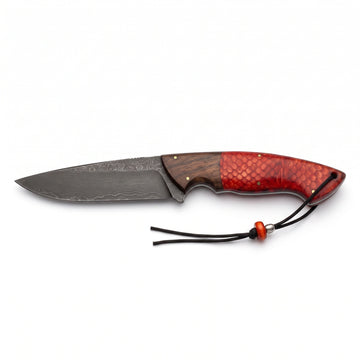
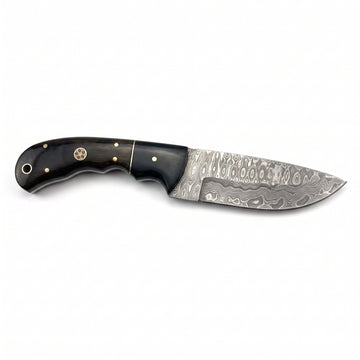
In a modern Damascus knife the pattern runs through the steel itself rather than sitting on the surface of a plain blade, so it reappears wherever the edge is ground or sharpened down the road. Every Crownridge Damascus knife is pattern welded from two steels: 1095, a plain high-carbon steel, and 15N20, a carbon steel with about 2 percent nickel that stays bright after the acid etch while the 1095 darkens.
Wootz, the Original Damascus, and Why Its Recipe Was Lost
Before pattern welding, there was wootz: a crucible steel first made in India and Sri Lanka around 300 BC, known for a wavy surface pattern and an edge that held up in use. Traders carried wootz blades through Damascus, Syria, on routes into Europe and the Middle East, which is likely why the pattern took the city's name rather than the steel's place of origin. The exact wootz recipe, a specific ore, plant matter and furnace technique, died out by the 1700s to 1800s as trade routes and raw materials changed, and how closely modern reproductions match the original is still debated by metallurgists. What is sold as Damascus steel today, ours included, is a different technique built afterward: pattern welding, refined over centuries and still practiced by bladesmiths.
How Modern Pattern-Welded Damascus Is Made
A smith starts by stacking alternating layers of two different steels, heats the stack, and forge-welds it into one solid bar under a hammer or a press. That bar is drawn out longer, folded back on itself, and forge-welded again, a cycle repeated enough times to build many thin layers. Some patterns call for a twist before the final draw. Once the billet is the right size, it is forged or ground into a blade shape and heat treated. The last step is the acid etch: the acid eats the two steels at different rates, so the layered pattern stands out instead of disappearing under a bright polish.

Damascus Steel Patterns
How a smith folds, twists or presses the billet before grinding decides the pattern that shows up after etching.
| Pattern | How it is made | What it looks like |
|---|---|---|
| Random | Folded with no forced shape | Irregular flowing lines, no two blades alike |
| Ladder | Grooves filed or pressed into the billet before etching | Straight rungs crossing the blade like a ladder on its side |
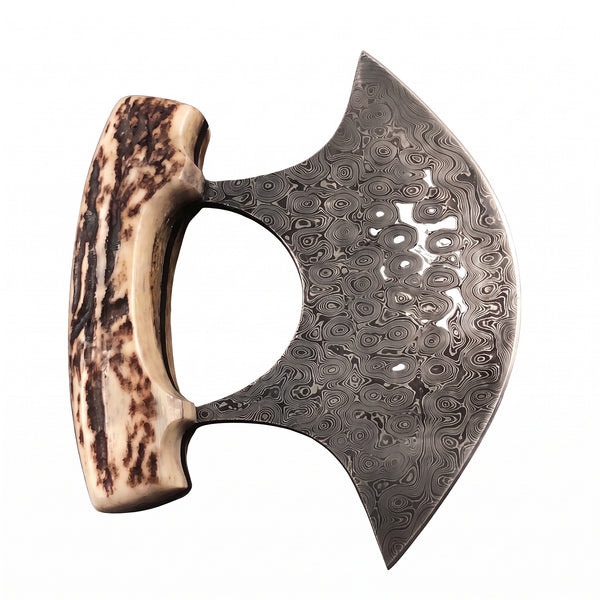
| Raindrop | The billet is dimpled or drilled before it is drawn out | Rounded drop shapes repeated along the blade |
| Twist | The bar is twisted like a rope before the final draw | Spiraling lines running the length of the blade |
Because the fold count, twist and grind angle are never identical twice, no two Damascus blades come out the same, even from the same bar of steel.

Is Damascus Steel Good for a Knife?
Yes, for the reason most people actually want it: combining two steels gives a blade that blends their properties, and a pattern that is part of the metal rather than added after the fact. The pattern itself does not raise hardness or change the edge angle. What controls how a blade cuts and holds an edge is the specific steels used, the heat treat, the grind and the edge angle, the same as for a plain steel blade. We do not record a hardness number for our knives, so none is stated here. Ask any maker which two steels went into the blade, not just the word Damascus, since low-quality pattern-welded blades exist alongside good ones.
Does Damascus Steel Rust?
Yes. Our Damascus is 1095 and 15N20, both high-carbon steels with no chromium added for stain resistance, so they rust if left wet or stored in a damp sheath. Hand wash the blade, dry it at once, and wipe on a light coat of oil before you put it away: food-safe mineral oil for a kitchen knife, any light blade oil for a hunting knife. A satin-finish carbon steel blade needs the same routine; a stainless knife needs less of it but is not rust proof either. Our care guide covers the full routine, including what to do after a wet hunt or a day in the kitchen.
How Much Should a Real Damascus Knife Cost?
Google showed these ranges for Damascus knives on September 30, 2026:
| What was searched | Price range seen |
|---|---|
| Damascus pocket knives | About $70 to $320 |
| Handmade Damascus hunting knives | About $80 to $299 |
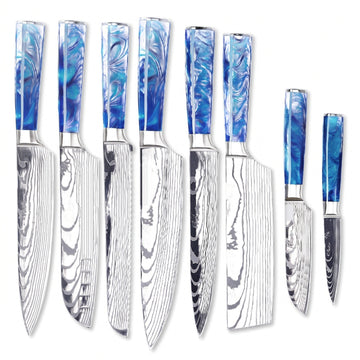
| Damascus kitchen sets | About $125 to $689 |
Our own Damascus knives sit inside those bands. Hunting, folding and chef knives start at $99, our Damascus bowies run up to $319, and our kitchen sets run $149 to $669, each with a leather sheath or roll included at no extra charge. A price far under these ranges is worth a second look: an acid-etched pattern stamped or printed onto plain steel costs a fraction of a forge-welded blade to make. Our real vs. fake Damascus page walks through how to tell the difference before you buy, from us or anywhere else.

See the full range in Damascus hunting knives, Damascus chef knives, Damascus knife sets and Damascus folding knives. Once you know the steel, knife blade shapes is the next question worth answering.