

1095 Steel and 15N20 Steel Explained
A plain explanation of what each steel is, how it behaves in a knife, why smiths weld the pair into Damascus, and how to keep the result free of rust.

1095 steel is a plain high-carbon steel with about 0.95 percent carbon and nothing else added on purpose. 15N20 is a tougher steel with about 0.75 percent carbon and about 2 percent nickel. Smiths forge-weld the two into pattern-welded Damascus because they weld and harden alike but etch differently: 1095 turns dark and 15N20 stays bright.
What does 1095 mean in steel?
The number is a code from the SAE and AISI grading systems. The first two digits, 10, mark a plain carbon steel: iron and carbon with a little manganese, and no chromium, nickel or other element added on purpose. The last two digits give the carbon in hundredths of a percent, so 95 means about 0.95 percent. The standard range for the grade runs from 0.90 to 1.03 percent. The code works the same way across the series: 1060 has about 0.60 percent carbon and 1084 about 0.84 percent.
In a knife, that much carbon gives a steel that takes a keen edge and comes back quickly on a stone, because it has no hard chromium or vanadium carbides to grind through. It has few ingredients, so heat treatment is straightforward, and smiths have worked the 10xx series for generations. The costs are plain too. 1095 wears faster in abrasive work than a steel built with those carbides, and it rusts if left wet.
What is 15N20 steel, and is it good for knives?
15N20 is a nickel steel with about 0.75 percent carbon and about 2 percent nickel, plus a little manganese. It was developed for band saw blades, which flex around a wheel on every pass, and the nickel adds the toughness that job needs. Nickel also resists the etching acid, so 15N20 stays bright where 1095 goes dark. Two percent nickel is far short of a stainless steel and 15N20 carries no chromium, so it rusts if left wet, as 1095 does.
Used alone, 15N20 has less carbon than 1095, so a whole blade of it holds an edge for less time. That is why its main job in knives is the tough, bright layer in pattern-welded Damascus, and it is how we use it.
1095 vs 15N20: what is the difference?
The table gives the standard figures for each grade. They describe the grades, not a measurement of our bars.
| Trait | 1095 | 15N20 |
|---|---|---|
| Type | Plain carbon steel | Nickel steel |
| Carbon | About 0.95 percent (standard range 0.90 to 1.03) | About 0.75 percent |
| Nickel | None | About 2 percent |
| Chromium | None added | None added |
| Color after the acid etch | Dark gray | Bright |
| Main trait | Keen edge, quick to sharpen | Toughness |
| Weak point | Wears faster than carbide steels; rusts if left wet | Less carbon, so a shorter-lived edge on its own; rusts if left wet |
| Original use | Springs and cutting tools | Band saw blades |
Every Crownridge Damascus blade carries both columns, since the two steels are welded into one bar. We do not record a hardness number for our knives, so none appears here.
Why do smiths pair 1095 and 15N20 in Damascus?
Pattern-welded Damascus needs two steels that cooperate at the forge and still look different when finished. 1095 and 15N20 do three things for the smith:
- They forge-weld. Neither steel holds chromium, whose oxide makes welding harder, so with flux the layers fuse into one solid bar at forge heat.
- They harden alike. Both are carbon steels that respond to the same quench, so the finished bar takes one heat treatment. Carbon also moves between the layers while the bar sits at welding heat, which pulls the two grades closer together.
- They contrast. In the etch, 1095 turns dark gray and 15N20, with its 2 percent nickel, stays bright, so the layers show as dark and bright lines.
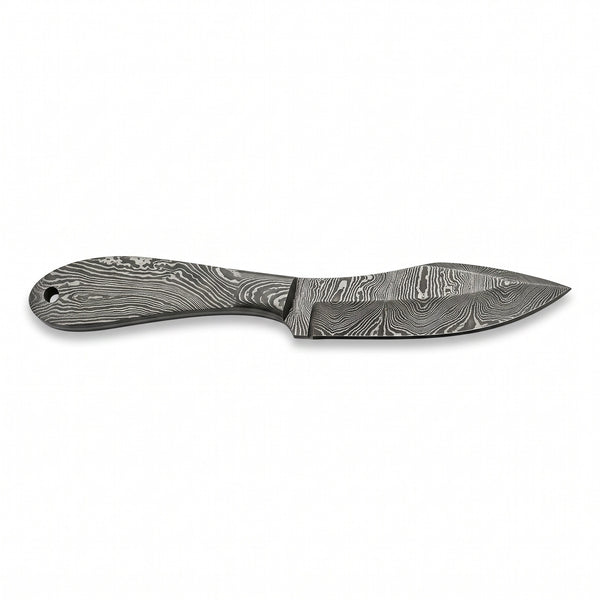
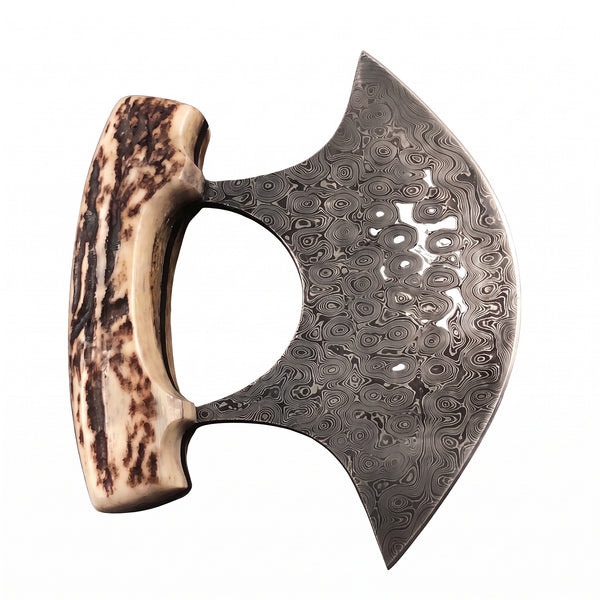
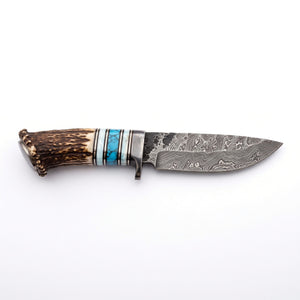
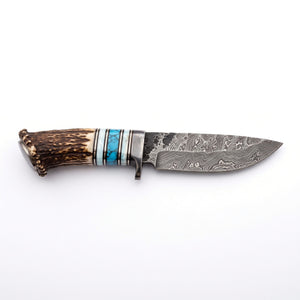
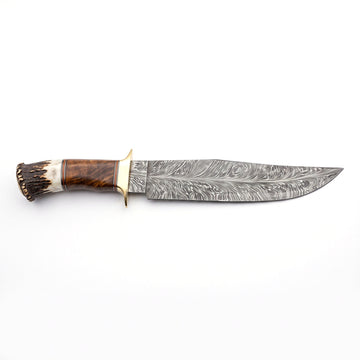
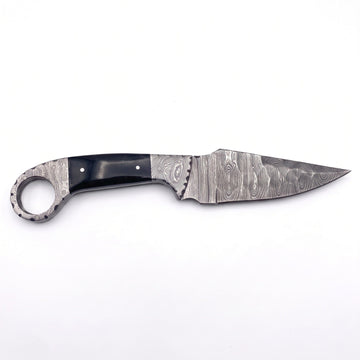
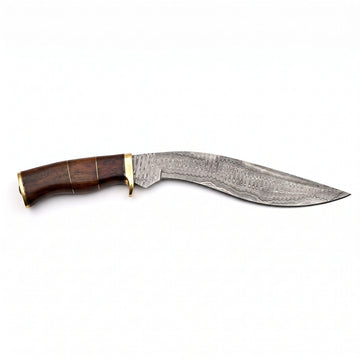
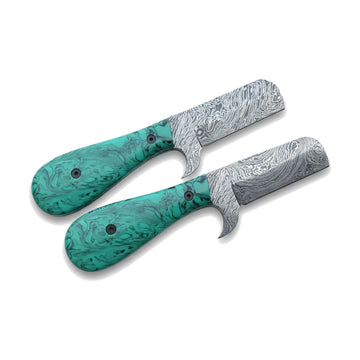
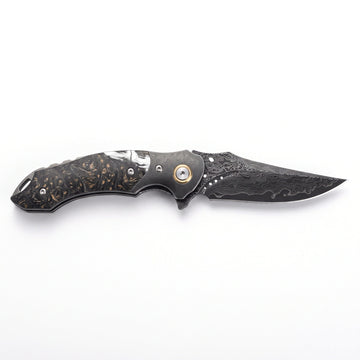
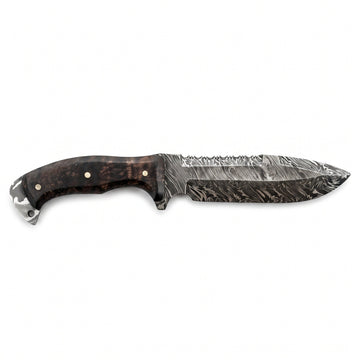
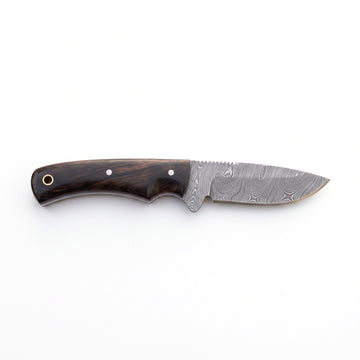
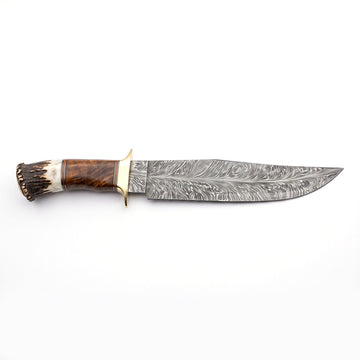
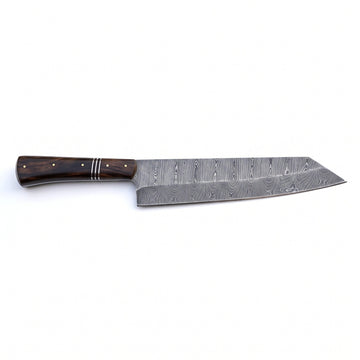
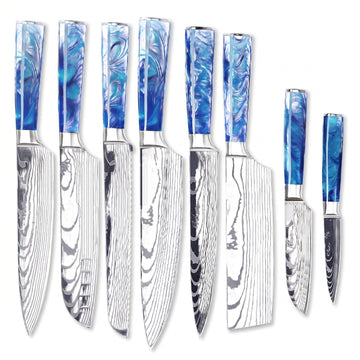
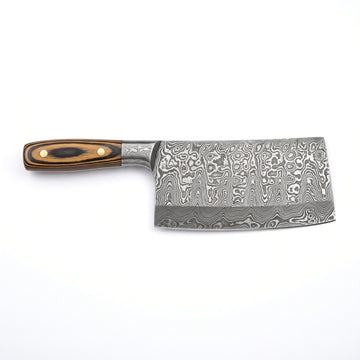
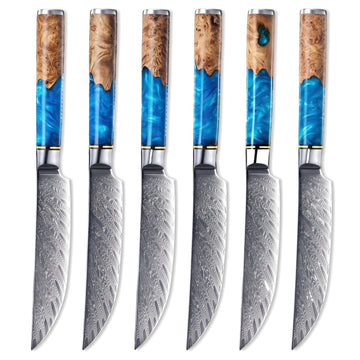
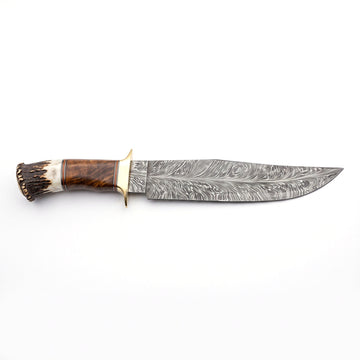
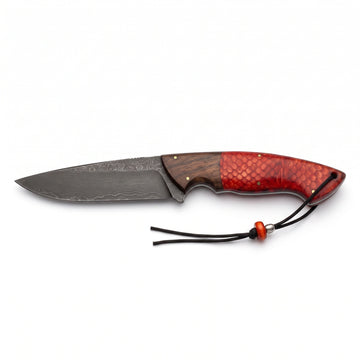
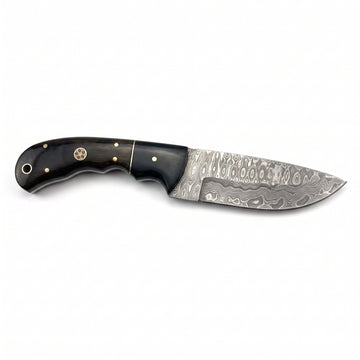
Our blades are built this way: the two steels are forge-welded into one bar, drawn out and folded, then etched. The pattern runs through the steel, so it shows on the spine and stays after sharpening. Ask any maker to name both steels. Our real vs fake Damascus page and the spec standard set out the checks, and What Is Damascus Steel? covers the patterns.

Is 1095 a good knife steel, and does it rust?
Yes to both halves. 1095 is a good knife steel for cutting, slicing, skinning and food prep: it takes a keen edge, and a few passes on a stone restore it. It also rusts. Bare 1095 left wet, or stored in a damp sheath, grows orange rust, and a dry blade with a thin film of oil does not. The disadvantages are short:
- It rusts if left wet or stored damp.
- Onions, citrus, tomatoes and meat darken it to a gray patina, which is harmless but changes the look.
- It wears faster than carbide steels in abrasive jobs such as cutting cardboard or rope, so you sharpen it more often.
Damascus made of 1095 and 15N20 rusts the same way, because neither steel has chromium. The care routine below is the whole answer.
How does 1095 compare with D2 and stainless steel?
D2 is a tool steel with about 1.5 percent carbon and about 12 percent chromium, plus molybdenum and vanadium. The chromium and the hard carbides it forms make D2 resist wear and rust better than 1095, though it is not fully stainless and can still spot. It takes longer to sharpen, and it usually trades some toughness for that wear resistance. Neither steel is better outright: pick 1095 for quick sharpening and D2 for longer between sharpenings.
| Steel | Main alloying | Rust | Sharpening | Edge wear in abrasive work |
|---|---|---|---|---|
| 1095 | Carbon and manganese only | Rusts if left wet | Quick on a stone | Wears faster than D2 |
| D2 | About 12 percent chromium, with molybdenum and vanadium | Resists rust better than 1095, can still spot | Slower | Wears slower than 1095 |
| Stainless steels | At least 10.5 percent chromium | Rarely rust | Varies by grade | Varies by grade |
Stainless steels carry at least 10.5 percent chromium, which forms a thin invisible film that blocks rust, so they need the least care. Grades range from soft, low-carbon types to hard, high-carbon ones, so the word stainless alone says little about the edge. A few of our knives are J2 stainless, and our care guide rates it the lowest-maintenance steel we use. The full comparison is in our guide to carbon steel vs stainless steel knives.
How do you care for a 1095 and 15N20 Damascus knife?
- Dry the blade completely after every use, including the joint where the blade meets the guard or handle.
- Wipe on a thin coat of oil and buff until the steel looks dry: food-safe mineral oil on a kitchen knife, mineral oil or any blade oil on a hunting or folding knife.
- Keep steel wool, scouring pads and metal polish off the blade. They rub off the etch that makes the dark and bright layers show.
- Do not leave the knife in its sheath for more than a day or two, because leather holds moisture.
- Rub light rust with a few drops of oil and a soft cloth, then dry and oil the blade again.
A gray patina where the blade meets food is normal. It softens the contrast a little and leaves the pattern in place. When the edge dulls, sharpen it by hand; how to sharpen a knife walks through it. The care guide covers rust removal and every handle material. Our single-steel carbon knives are listed as forged carbon steel with no grade, so nothing in this guide describes them.

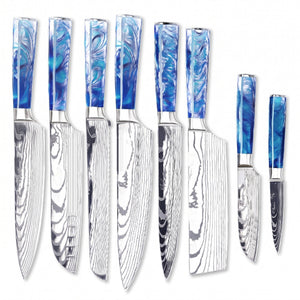
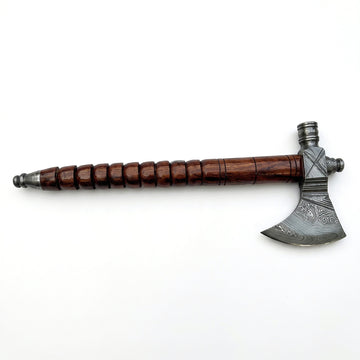
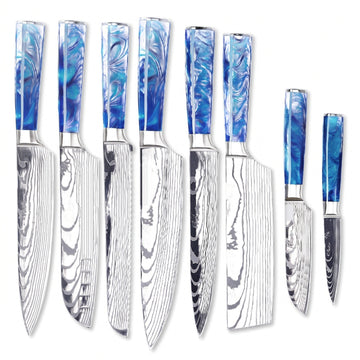
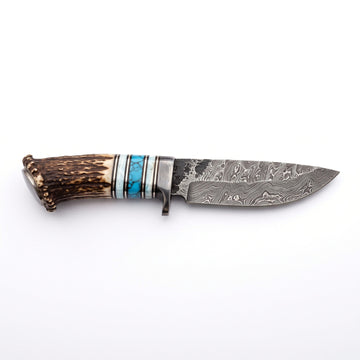
Every Crownridge Damascus knife is made from these two steels, and each product page names them in the steel field. Browse the Damascus hunting knives, Damascus chef knives, Damascus folding knives and Damascus knife sets.