

Full Tang vs Hidden Tang: How to Choose
A plain guide to five tang types, how to spot each one along the handle edge, and which belongs on a hunting, camp or kitchen knife.

Full tang vs hidden tang is a question of where the blade steel goes. A full tang runs the length and width of the handle, with a slab pinned to each side. A hidden tang is a narrower strip sealed inside it. Full tang gives more strength margin; hidden tang gives a lighter hand and one-piece handles.
What is a full tang knife, and how can you spot one?
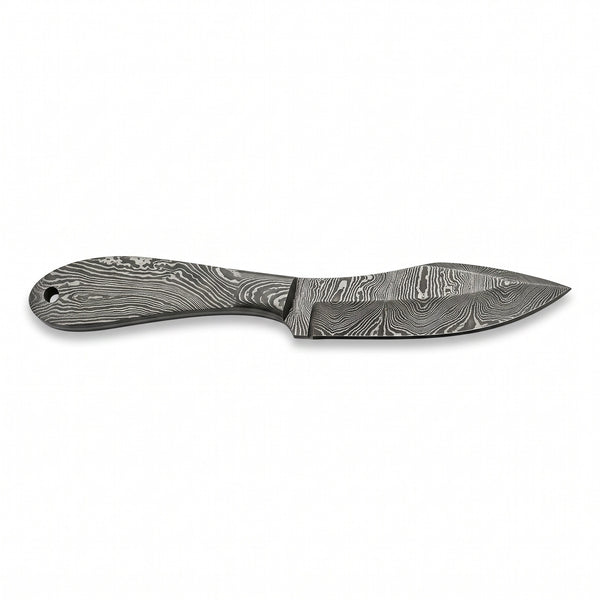
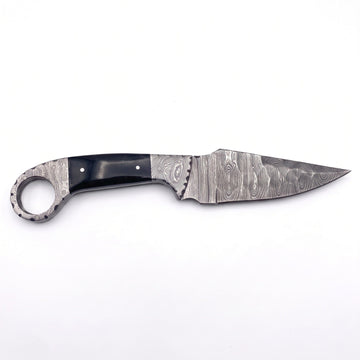
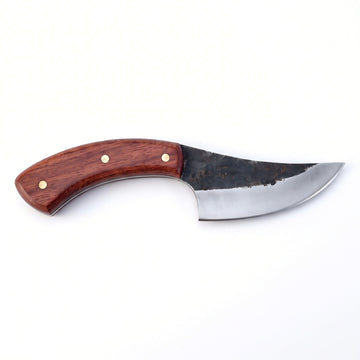
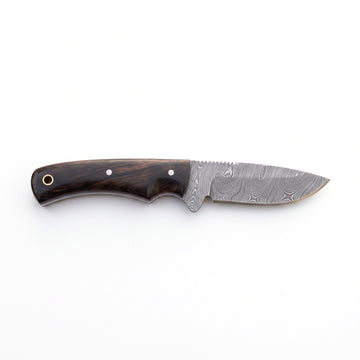
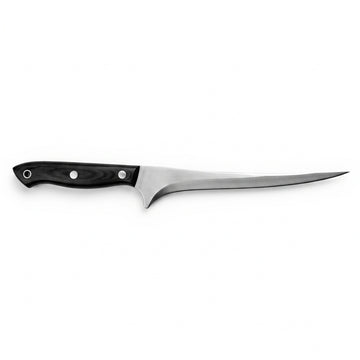
The tang is the part of the blade steel that continues past the guard or bolster and into the handle. On a full tang knife the tang has the same outline as the handle, so the handle is built around a flat plate of steel. The handle material is cut as two slabs, called scales, and fastened to the plate with pins, bolts or rivets, usually with epoxy between the surfaces. Three things show it from the outside:
- The handle edge. A thin line of steel runs along the top and bottom of the handle, sandwiched between the scales.
- The pins. Round pin heads show on both faces, flush with the scales.
- The butt. The steel reaches the end of the handle, often with a lanyard hole.
What is a hidden tang knife, and why do makers use it?
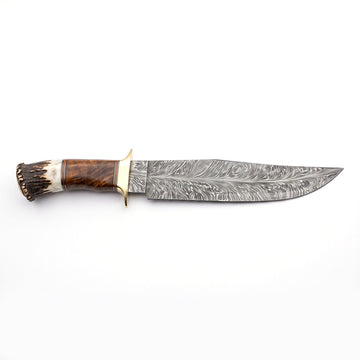
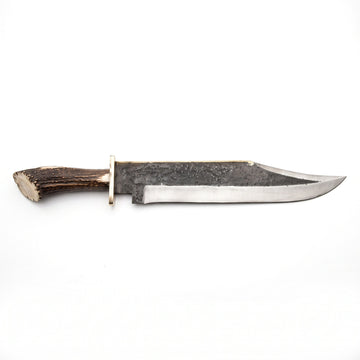
A hidden tang knife has a tang narrower than the handle and fully enclosed by it. You will also see it called a stick tang, or a rat-tail tang when it narrows to a thin rod. The handle is drilled or slotted, the tang slides in, and epoxy, a pommel at the butt, or both hold it there.
Makers choose it for two main reasons. A stag tine, a piece of horn, turned wood and a stack of leather washers cannot be split into two flat scales, and a hidden tang goes through the middle of them. And less steel in the handle gives a lighter knife in the hand.
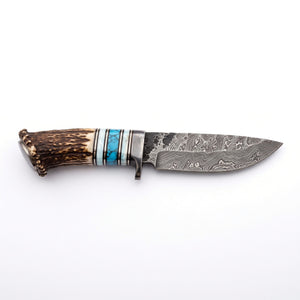
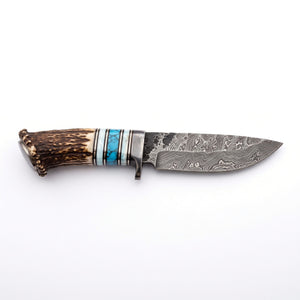
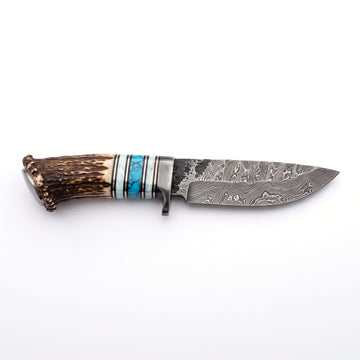
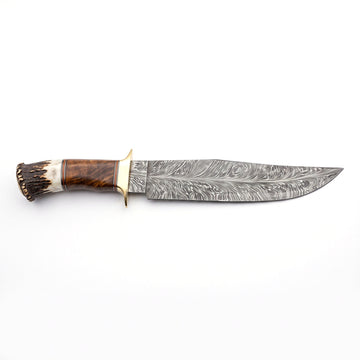
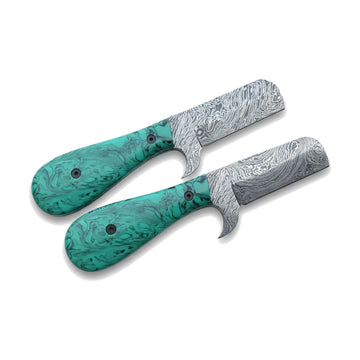
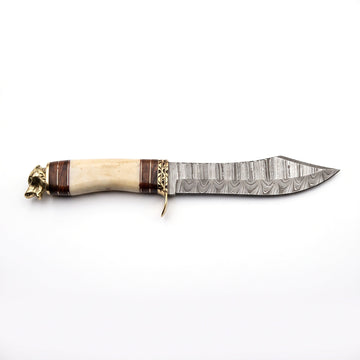
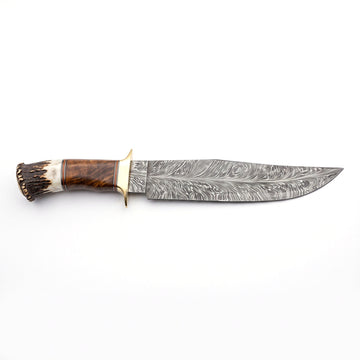
From the outside, a hidden tang shows no steel line along the handle edge, one pin or none, and often a cap at the butt. Our Highline 12" Damascus Bowie Knife in Stag & Amber Resin is built this way, with a 7 inch blade. The Trailhead 5.5" Damascus Neck Knife in Stag and the Ranch 7.25" Carbon Steel Cowboy Knife in Turquoise are hidden tang too. Most of our fixed blades are full tang and a few are hidden tang.

What are partial, half and encapsulated tangs?
These terms describe how far the steel goes and whether it is covered. Makers use them loosely.
- Partial tang. The tang goes into the handle and stops short of the butt.
- Half tang. A partial tang that reaches about half the handle. It is the low-cost version: two rivets through a short tang hold the scales, and the end of the steel is where a hard twist concentrates the stress.
- Encapsulated tang. A tang that runs the full length of the handle but is cut narrower, often with holes through it, and then covered by molded rubber or polymer. It looks hidden from outside and behaves like a full tang in length.
How do the tang types compare for strength, weight and balance?
| Tang | Strength under side load | Weight and balance | Handle materials | Best jobs |
|---|---|---|---|---|
| Full | Highest. Steel carries the load to the butt | Most steel in the handle; balance sits closer to the hand | Wood, pakka wood, micarta, G10, resin, bone and stag as scales | Camp knives, hunting knives that cut joints, cleavers |
| Hidden | Sound for slicing and carving; less margin for hard twisting | Lightest handle; balance sits closer to the blade unless a pommel adds weight | Stag tines, horn, turned wood, stacked leather | Skinning, slicing, carving, small utility knives |
| Partial or half | Lowest. The end of the tang takes the stress | Light handle; balance sits forward | Wood, plastic | Light cutting at a low price |
| Encapsulated | High if the tang runs full length; depends on how much steel is cut away | Between full and hidden | Molded rubber and polymer | Wet handling where a molded grip helps |
The tang keeps the handle attached when you twist the knife in a cut or swing a camp knife through a branch. A full tang carries that load to the butt. A hidden tang carries it through a narrower strip, so more of the load falls on the shoulder where the tang leaves the blade and on the epoxy or pommel holding the handle. For slicing and skinning those loads are small, and a well-made hidden tang does the job. Neither construction makes a knife a pry bar.
Blade shape and handle material move the balance as much as the tang does, so we publish no balance or weight figure for our knives. We publish a figure only once we have measured it.
Which tang suits a hunting, camp or kitchen knife?
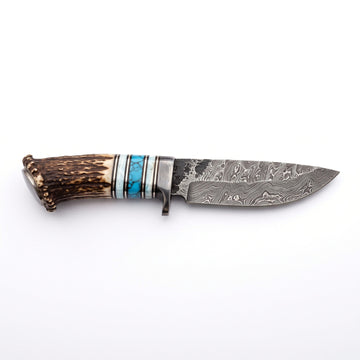
Hunting. Dressing a deer is slicing work with a wet, slick handle. The blade is short, around 4 to 5 inches, the load on the handle is light, and either tang does the job. Pick full tang if the same knife will also cut through cartilage and joints. Our guide to the best knife for skinning a deer covers blade shape, and each of the Damascus hunting knives lists its tang. The Ridgeback 9" Damascus Hunting Knife in Stag is full tang with a 5 inch blade: the same stag handle material as the Highline above, on a full tang.

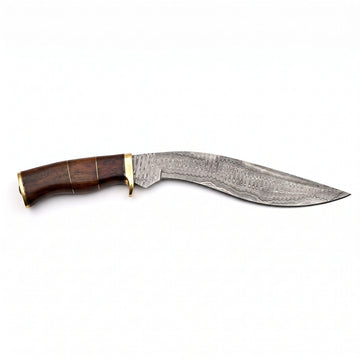
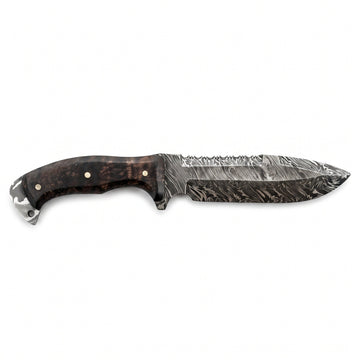
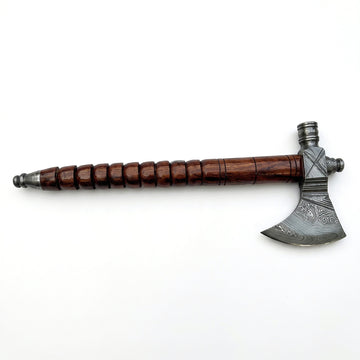
Camp. A camp knife splits kindling, carves tent pegs and cuts rope, and it gets twisted through knots and bark. Full tang is the safer construction for those loads. Chopping firewood is a hatchet's job, and our hatchet vs axe guide compares the two. The Timber 9.75" Damascus Camp Knife in Rosewood is full tang with a 5 inch blade.

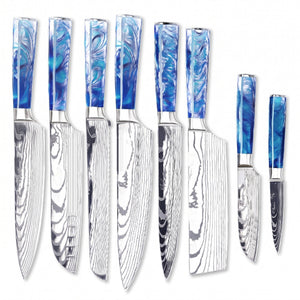
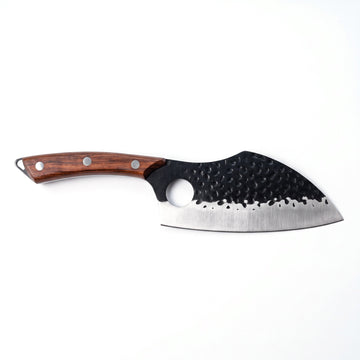
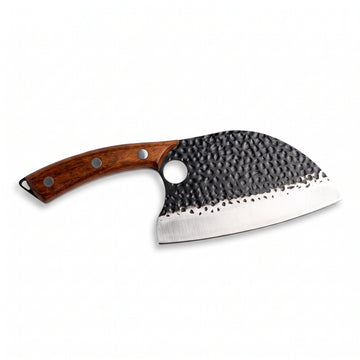
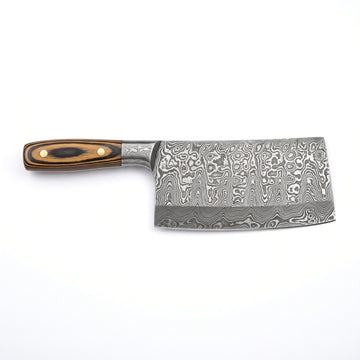
Kitchen. A kitchen knife slices on a board, so side loads are small and hidden tang handles are common, including the wooden handles on Japanese kitchen knives. Tang matters more on heavy knives. A cleaver swings through joints and thick cartilage, and the Hollow 10" Carbon Steel Meat Cleaver in Rosewood is full tang. So is the 8" Carbon Steel Chef Knife in Rosewood.
What are the downsides of a full tang?
- Weight. More steel in the handle makes a heavier knife. Makers drill holes through the tang or taper it toward the butt to cut that weight, and it stays a full tang.
- Exposed steel. Water sits along the steel line at the handle edge after skinning or washing. Carbon steel and Damascus rust if left wet, so wipe the handle edge dry with the blade and oil the exposed steel. Our care guide has the routine, and carbon steel vs stainless steel explains why stainless needs less of it.
- Moving handles. Wood and other natural handle materials shrink and swell with humidity, so after years the steel can stand slightly proud of the scales. Our spec standard requires scales, pins and bolsters to sit flush, with no gap at any joint, before a knife ships, and the Limited Lifetime Warranty covers forge welds and handle fit for as long as you own the knife.
What are the downsides of a hidden tang?
A hidden tang knife depends on its attachment. The handle holds on by epoxy or a pommel, so if either gives way the handle loosens, and repair means taking the handle off. It has less margin under hard twisting, because the joint at the blade shoulder carries more of the load. And you cannot see inside: how far the tang goes is the maker's word, which is why a product page that states the tang, and a warranty that covers handle fit, are worth having.
How can you tell the tang before you buy?
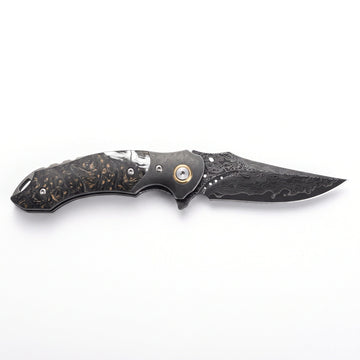
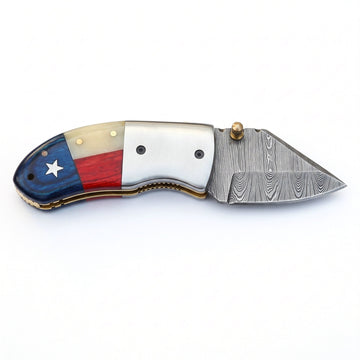
- Read the product page. Most of our product pages state the tang for that knife. Our folding knives pivot on a lock, so a tang does not apply to them in the same way.
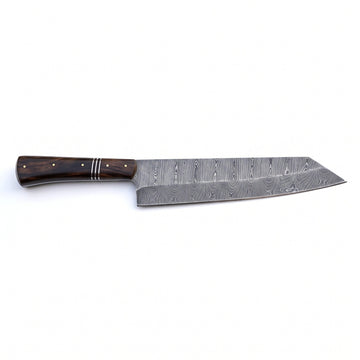
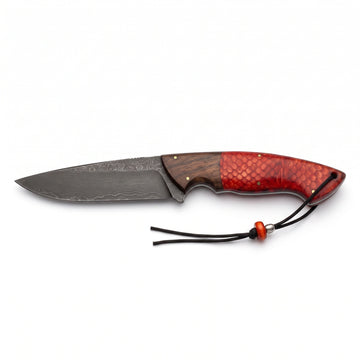
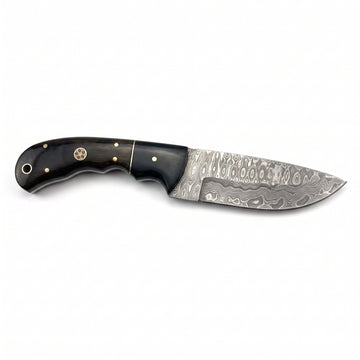
- Look at the handle edge in the photos. A steel line between the scales, with pins on both faces, is a full tang. A handle with no steel line is hidden or encapsulated.
- Check where the guard or bolster meets the handle. A visible gap there is a loose joint on any tang, and our spec standard allows none.
- Ask when a listing is silent. A maker who knows the knife can name the tang in one line.
To compare both builds in one material, open the stag handle knives, which hold full tang and hidden tang side by side. For full tang construction, start with the full tang knives. The Damascus Bowie knives and the carbon steel knives carry both builds too.