

Best Knife for Skinning a Deer
A short guide to choosing a skinning knife, gut hook and boning knife for deer season, with blade length guidance, steel choices and prices from our shop and the wider market.

The best knife for skinning a deer is a fixed blade with a 3 to 4 inch drop point and a deep belly, paired with a gut hook to open the hide and a boning knife to break the animal down. A shorter blade gives more control close to the cape than a long hunting knife does.
The Three Blades a Deer Needs
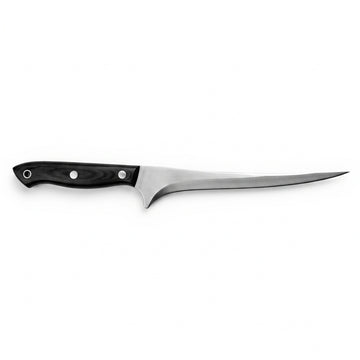
Deer work has three separate jobs, and one knife rarely does all three well. A gut hook opens the hide from the pelvis to the ribcage without cutting into the stomach or intestines. A skinning knife, short and curved, peels the hide off the meat. A boning knife, thinner and more flexible, works around joints and separates muscle groups once the hide is off. Carrying all three costs less than one knife built to do everything, and each blade stays sharp longer because it only does its own job.

What Makes a Good Skinning Knife
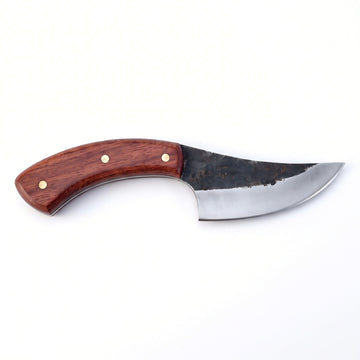
Blade length matters most. A knife built for skinning runs 3 to 5 inches; 3 to 4 inches gives the best control on a deer, while 4.5 to 6 inches suits elk and other large game where you are moving more hide. A deep, upswept belly does the actual peeling: you drag the belly of the blade through the connective tissue between hide and muscle rather than sawing with the tip.
The tip should be blunt enough that it will not puncture the stomach or bladder by accident, which is why most skinning knives round off toward a rounded point or a gut hook instead of a fine point. A handle with some texture, bone, horn, or a grippy wood, matters more once your hands are wet and cold. Whatever steel you choose, you want an edge you can restore in the field with a few strokes on a small stone or a ceramic rod, not one that needs a bench grinder.

Carbon Steel and Damascus vs Stainless for Skinning
Carbon steel and pattern-welded Damascus sharpen quickly to a fine edge on a small stone, which matters when you are three deer into a morning. The tradeoff is rust: leave either one wet or shut in a damp sheath overnight and it will spot or discolor. Modern stainless steels vary: many hold an edge longer between sharpenings but take more work to restore in the field, and all of them shrug off a wet, bloody job with less attention. Whichever steel you carry, wipe the blade dry before it goes back in the sheath and give it a light coat of oil before it sits for more than a day; our care guide has the full routine. For the background on how pattern welded Damascus is made and why the pattern varies from knife to knife, see what Damascus steel is.
Knives People Compare
Here is a roundup of knives people compare when picking a deer skinner, with prices as Google showed them on September 30, 2026.
| Knife | Blade length | Price (Google, Sep 30, 2026) | Steel | Notes |
|---|---|---|---|---|
| Benchmade Saddle Mountain Skinner | 4.2 in | $250 to $300 | Stainless | Fixed blade, drop point |
| Montana Knife Company Blackfoot 2.0 | 3.37 in | $275 and up | 52100 carbon or MagnaCut stainless | Compact fixed blade skinner |
| Outdoor Edge RazorLite | Replaceable blades | $50 and up | Stainless | Swap a dull blade instead of sharpening one |
| Opinel No. 8 | About 3.3 in | $20 to $25 | Carbon steel | Folding, easy to resharpen, needs drying after use |
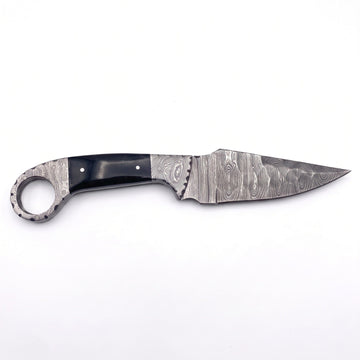
| Crownridge skinning knives | 3 to 7 in, most 4 in | $99 to $129 | Damascus (1095/15N20) or forged carbon steel | Mostly full tang, leather belt sheath included, some with a spine gut hook |
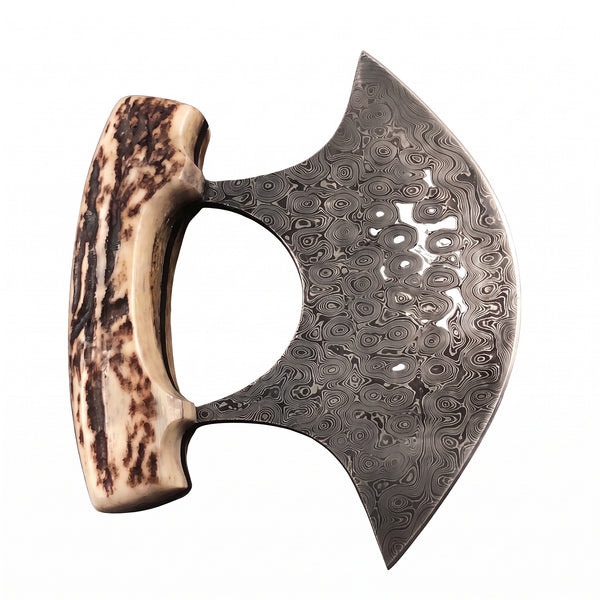
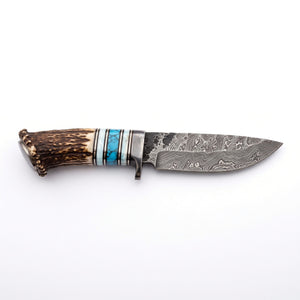
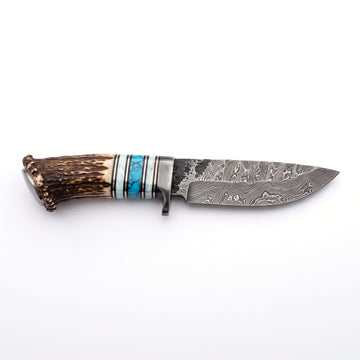
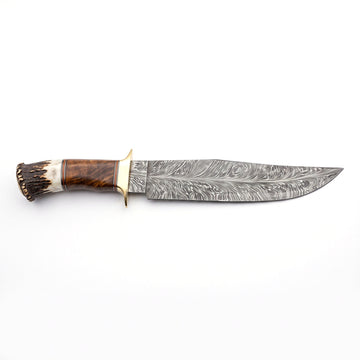
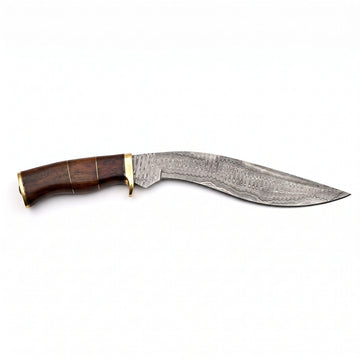
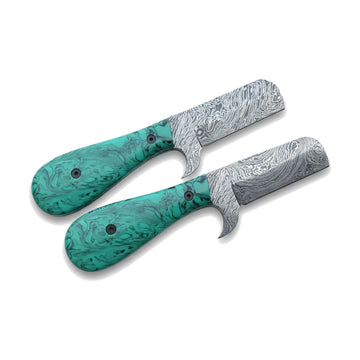
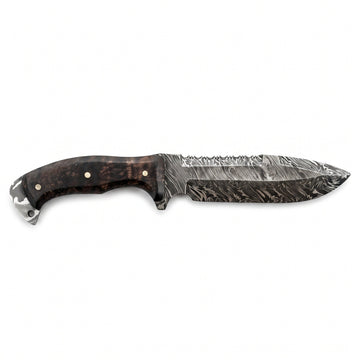
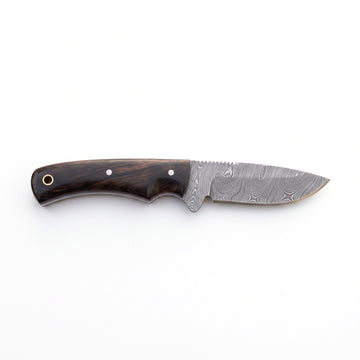
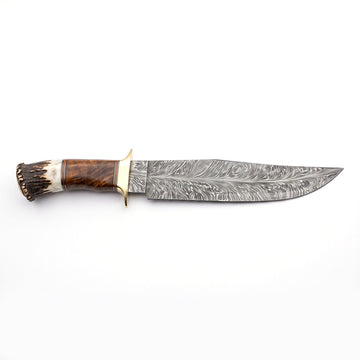
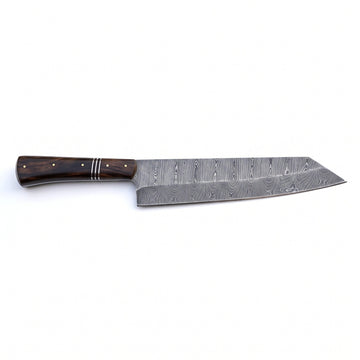
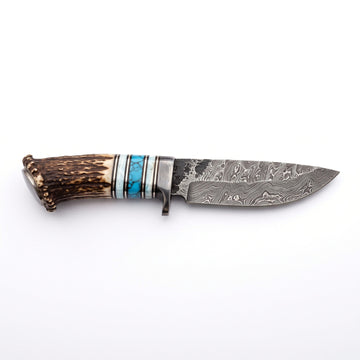
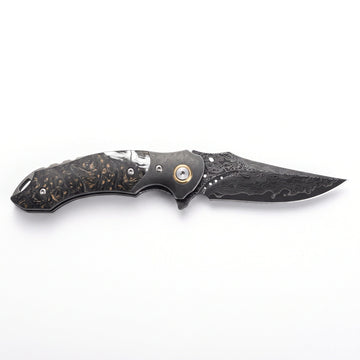
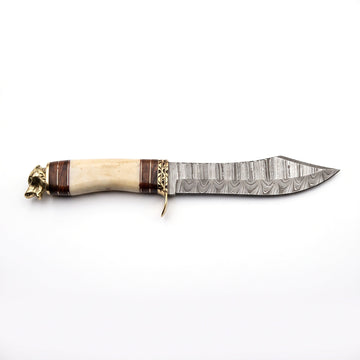
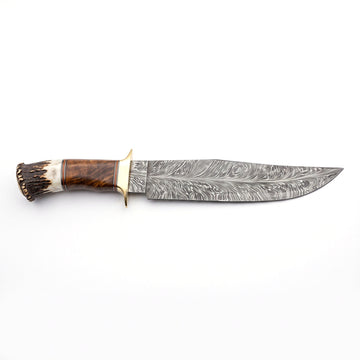
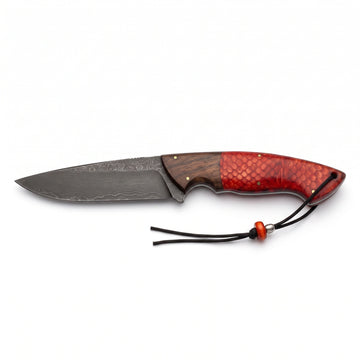
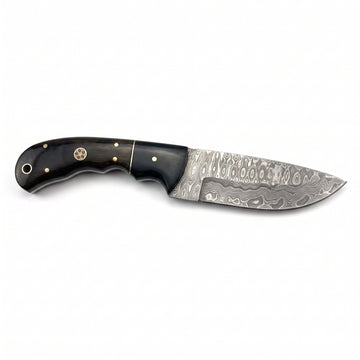
Our skinning knives sit between the folding carbon blades and the higher priced stainless skinners above: a fixed, full tang blade in either steel, with a leather belt sheath included, at under half the price of the two fixed-blade skinners in the table. See the Trailhead 9 inch Damascus skinning knife or the Ridgeback 8 inch Damascus gut hook knife pictured above, in the skinning and gut hook collection. Hunting knives built for the whole trip, not just the skinning step, are in Damascus hunting knives.
Skinning a Deer, Knife by Knife
This is the order of blades, not a full field dressing guide. Open first: lay the deer on its back and run the gut hook from the base of the sternum to the pelvis, hook facing up so it rides just under the hide and away from the stomach wall. Peel next: starting at a rear leg, work the skinning knife belly first between hide and muscle, using your fist to pull tension on the hide rather than pulling with the blade. Break down last: once the hide is off and the deer is hanging or on a table, switch to a boning knife to work around the joints and separate the major muscle groups into manageable cuts.
Keeping the Edge Sharp in the Field
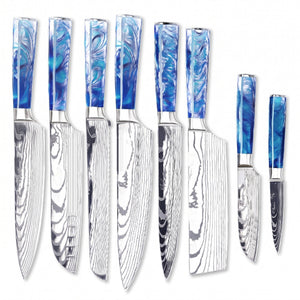
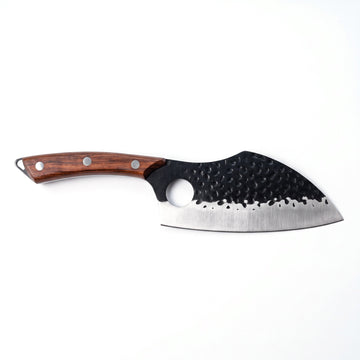
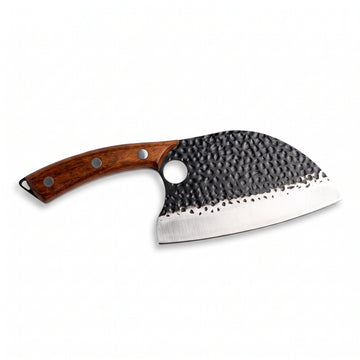
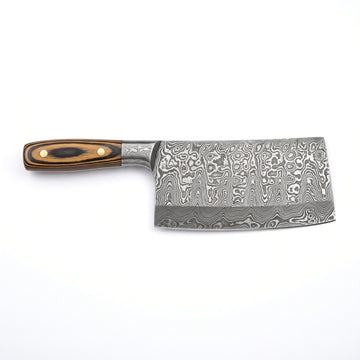
A skinning knife dulls fast against hide and hair, so plan on a touch up partway through, not just at the end. A small pocket stone or a ceramic rod run along the edge a few strokes at a time keeps a high carbon or Damascus blade cutting instead of tearing. Back at camp, wash the blade in warm water, dry it at once, and oil the steel before it goes back in the sheath, especially if the hunt was wet. A cleaver or a dedicated boning knife for the breakdown step is worth adding once you are processing more than one deer a season; our cleavers are in Damascus cleavers and our boning knives in carbon and satin steel knives, and a full three piece setup makes a practical gift; see gifts for hunters.