


What Is a Bowie Knife?
The clip point, the guard, the size: what makes a knife a Bowie, where the shape came from, and how it compares to a hunting knife for camp and field work.

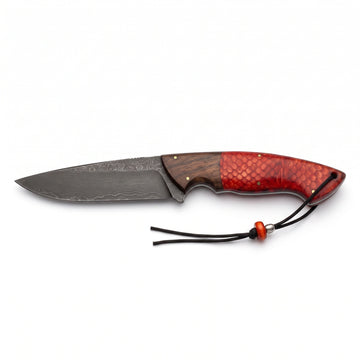
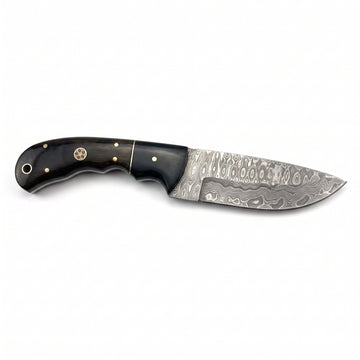
A Bowie knife is a large fixed blade knife with a clip point, a cross guard and a single cutting edge, most with blades from 6 to 12 inches, some longer. It differs from a plain hunting knife mainly in its size and the guard, which keeps your hand from sliding onto the edge during hard use.
Anatomy of a Bowie Knife
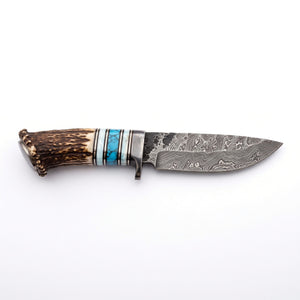
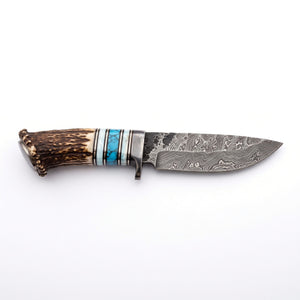
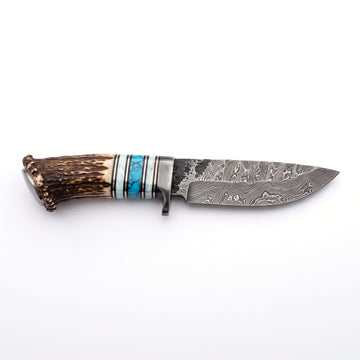
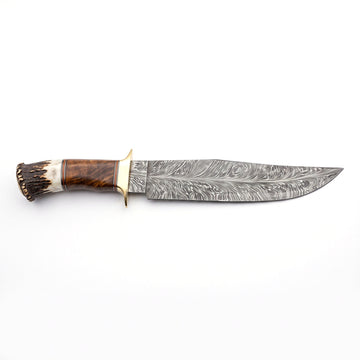
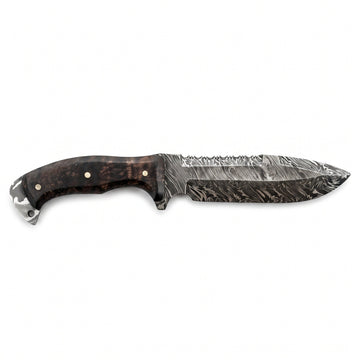
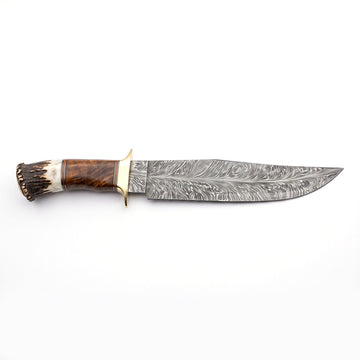
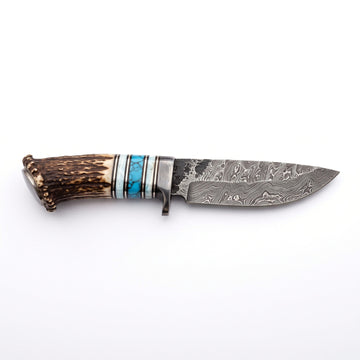
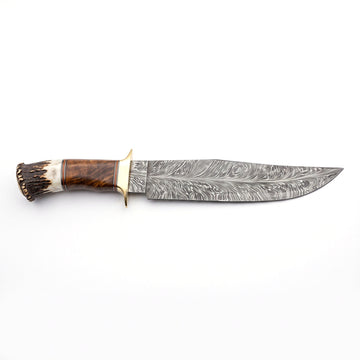
The defining feature is the clip point: the spine runs straight for most of the blade, then the top third is cut away in a concave curve to a narrow tip, which is often given its own sharpened edge called a swedge or false edge. Below the blade sits a cross guard, a bar of steel or brass that stops your grip from riding forward onto the edge. The tang, the steel that continues back into the handle, usually runs the full length of the grip on a working Bowie rather than stopping partway, and the handle ends in a pommel that can be flat, capped or rounded. The Highline 17 inch Damascus Bowie Knife below has a full tang, a stag and brass handle and pattern-welded Damascus steel; compare its parts against the ones described here.

Where the Name Comes From
The style is named after a frontiersman whose large knife became famous on the American frontier in the late 1820s. The pattern spread quickly through that decade as a working blade for people living and traveling far from a hardware store, and by the 1840s knifemakers across the country and in Sheffield, England were producing their own versions of the shape.
What survived from that period is the shape itself: a long, single edged blade with a clipped tip and a guard, sized to do more than a small pocket knife but to still carry on a belt. That combination of size, point and guard is what later knives borrowed, and what still defines the category two centuries on.
What a Bowie Knife Is Used for Today
A modern Bowie earns its keep at camp rather than on the frontier. The long blade and forward weight make it good at chopping kindling and light brush, at batoning, driving the spine with a baton to split small logs, and at breaking down larger game once the hide is off. The guard matters here too: it gives you a solid stop for your hand when you choke up on the blade for finer work like carving stakes or a pot hanger. A shorter camp or hunting knife is easier to control for that finer work, which is why many people carry both.
Bowie vs Hunting Knife
| Bowie knife | Hunting knife | |
|---|---|---|
| Blade length | Typically 6 to 12 inches, some to 18 or more | Typically 2.5 to 6 inches |
| Feel in hand | Blade heavy, built for chopping and batoning | Balanced near the handle, built for control and detail |
| Main jobs | Camp chores, chopping, batoning, breaking down game | Skinning, caping, field dressing |
| Guard | Almost always has one | Often none, or a small finger stop |
| Carry | Belt sheath, worn on the hip | Belt sheath, often smaller and lighter |
Our own Bowie knives run 6 to 18 inch blades, most around 8 inches, with an overall length of 11 to 24 inches, most around 13. Prices run $129 to $319, in pattern-welded Damascus or forged carbon steel with a satin or forge scale finish. See the pattern-welded ones in Damascus Bowie knives and the carbon steel ones in carbon and satin steel knives, and a smaller, quicker option like the Highline 12 inch Damascus Bowie Knife if you want the shape without the extra length.
How to Choose a Bowie Knife
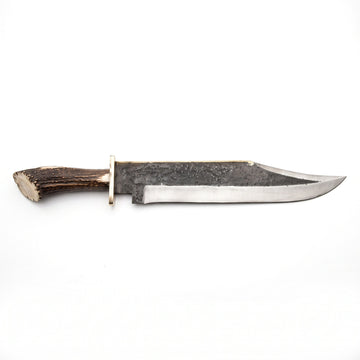
Start with blade length: 8 inches handles most camp chopping and batoning without becoming hard to control, while a 12 to 18 inch blade suits someone who wants more reach and chopping power and does not mind the extra weight. Steel is next. Pattern welded Damascus, ours is forged from 1095 and 15N20, takes a sharp edge and shows a pattern in the metal after an acid etch, at a higher price than forged carbon steel with a satin or forge scale finish, which cuts just as well and costs less. The Highline 16 inch Carbon Steel Bowie Knife is the satin-finish carbon steel option. Handle material is mostly a matter of grip and looks: stag, buffalo horn, stacked leather, rosewood, walnut and stabilized wood are all common, and a full tang gives the most strength for hard use. Every one of our Bowie knives ships with a leather belt sheath, so carry is settled before it arrives.

Caring for a Big Carbon Blade
A large Damascus or carbon steel blade rusts faster than a small one simply because there is more steel exposed to moisture and more surface to miss when you dry it. Wipe the full length of the blade after every use, including the spine and the swedge near the tip, and dry it completely before it goes back in the sheath. A light coat of oil before storage keeps both the edge and the pattern looking right; our care guide covers the routine step by step. If you want to know how the pattern in a Damascus blade is actually made, read what Damascus steel is. For a smaller knife built for the finer parts of a hunt rather than camp chopping, our stag handle knives and full tang fixed blades in full tang knives are worth a look, as are the sheathed options in belt knives with sheath.


