







Kitchen Knife FAQ
These answers cover choosing a kitchen knife, caring for Damascus and carbon steel, engraving and gifts, delivery and returns. Each answer is short, and the link under it opens the longer guide or page.
Choosing a kitchen knife
What is the best kitchen knife to start with?
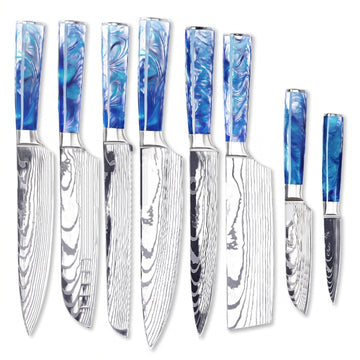
Start with a chef knife. Its typical blade is 8 inches (6 to 10 inches is the range), and it handles most kitchen work: slicing, dicing and mincing. Add a santoku for thin, even slices, a cleaver for heavy chopping or a boning knife for following bones. Each product page gives the exact blade, handle and overall length.
Types of kitchen knives and what each one does
Should I buy a santoku or a chef knife?
Buy the chef knife first if you want one knife for most kitchen work. It typically has an 8 inch blade and slices, dices and minces. A santoku is shorter, typically 6 to 7 inches, and suits thin, even slices of vegetables and boneless meat, so pick it if that is most of your cooking.
What is a Serbian chef knife used for?
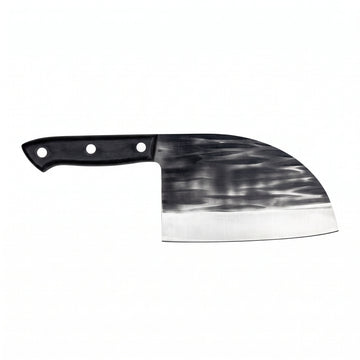
A Serbian chef knife is used for heavy chopping, crushing garlic and scooping food off the board. Its typical blade is 6 to 8 inches, the same range as a cleaver. Cut on a wood or plastic board, and keep it off bone and frozen food, which chip a thin kitchen edge.
What is the best knife for cutting meat?
The best knife for cutting meat depends on the job. A cleaver does heavy chopping, a boning knife works around joints and along ribs, and a santoku makes thin, even slices of boneless meat. A chef knife covers most other kitchen work. Keep every kitchen edge off bone and frozen food, which chip it, cleavers included.
Best knife for cutting meat, by job
What is the difference between a boning knife and a fillet knife?
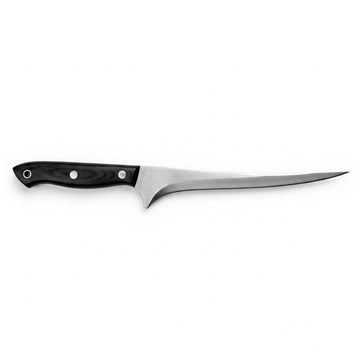
The difference is blade thickness and stiffness. A boning knife has a narrow, sturdier blade, usually 5 to 7 inches, for working around joints, ribs and cartilage in meat and poultry. A fillet knife has a thinner blade, often 6 to 11 inches, that follows the backbone of a fish and slides between skin and flesh. Pick the one for the job you do most.
Boning knife vs fillet knife guide
Is a kitchen knife set worth it?
A set is worth it when you want several knives for different jobs kept together. Each set comes in one char leather knife roll with a sewn slot for each knife, and the product page names every piece. If you use one or two knives, buy them singly: each single knife comes with its own blade guard at no extra cost.
Damascus and carbon steel
Is Damascus steel good for kitchen knives?
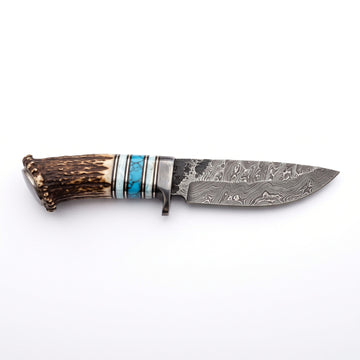
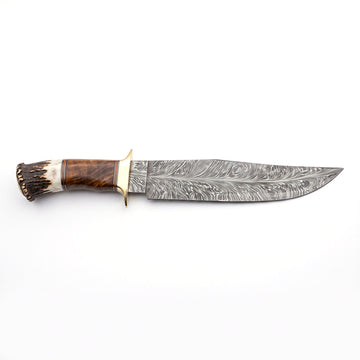
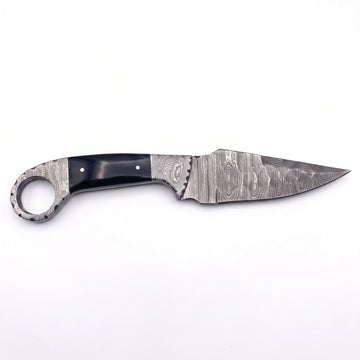
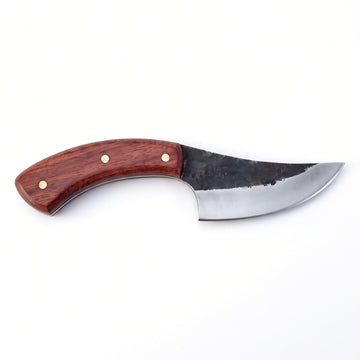
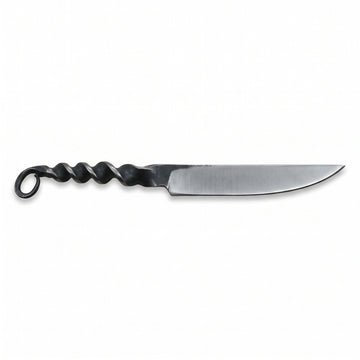
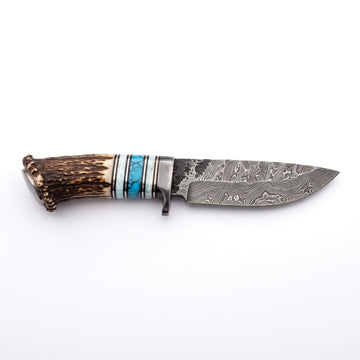
Yes, if you will dry and oil it. Our Damascus kitchen knives are pattern-welded from 1095 and 15N20 carbon steels, and the pattern runs through the steel, so it stays after sharpening. The trade is care: Damascus rusts if it is left wet. Our other kitchen knives are forged carbon steel, which needs the same drying and oil.
Do carbon steel and Damascus kitchen knives rust?
Yes, both rust if they are left wet, and tomato, citrus and onion etch carbon steel within minutes. Dry the blade completely after every use, including the joint where the blade meets the guard. Then wipe on two or three drops of food-safe mineral oil or camellia oil, and buff until the steel looks dry. Avoid olive oil, which turns sticky.
Care guide: the two-minute routine after every use
Can I put a Damascus or carbon steel knife in the dishwasher?
No. Heat and detergent pit the steel, strip the etch, crack wooden and bone handles and ruin leather. The warranty does not cover dishwasher damage. Wash by hand in warm water with a drop of dish soap, wiping from the spine toward the edge, and dry the knife straight away. Never soak it.
Care guide: washing and drying
What is a patina on a carbon steel knife?
A patina is a gray or dark layer, often patchy, that forms where carbon steel meets onions, citrus, tomatoes and meat. It is a stable oxide that protects the steel from red rust, so it is normal wear, not a defect. Patina feels smooth and even. Rust is orange or red-brown, and it feels rough.
Care guide: patina and how to remove light rust
Care and sharpening
How do I clean and store a Damascus kitchen knife?
Rinse it by hand in warm water with a drop of dish soap, wiping from the spine toward the edge, then dry it completely, including the joint at the guard. Wipe on a thin coat of oil. Store it where the edge touches nothing: on a magnetic strip, spine to the magnet, or in its blade guard or roll once it is dry.
How often should I sharpen my kitchen knives?
For a kitchen knife in daily use, sharpen every few months, or when honing stops bringing the edge back. In between, hone it every few uses: five or six light strokes per side with a rod stand a rolled edge back up. Sharpen by hand on a stone, never on a powered grinder or a pull-through carbide sharpener.
Care guide: honing and sharpening
What cutting board is best for a hand-forged knife?
A wood or plastic board. Glass, stone, marble, ceramic plates and metal trays chip and roll an edge in a single stroke. Keep to food, because bone and frozen food chip a thin kitchen edge too, and wipe acidic food off carbon steel promptly, since tomato, citrus and onion etch a patch within minutes.
Care guide: kitchen knife habits
What comes with it, engraving and gifts
Does a kitchen knife come with a blade guard?
Yes. A single kitchen knife comes with a Crownridge char leather blade guard, with a pale welt and straw-gold saddle stitching, made to fit that knife's blade and included at no extra cost. A set comes in one char leather knife roll with a sewn slot for each knife. The product page names what comes with each knife.
Spec standard: the leather that comes with each knife
Can I engrave a kitchen knife?
Yes. Engraving is $19 a surface on a single knife: the blade, the blade guard or the handle. We cut text or a plain logo by machine, and a wooden handle takes none. It adds about 4 business days to processing. An engraved knife cannot be returned on a change of mind, only if it arrives defective or not as ordered.
Can I send a kitchen knife as a gift?
Yes. Choose the wooden gift box on the product page: $39 a knife, a wooden box with a card, for single knives only, because a set travels in its leather roll. Each knife is made to order, so allow 7 to 12 business days for most, plus about 4 for engraving. A gift recipient can return an unused, unengraved knife within 30 days for store credit or an exchange.
Orders, delivery and returns
How long does delivery take?
Delivery takes 7 to 12 business days in all, as an estimate rather than a guarantee. Every knife is made to order: processing takes 2 to 4 business days, then express courier shipping takes 5 to 8. A knife that needs longer shows its own times on its product page, and engraving adds about 4 business days to processing.
Shipping policy: dispatch and delivery times
How do I track my order?
We email you a tracking link the moment your order ships. You can also use the order tracking page. If tracking has not updated for 5 business days, email support@crownridgeknives.com and we open a trace with the courier. We reply within one business day.
Is shipping free?
Yes. Standard shipping is free on every order, with no handling fees. The checkout shows it before you pay, and any sales tax appears there too, so the checkout total is all you pay: no courier fees and no bill at the door. The shipping policy lists where we deliver.
Shipping policy: rates and delivery area
What is your return policy?
You have 30 days from delivery to return an unused knife in its original condition with its blade guard or roll, box and papers. On a change of mind, the $9 return label is deducted from your refund, which we issue within 5 business days of the return reaching us. Engraved knives cannot be returned unless they arrive defective or not as ordered.
What does the lifetime warranty cover?
The Limited Lifetime Warranty covers defects in materials and workmanship for as long as you own the knife: a Damascus weld that opens, a blade that cracks or bends in normal cutting, and handle fit that loosens. The blade guard and roll are covered for 1 year. Normal wear, patina, rust from storing a knife wet and dishwasher damage are not covered.
Who is Crownridge Knives?
Crownridge Knives is a US company run by two partners who sell online, and one of them answers every email. Every knife is made to order and checked against a written spec standard before it ships. Email support@crownridgeknives.com and we reply within one business day. The contact page shows the phone number and support hours.