






Hunting and Outdoor Knife FAQ
These answers cover choosing a hunting or outdoor knife, steel and sheath, care and sharpening, age and local law, engraving and gifts, delivery and returns. Each answer is short, and the link under it opens the longer guide or page.
Choosing a hunting or outdoor knife
What size hunting knife do I need?
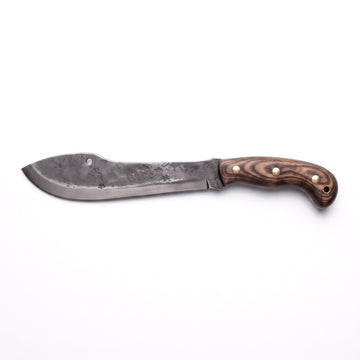
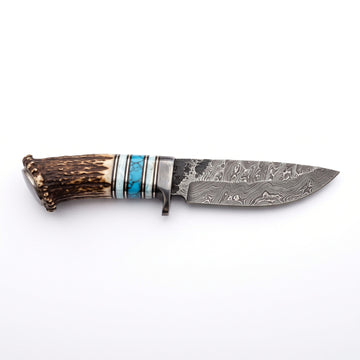
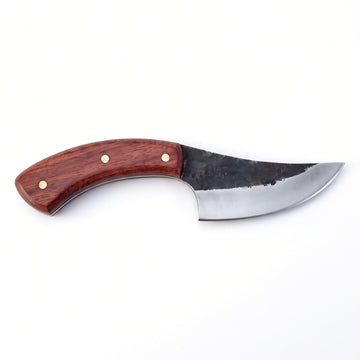
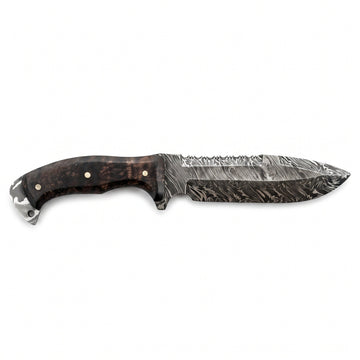
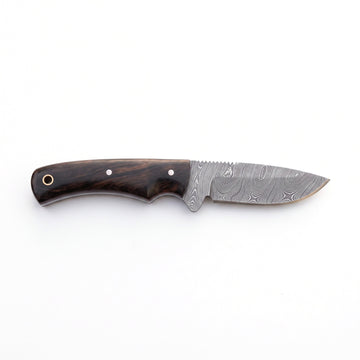
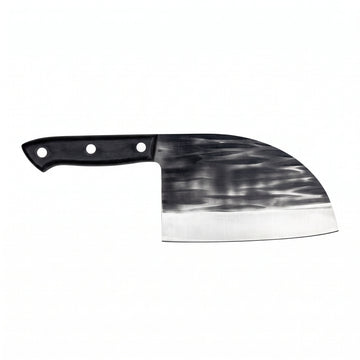
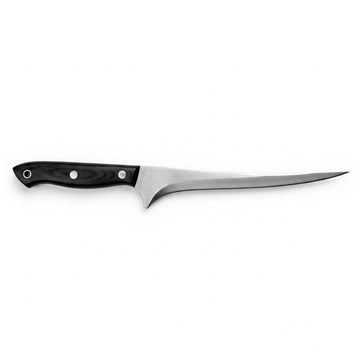
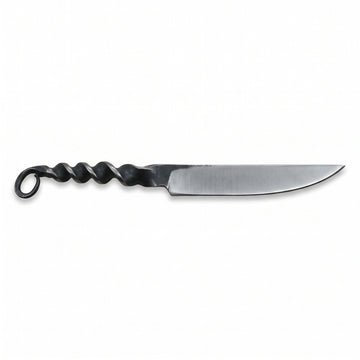
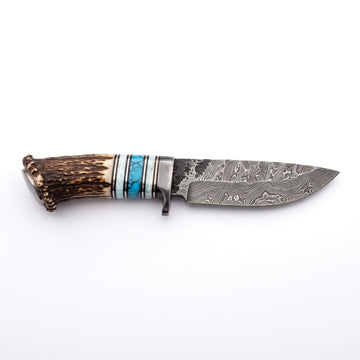
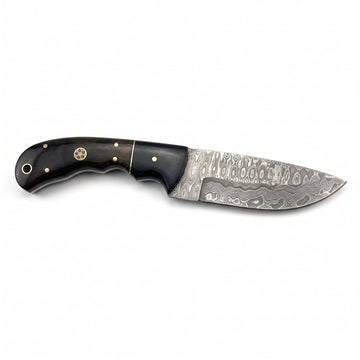
A blade of 3.5 to 6 inches covers general field work, from dressing to camp chores. A skinning knife typically runs 3 to 4.5 inches, for fine control close to the hand, and a gut hook knife 3.5 to 5 inches. A handle should be a little longer than your palm is wide: 4 to 5 inches for most adult hands.
Size guide: which size for which job
What is the best knife for skinning a deer?
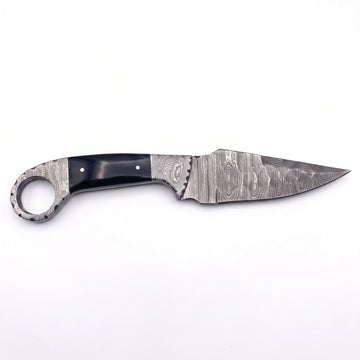
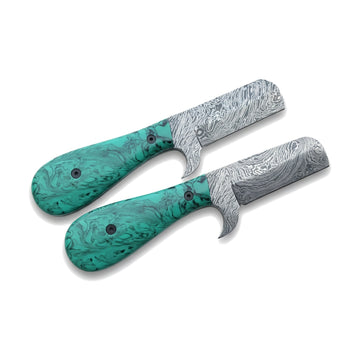
A skinning knife, typically with a 3 to 4.5 inch blade, gives the fine control that skinning and caping need close to the hand. A gut hook knife, typically 3.5 to 5 inches, suits field dressing because the hook opens the hide without cutting deeper. A hunting knife of 3.5 to 6 inches covers general field work.
Best knife for skinning a deer
What is a gut hook for?
A gut hook is a sharpened hook on the spine of some hunting knives, used in field dressing to open the hide without cutting deeper. Hair and tissue collect in the hook, so clean it after use with a cloth or an old toothbrush, then dry and oil it. Sharpen it with a small tapered rod that fits the curve.
What is a gut hook for on a knife?
What is the difference between a bushcraft knife and a camp knife?
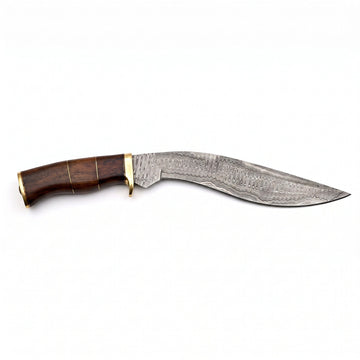
In our size guide a camp knife and a bushcraft knife share one row: a typical blade of 4 to 6 inches for carving, feathering sticks and food prep at camp. For chopping, step up to a bowie (6 to 10 inches), a kukri (10 to 13 inches) or a hatchet. The guide below compares the names, including the survival knife.
Bushcraft vs camp vs survival knife guide
What is a bowie knife used for?
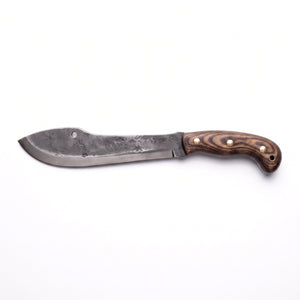
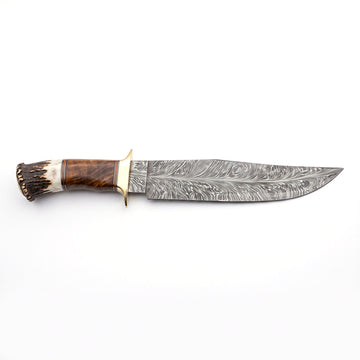
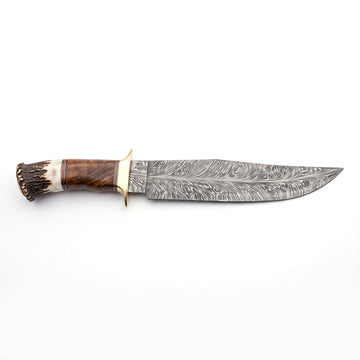
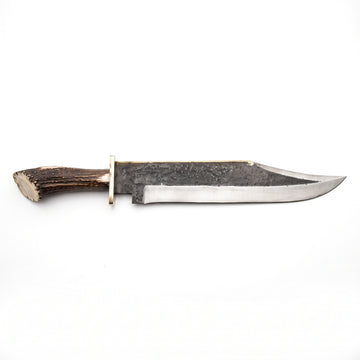
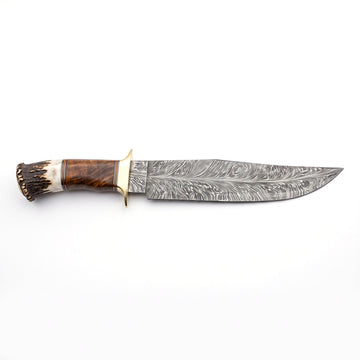
A bowie knife is for heavy camp work and chopping, and for display, with a typical blade of 6 to 10 inches. Splitting small wood by striking the spine with another piece of wood is normal use. Striking the spine with metal, prying and twisting are not, and the warranty does not cover them.
Should I get a fixed blade or a folding knife?
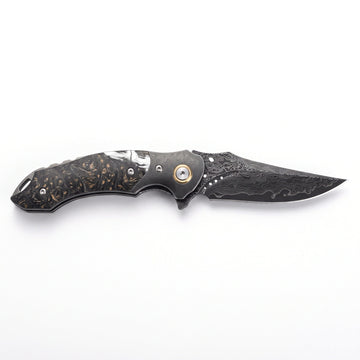
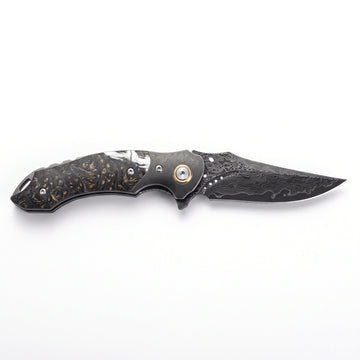
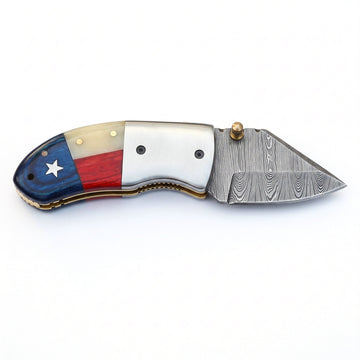
Choose a fixed blade for field dressing, camp chores and heavier work, and a folding knife for everyday carry. A folding knife has a typical blade of 2.5 to 3.5 inches, measured open, and comes with a leather belt slip. A hunting fixed blade is typically 3.5 to 6 inches. Put one drop of oil at a folding knife's pivot every few months.
Best everyday carry knife guide
What is a hatchet used for?
A hatchet is for chopping, limbing and splitting wood. Prying a stuck head out of a log by levering the handle sideways is what breaks one. Dry and oil the head after use, and keep the leather head mask on for carrying and off for storage. The size guide measures a hatchet from the top of the head to the foot of the handle.
Steel, sheath and build
Is Damascus steel good for a hunting knife?
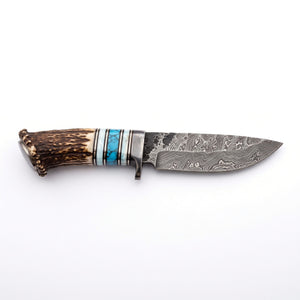
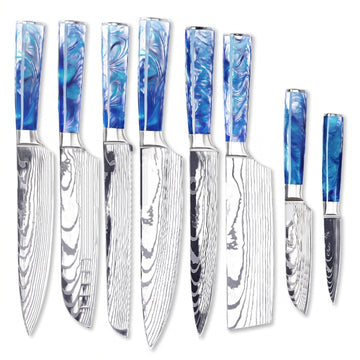
Yes, if you will keep it dry and oiled. Our Damascus is pattern-welded 1095 and 15N20 carbon steel, so it rusts if left wet, and blood starts rust within hours. Wipe the blade in the field, then wash, dry and oil it at camp. The pattern runs through the steel and stays after sharpening. A few of our knives are J2 stainless, which rarely rusts.
Does Damascus steel rust?
Yes. Damascus is pattern-welded from two carbon steels, 1095 and 15N20, and rusts if it is left wet. Dry it after every use, oil it, and store it out of its sheath. For light rust, rub a few drops of oil firmly into the spot with a soft cloth, or use a pencil eraser. Never use steel wool or metal polish, which rub off the etch.
What sheath comes with the knife?
Most fixed blades come with a char leather belt sheath with a brass stud, and some come with a char leather belt slip with a belt loop. A hatchet comes with a leather head mask, and an outdoor set comes in a leather knife roll. All are included at no extra cost, and the sheath or slip is made to fit that knife's blade.
What is the difference between full tang and hidden tang?
A full tang is one piece of steel that runs to the end of the handle, with the scales fixed on either side, so you can see the steel along the handle's edge. A hidden tang is narrower and sits inside the handle, out of sight. The guide below compares the two for strength, weight and balance, and says which suits which knife.
Full tang vs hidden tang guide
Care and sharpening
How do I sharpen a hunting knife?
Sharpen a hunting knife by hand on a whetstone, keeping the angle already on the edge. Color the bevel with a marker, take one stroke, and check that the ink is gone across the whole bevel. Use a 1000 grit stone to sharpen and a 3000 to 6000 grit stone to refine. A small tapered rod fits a gut hook. Never use a powered grinder.
How to sharpen a knife: whetstone and honing guide
How do I clean a knife after field dressing a deer?
Wipe off blood and fat as soon as you can with a rag or grass, because blood is salty and starts rust on carbon steel within hours. At camp or home, wash the knife in warm water with a drop of dish soap, clean the gut hook, then dry and oil it. Dry the sheath separately, and store the knife out of it.
Care guide: hunting and camp knives in the field
Laws, engraving and gifts
Do I have to be 18 to order a knife?
Yes, you must be 18 or older to order from Crownridge Knives. By placing an order you confirm that you are at least 18 and that you may lawfully receive and possess the item under the laws of your state and locality. Check your local knife laws before ordering: complying with them is your responsibility.
Shipping policy: age requirement
Is it legal to own a bowie or a kukri in my state?
Limits on blade length and on carrying a fixed blade differ from state to state, and sometimes from city to city. Check the law where you live and where you carry before you choose a length. A bowie typically has a 6 to 10 inch blade and a kukri 10 to 13 inches. By placing an order you confirm that you may lawfully receive and possess the item.
Size guide: blade length and the law
Can I engrave a hunting knife or its sheath?
Yes. Engraving is $19 a surface on a single knife: the blade, the sheath or the handle. We cut text or a plain logo by machine, and a wooden handle takes none. It adds about 4 business days to processing. An engraved knife cannot be returned on a change of mind, only if it arrives defective or not as ordered.
Knife engraving ideas: what to engrave and where
What is a good knife gift for a hunter?
A hunting knife with a 3.5 to 6 inch blade suits general field work, and it comes with its own leather sheath at no extra cost. Add engraving for $19 a surface on the blade or sheath, or the wooden gift box for $39 on a single knife. Each knife is made to order, so allow 7 to 12 business days for most.
Orders, delivery and returns
How long does delivery take?
Expect 7 to 12 business days from order to your door. Your knife is made to order, so processing takes 2 to 4 business days and express courier shipping takes 5 to 8. A knife that needs longer shows its own times on its product page. Engraving adds about 4 business days, and severe weather and peak season can add a few more.
Shipping policy: delivery times
How do I track my order?
A tracking link arrives by email the moment your order ships, and the order tracking page is there too. If tracking has not updated for 5 business days, contact us and we open a trace with the carrier. Questions go to support@crownridgeknives.com, and we reply within one business day.
Is shipping free?
Standard shipping is free on every order, with no handling fees. You see it at checkout before you pay, along with any sales tax, and nothing is charged after that: no carrier fees and no bill at the door. The shipping policy lists where we deliver and the age requirement.
What is your return policy?
You can return a knife within 30 days of delivery if it is unused and comes back with its sheath, box and papers. Unused means the edge has not been used, sharpened or changed. On a change of mind, the $9 label is deducted from your refund. Engraved knives cannot be returned unless they arrive defective or not as ordered.
What does the lifetime warranty cover?
The Limited Lifetime Warranty covers forge welds, blade integrity and handle fit for as long as you own the knife. Leather, such as the sheath, slip, roll and head mask, is covered for 1 year, and natural handles such as stag, horn and bone for 2 years. Rust from storing a knife wet or in its sheath, and normal wear, are not covered.
Who is Crownridge Knives?
Two partners run Crownridge Knives, a US company that sells online, and one of them answers every email. Each knife is forged to order and checked against our written spec standard before it ships. Email support@crownridgeknives.com for a reply within one business day, or use the contact page for the phone number and support hours.