

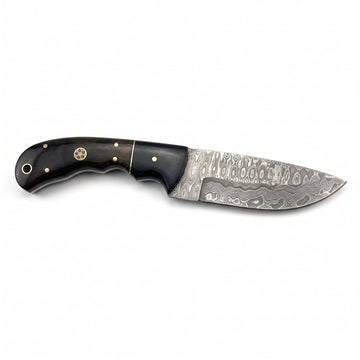
Best EDC Knife: How to Choose One
Size, lock, carry and steel decide which pocket or belt knife earns a place in your daily routine. Here are the tests to apply, a folder versus fixed blade table and the knives we sell that fit.
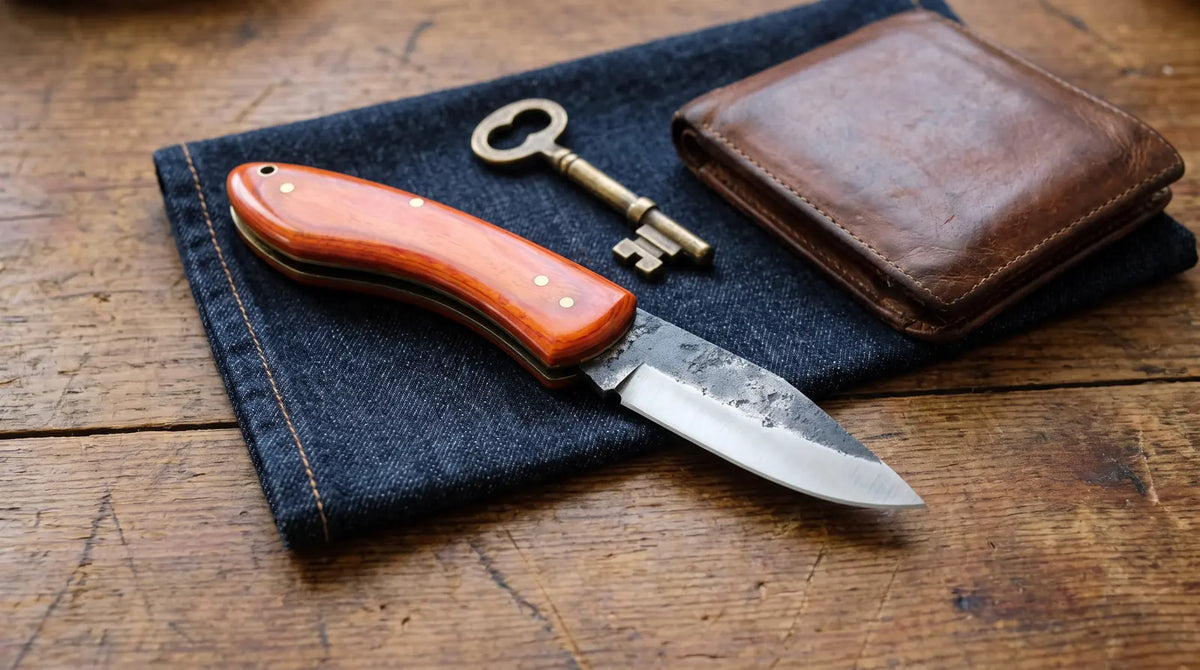
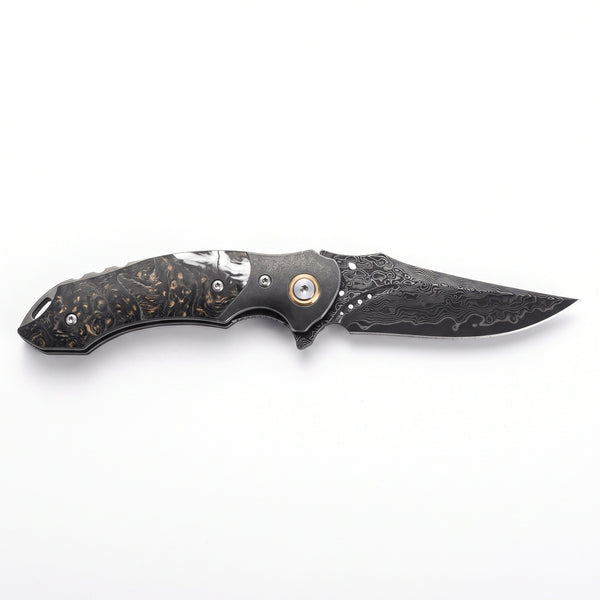
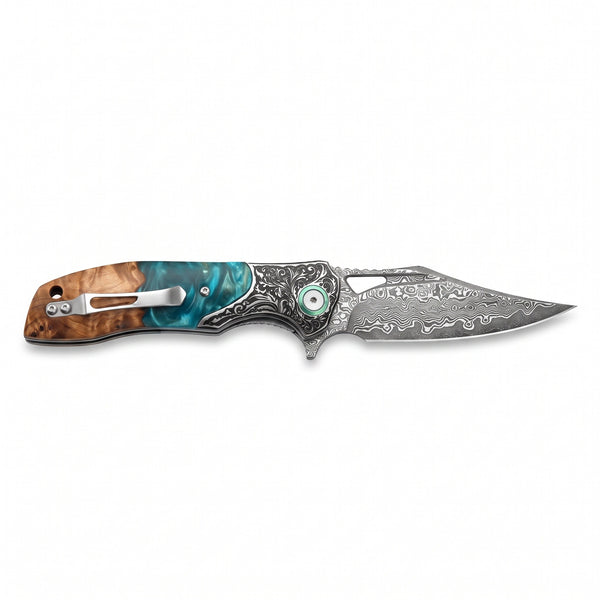
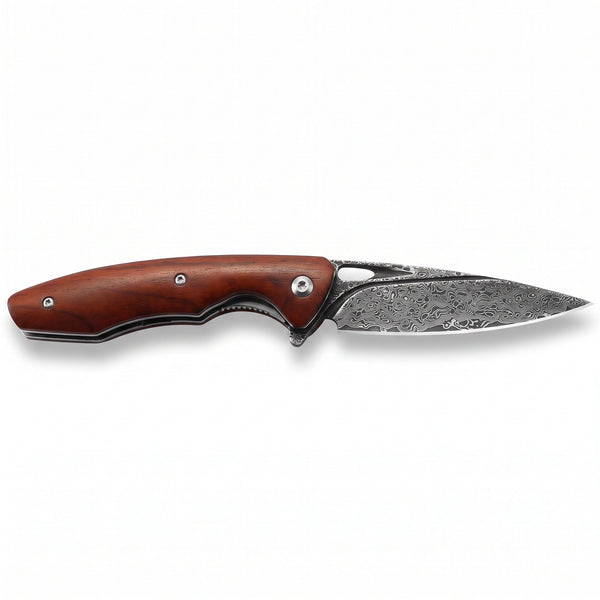
The best EDC knife is the one you will carry every day. For most people that means a blade of 2 to 3.5 inches, a lock or full tang you trust, and a weight you stop noticing in a pocket or on a belt. We sell a few knives in that size range.
What makes one EDC knife better than another?
An EDC knife earns its place by passing three tests: carry, cut and care. A knife left on the dresser cuts nothing, so carry comes first. Size, shape and the way the knife rides on you decide whether it comes along.
The cutting jobs are small and constant: opening a box, slicing cord, peeling an apple, trimming a loose thread. A blade near 3 inches does all of them. Care is the third test, and it depends on the steel. Stainless steel forgives a damp pocket. Carbon steel and pattern-welded Damascus ask for more attention, and this guide says how much.
Our route is a plain one. We sell folding knives and small fixed blades in pattern-welded Damascus and forged carbon steel, each with a leather belt slip or sheath. They suit a person who is willing to wipe a blade dry after use.
What is an EDC knife?
An EDC knife is a small knife carried daily for ordinary cutting jobs. The letters stand for everyday carry, the short list of things a person keeps on them, such as keys, a wallet and a phone. The knife on that list is usually a folder, whose blade closes into the handle, or a small fixed blade worn in a sheath.
It is a tool for small jobs. A larger knife for field work is a different choice, and our guide to what makes a good hunting knife covers the bigger sizes.
What do the popular EDC knives look like?
The two knives Google named share a pattern: a light handle, a pocket clip and a stainless steel blade. Google's AI Overview for "best edc knife" on November 6, 2026 called the Spyderco Para 3 Lightweight its best overall pick, crediting an ergonomic grip and a compression-style lock, and named the Benchmade Bugout as its ultralight pick.
We did not buy or test either knife, so this is what Google showed and not our ranking. Check each maker's page for current specifications, because we have not recorded them.
A light stainless folder is the lowest-care route, and it wins when the knife lives in a damp pocket or a pack. Our knives take a different route: a pattern-welded or forged carbon steel blade, a handle of bone, wood or Micarta, and a leather belt slip that comes with each folder. You trade some care for a blade with a visible pattern. We call that different, not better. Pick the knife you will actually carry.
Folder or fixed blade for everyday carry?
A folder suits a pocket and a small fixed blade suits a belt, so the choice follows where you will carry the knife and how often you will reach for it. The table compares the two on the points that matter day to day.
| Point | Folding knife | Small fixed blade |
|---|---|---|
| Closed, it slips into a pocket | Bulky in a pocket, so it usually rides on a belt | |
| Belt | Rides in a belt slip or clipped at the waistband | Rides in a belt sheath, the usual way to carry one |
| Sheath | The blade closes into the handle, so the edge is covered without one | The sheath covers the edge and holds the knife, so it must fit well |
| Cleaning | Dirt and moisture reach the pivot, so open it and wipe it out | One piece of steel and a handle, so you wipe the whole blade |
| Access | You open and lock the blade before you cut | You pull it from the sheath and cut, with no lock involved |
| Heavy work | The pivot and lock set the limit | A full tang puts steel the length of the handle |
Most of the knives in the table at the end of this guide are folders, and one is a full tang fixed blade. Our guide to full tang vs hidden tang explains what the tang is and why it matters on a knife you may use hard.
What blade length is best for EDC?
For most people a blade of 2 to 3.5 inches is best for everyday carry. A 2 inch blade opens packages, cuts cord and peels fruit, but it feels cramped on a thick rope or a large apple. A 3 inch blade covers nearly every daily job and still carries without fuss. Past 3.5 inches the knife gets heavier and harder to pocket.
Knife laws differ by state and city. Some places regulate blade length, the type of knife or the way you carry it. Check the rules for your own state and your own city before you carry any knife. We cannot give legal advice, and we do not state a limit here.
A title number on our knives is the overall length, not the blade. The blades in the table below measure 2, 2.7 and 3 inches. If you wonder what the curve of a blade does for a job, our guide to knife blade shapes explains it in general terms, and the pictures on each product page show the knife itself.
Is a Damascus knife a good EDC knife?
A Damascus knife is a good EDC knife if you will wipe it dry and oil it, because carbon-bearing steel rusts in a pocket. Our Damascus is pattern-welded 1095 and 15N20, and it shows its pattern on the blade. A damp pocket puts moisture on the steel, and a wet blade left alone will rust.
The routine is short. Wipe the blade dry after use, add a thin film of oil, and dry the blade before it goes back into a leather slip, since wet leather holds moisture against steel. Never put a knife in a dishwasher. Our care guide gives the steps, and our guide on whether Damascus steel rusts explains why it happens.
A stainless knife needs less care. If you know you will not wipe a blade, a stainless folder is the better EDC knife for you, and we say so plainly. Our knives suit a person who accepts the routine for the pattern and a hand sharpened edge. Carbon steel is also straightforward to touch up, and our guide to how to sharpen a knife shows the method. We sell no stones or rods, so buy one from a hardware or knife-supply shop.
Which of our knives work for everyday carry?
These knives from our range have blades of 2 to 3 inches and each comes with a leather slip or sheath. The specifications and prices below were read from our product records on November 6, 2026.
| Knife | Kind | Blade | Overall | How it carries | Price on November 6, 2026 |
|---|---|---|---|---|---|
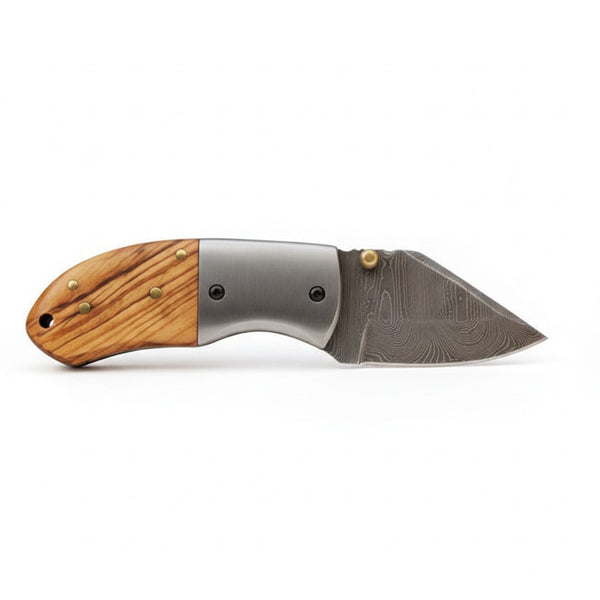
| Creek 5" Damascus Pocket Knife | Olive Wood | Folding | 2 inches | 5 inches | Char leather belt slip with a belt loop | $99 |
| Creek 7" Damascus Pocket Knife | Camel Bone | Folding | 3 inches | 7 inches | Char leather belt slip with a belt loop | $109 |
| Creek 6.4" Carbon Steel Pocket Knife | Orange Micarta | Folding | 2.7 inches | 6.4 inches | Char leather belt slip with a belt loop | $99 |
| Trailhead 6.5" Damascus EDC Knife | Rosewood | Full tang | 3 inches | 6.5 inches | Char leather belt sheath with a brass stud | $99 |
The two Creek Damascus knives are pattern-welded 1095 and 15N20 in a folding body. The Creek 6.4 is forged carbon steel with the forge scale left on the upper blade, and it rusts like the others if it is left wet.


Browse the full range in Damascus Folding Knives, Horizontal Carry Knives and Knives Under $150. Each product page shows its own pictures and when that knife will dispatch.