
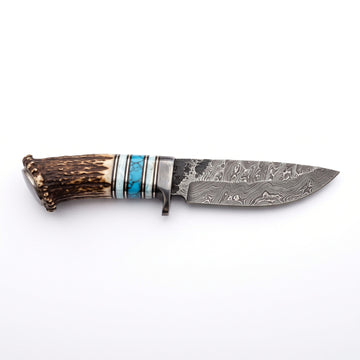
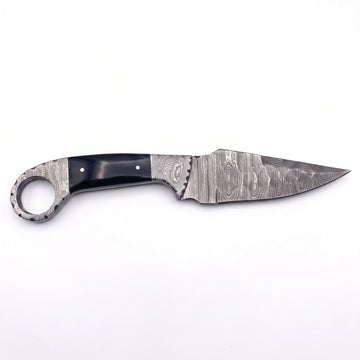
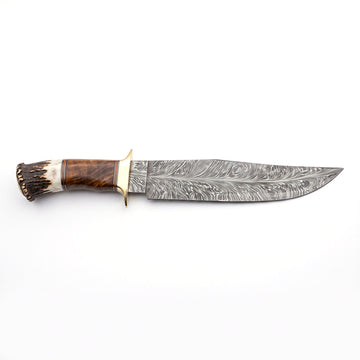
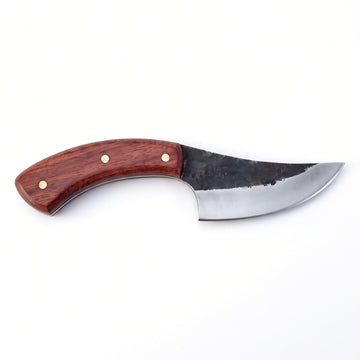

What Is a Bull Cutter Knife Used For?
A bull cutter is a ranch working knife with a blunt tip, made for rope, sacks and leather. This guide covers its name, its jobs, what to look for and how to care for one.
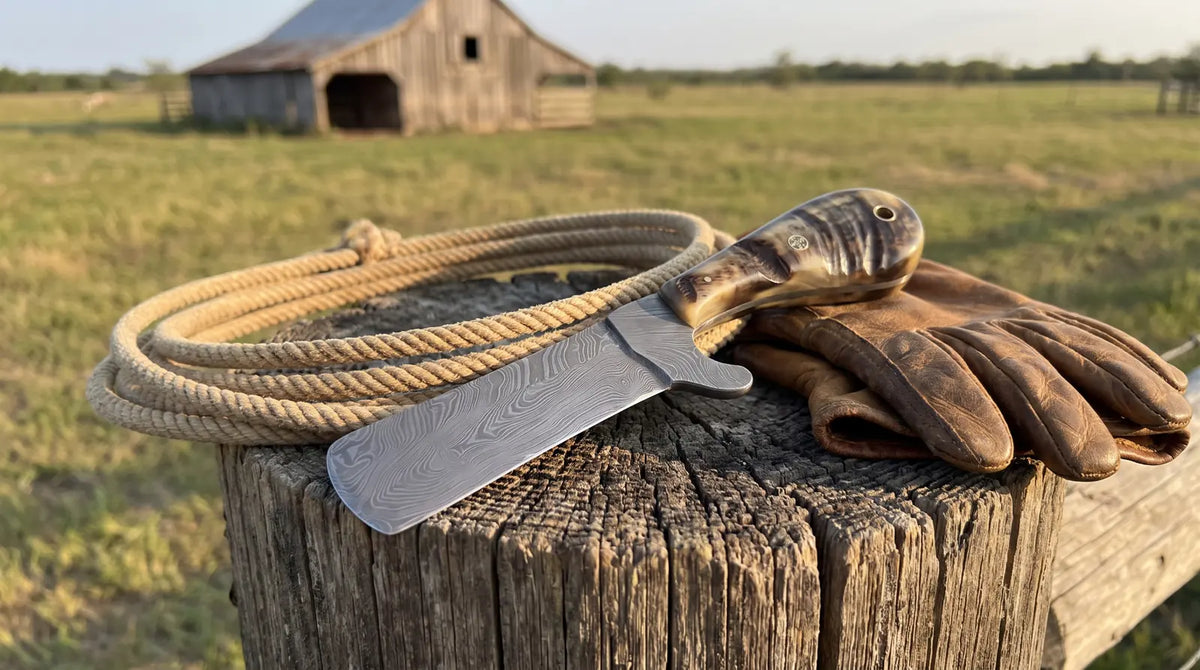
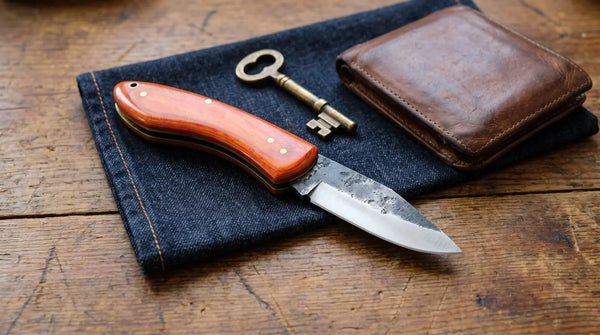
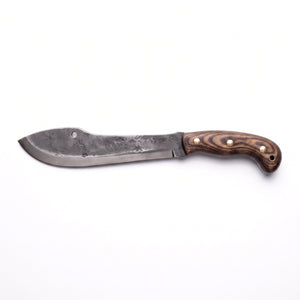
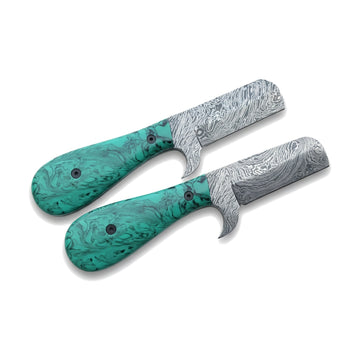
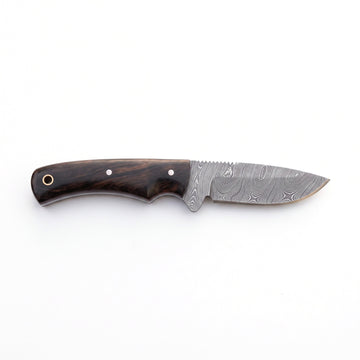
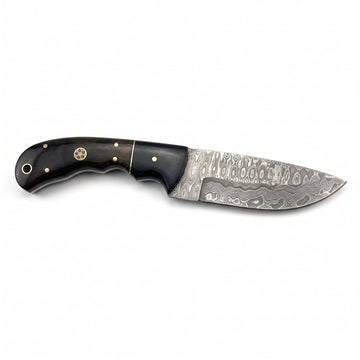
A bull cutter knife is a Western ranch working knife with a short, wide blade and a rounded or blunt tip, carried in a sheath on the belt. The blunt tip keeps the point from piercing things by accident in close quarters. Today a bull cutter cuts rope, twine, feed sacks and leather.
Why is it called a bull cutter knife?
A bull cutter knife is called a bull cutter because ranch hands used it to castrate bull calves, turning them into steers. The name stayed with the knife shape.
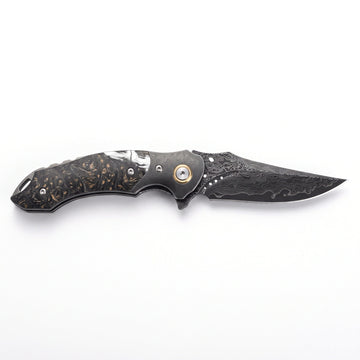
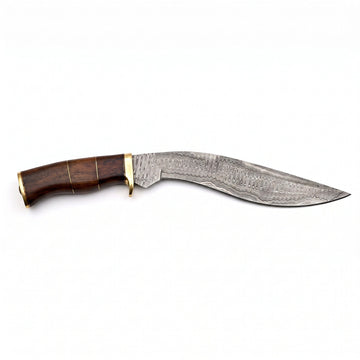
Today the name describes the knife, not the task: a sturdy, compact blade with a rounded tip that does ranch chores safely. The same knife is also sold as a cowboy knife, and in our shop both live in one collection, the Cowboy Knives and Bull Cutters.
What is a bull cutter knife used for today?
A bull cutter knife is used today for everyday cutting on a ranch, a farm or at camp. The blunt tip and strong spine suit rough, close work where a sharp point would be a nuisance. Typical jobs include:
- Cutting rope, baling twine and cord.
- Opening feed sacks and boxes.
- Trimming leather and straps.
- Camp chores such as cutting cheese, sausage and bread.
- Trimming cord and tarp lines at camp.
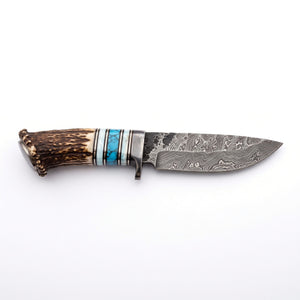
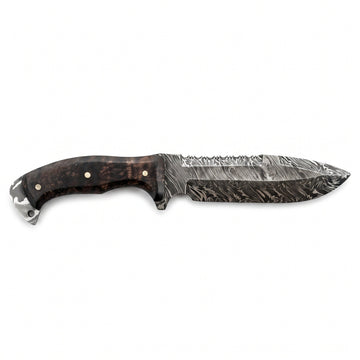
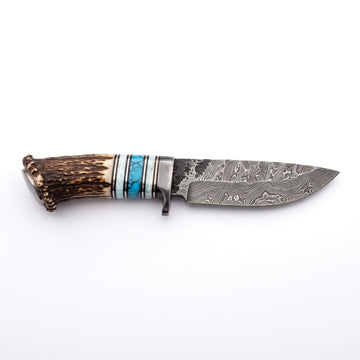
A bull cutter is a poor knife for skinning or fine piercing work, because the rounded tip does not start a cut in a hide or follow tight curves. For a deer, choose a hunting knife with a pointed or drop point blade, such as those in our Damascus hunting knives.

Bull cutter vs cowboy knife vs hunting knife: what is the difference?
A bull cutter, a cowboy knife and a hunting knife differ mainly in tip and job. A bull cutter has a blunt tip for ranch chores, a cowboy knife is the wider family of Western belt knives, and a hunting knife has a pointed blade for skinning and dressing game.
| Feature | Bull cutter | Cowboy knife | Hunting knife |
|---|---|---|---|
| Tip | Rounded or blunt | Usually rounded or blunt | Pointed or drop point |
| Blade shape | Short and wide | Short to medium, often wide | Medium, with a belly for skinning |
| Our blade lengths | 3 to 6.5 inches | 3 to 4.25 inches | Varies by model |
| Best jobs | Rope, twine, sacks, leather, camp chores | The same, plus everyday carry | Skinning, dressing, field cutting |
| Carry | Belt sheath | Belt sheath | Belt sheath |
The blade lengths for our knives come from each product record on October 11, 2026. The general shape descriptions are common knife knowledge, not a test we ran.
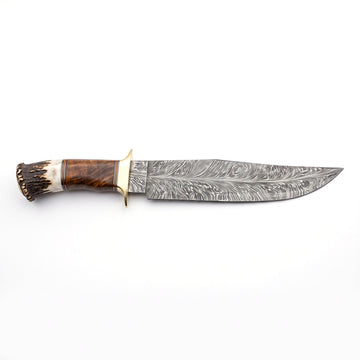
The number in a Ranch title is the overall length of the knife, handle included, so the blade is shorter than it looks. Our Ranch bull cutters range from the 6 inch Rasp Steel Bull Cutter, which has a 3 inch blade, to the 10.5 inch Damascus Bull Cutter, which has a 6.5 inch blade. Our cowboy knives sit between 6 and 8.5 inches overall, with blades of 3 to 4.25 inches.
What should you look for in a bull cutter knife?
Look at four things in a bull cutter knife: the steel, the tang, the handle and the sheath fit. All four decide whether the knife survives years of rough use.
- Steel. Our Ranch series uses pattern-welded Damascus of 1095 and 15N20, farrier rasp steel, or forged carbon steel. All three rust if left wet.
- Tang. Most of our Ranch knives are full tang, where the steel runs the length of the handle. A carbon steel model with a turquoise handle is hidden tang, as its product page records. Our full tang vs hidden tang guide explains the difference.
- Handle. Horn, stag, bone, rosewood, resin and turquoise are all in the series.
- Sheath. Each fixed blade comes with a Crownridge leather belt sheath, and one bull cutter pair comes in a leather roll.
Rasp steel is forged from a farrier's rasp, a high carbon file steel. It is plain steel without a pattern, while Damascus shows the pattern from its acid etch. Neither is stainless. Never call a plain rasp steel blade Damascus.

How do you carry and care for a bull cutter knife?
Carry a bull cutter knife in its leather belt sheath, and care for it by drying the blade after use and wiping on a little oil. A bull cutter knife works in dust, rain and mud, so the care matters more than it does for a knife that stays in a drawer.
- Wipe off dirt and moisture after each job, and dry the blade fully.
- Rub on a thin film of oil, and keep the steel dry in storage.
- Do not leave the knife in a damp leather sheath for weeks, because leather holds moisture.
Horn and stag are natural materials. Keep each one dry and out of a long soak, and wipe it with a dry cloth. The care guide covers steel and handles in more detail.

For handle choices, see our horn handle knives and stag handle knives. For a longer fixed blade on the belt, our belt knives with sheath are the next step, and the guide to choosing a hunting knife explains how to pick one.