
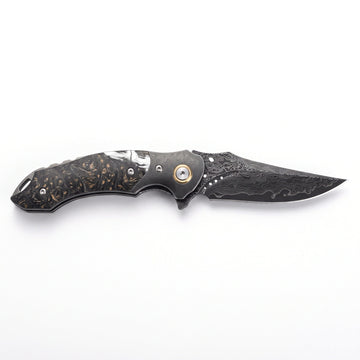

Bushcraft Knife vs Survival Knife vs Camp Knife
Three fixed blades with three jobs. See where carving ends and emergency work begins, what a camp knife covers that the other two miss, and when a hatchet or kukri takes over.
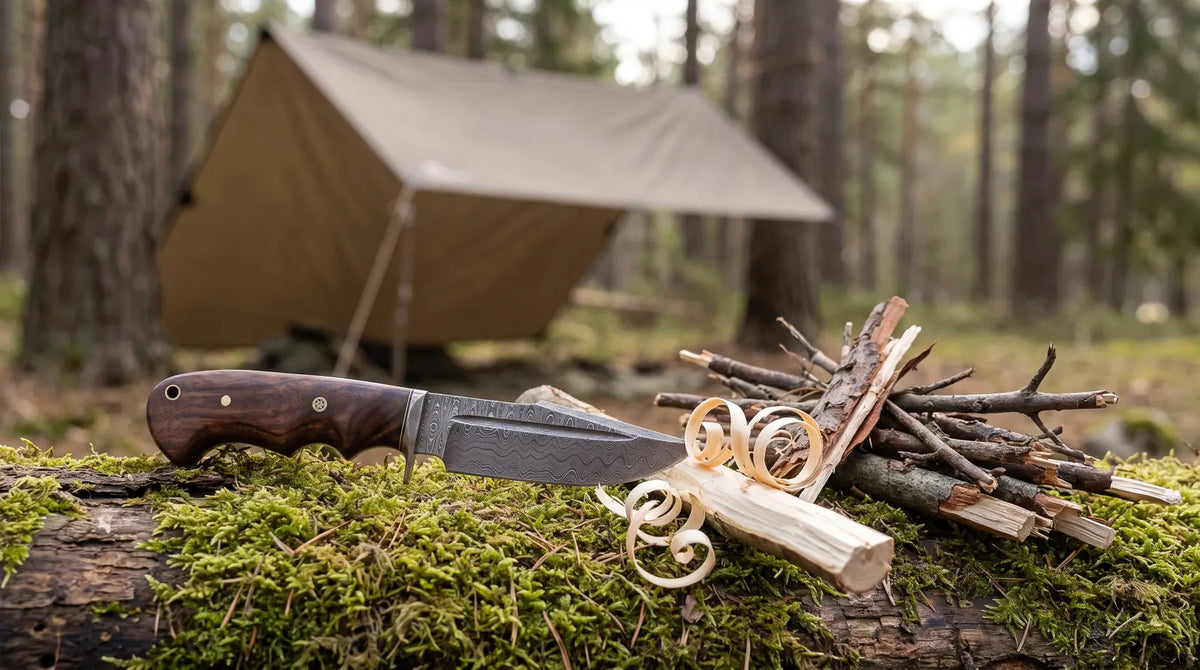
A bushcraft knife vs survival knife comes down to the job. A bushcraft knife is a compact fixed blade for carving, feather sticks and notches. A survival knife is a heavier fixed blade for emergency outdoor work such as shelter and fire prep. A camp knife is the longer middle choice for food prep and light chopping.
What is the difference between a bushcraft knife and a survival knife?
A bushcraft knife is a precision tool, a survival knife is a heavy-duty tool, and a camp knife is a general chore knife. Bushcraft knives suit planned time outdoors where you make things: tent pegs, notches, spoons, fire sticks. Survival knives suit an unplanned emergency, where one knife has to do every job. Camp knives suit the daily work of a camp: cutting rope, opening packs, preparing food.
In this guide, "survival" means emergency outdoor use only: building a shelter, preparing wood for a fire, cutting cord and preparing food. The three knives overlap, and many knives sold under one name would pass under another. The table below sets out the usual differences.
The three knives side by side
This table compares the three types in general terms, from common outdoor practice and not from a test. The last row names a knife from our Timber series that fits each type, with its blade length from the product record, as listed on October 11, 2026.
| Feature | Bushcraft knife | Camp knife | Survival knife |
|---|---|---|---|
| Typical blade length | 3.5 to 5 inches | 4 to 8 inches | 5 to 7 inches or longer |
| Spine and grind (general) | Thick spine, simple flat grind | Medium spine, general-purpose grind | Thick, heavy spine |
| Best tasks | Carving, feather sticks, notches, spoons | Food prep, rope, kindling, light chopping | Shelter, fire prep, batoning in an emergency |
| Carry | Belt sheath, close to the body | Belt sheath or pack | Belt sheath, secure fit |
| Suits | Planned trips, people who make things | Most campers | People who want one tough, heavy knife |
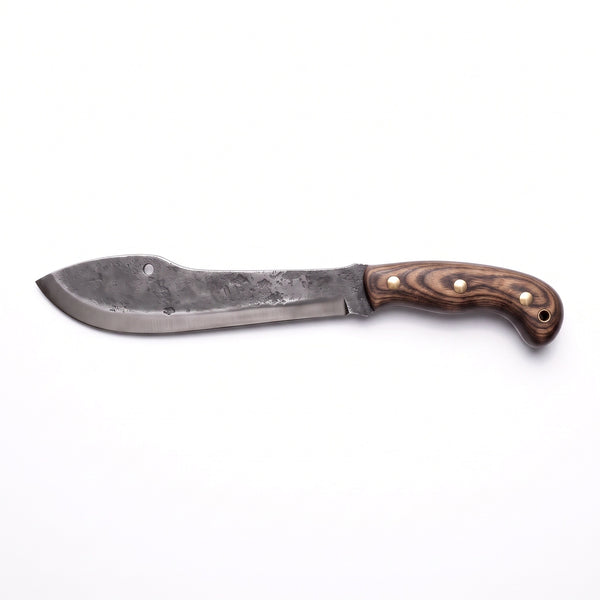
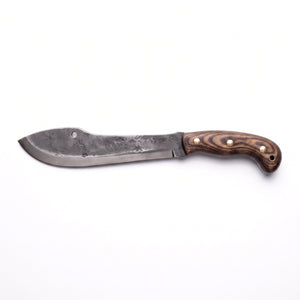
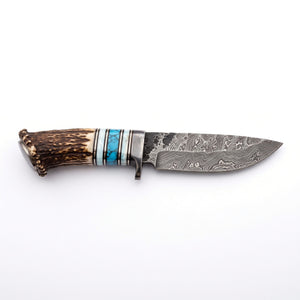
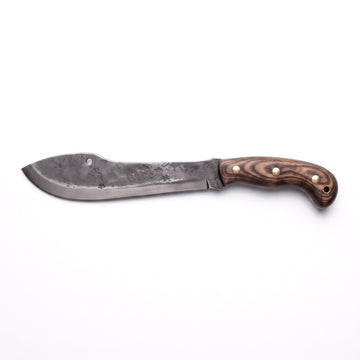
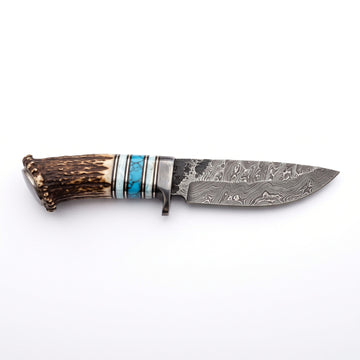
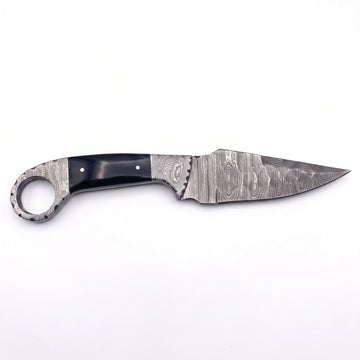
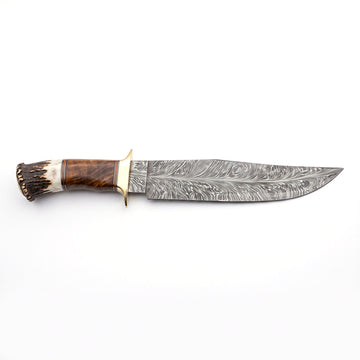
| Our nearest knife | Timber 10" Bushcraft, 5.5 inch blade | Timber 15" Camp Knife, 8 inch blade | No knife is sold as a survival knife |

What is a bushcraft knife?
A bushcraft knife is a compact fixed-blade knife for woodcraft: carving notches, making feather sticks for tinder, shaping tent pegs and whittling a spoon. Its blade is usually 3.5 to 5 inches long, with a thick spine and a strong point, so you can control the cut close to the work.
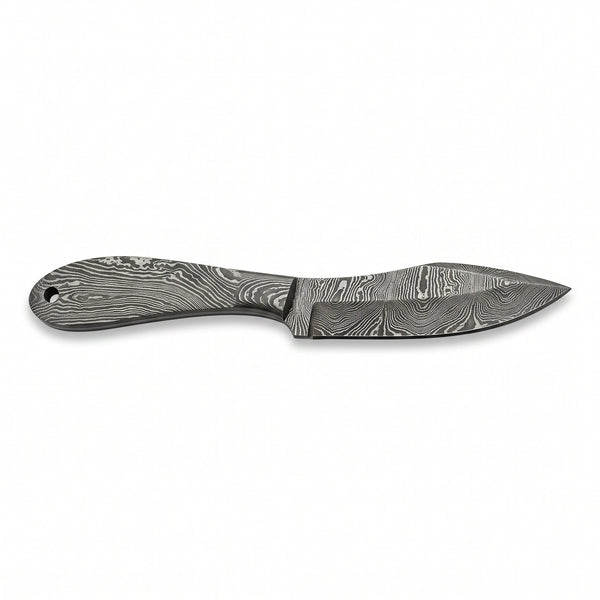
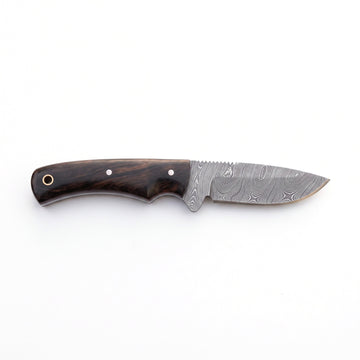
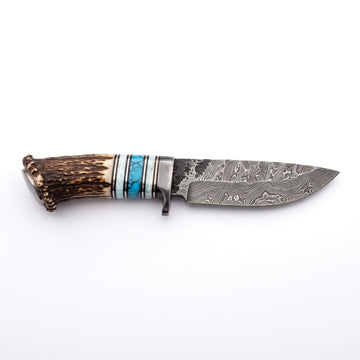
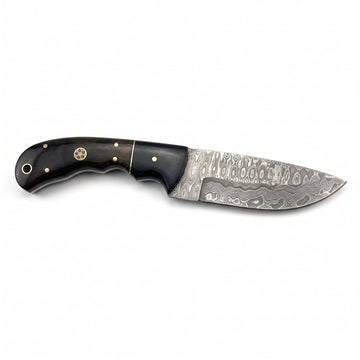
Shorter blades give better control when you carve. Longer blades give more reach but make fine cuts harder. Our Timber 7.5" Carbon Steel Bushcraft Knife | Micarta has a 3.5 inch blade and costs $99. The Timber 10" Damascus Bushcraft Knife | Walnut has a 5.5 inch blade and costs $119. Both are full tang, with a Crownridge leather belt sheath.
What is a survival knife?
A survival knife is a heavier fixed blade for emergency outdoor use, with a thick spine, a full tang and a blade usually 5 to 7 inches long. In an emergency it has to split small wood, prepare kindling, cut cord, dress game and build a shelter, so toughness counts more than fine control.
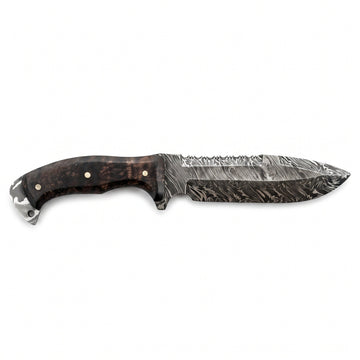
Look for a full tang, a thick spine, a handle that grips when wet and a sheath that holds the knife secure. Batoning means driving a blade through a log with a wooden mallet or stick, and a full tang is the usual choice for it. We do not sell a knife labeled a survival knife, and we do not sell ferro rod or firesteel kits or sharpening tools. For heavy chopping, a hatchet or a kukri does the work better than a knife.

What is a camp knife?
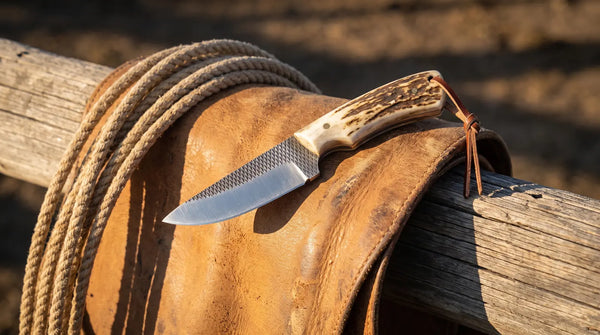
A camp knife is a general-purpose fixed blade for the work of a campsite: slicing food, cutting rope, shaving kindling and light chopping. Its blade is often 4 to 8 inches long, longer than a bushcraft knife, so it slices a loaf and splits kindling in the same hour.
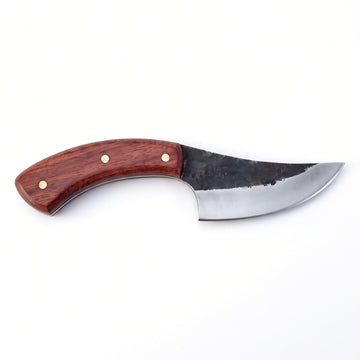
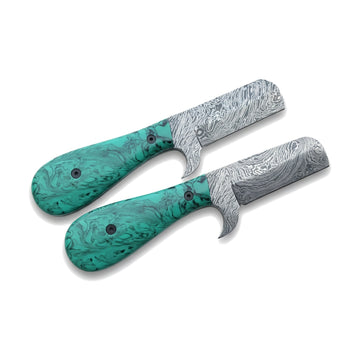
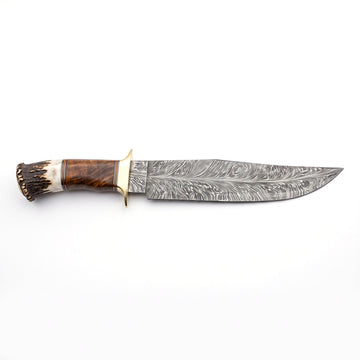
Our camp knives are the Timber series in Camp & Bushcraft Knives. The Timber 8" Damascus Camp Knife | Damascus Steel has a 4 inch blade at $99. The Timber 15" Carbon Steel Camp Knife | Ash has an 8 inch blade at $129 and leaves forge scale on the upper blade.
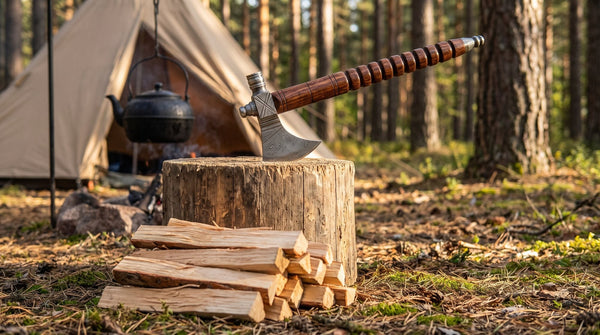
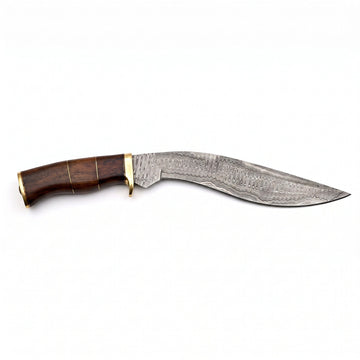
When the job is chopping, a longer tool takes over. A kukri has a forward-weighted curved blade that chops better than a straight camp knife: see our guide to what a kukri is and the kukri knives. A camping hatchet chops, splits and drives tent stakes: read hatchet vs axe and browse the camping hatchets. We sell hatchets, not felling axes.
Which knife should you buy for camping?
For most camping trips, buy one camp knife with a 4 to 5 inch blade. Add a bushcraft knife if you carve, and a hatchet or kukri if you split wood. Three questions settle it:
- Do you carve or make things? Then choose a bushcraft knife with a blade of 3.5 to 5 inches.
- Do you cook and do camp chores? Then choose a camp knife, 4 to 8 inches.
- Do you need to split wood? Then add a hatchet or a kukri, and keep the knife for fine work.
Carry matters as much as the blade. We make leather sheaths only, no Kydex, so keep the sheath dry: Kydex is the better choice in constant wet. Our guide to types of knife sheaths explains each carry. Our belt knives with a sheath and full tang knives carry a Crownridge leather sheath, as each product record says.
Which steel suits a camp or bushcraft knife?
A carbon steel suits a camp or bushcraft knife because it sharpens easily and takes a fine edge. Our Damascus knives are pattern-welded 1095 and 15N20 and our plain knives are forged carbon steel. Both rust if left wet, so wipe the blade dry and oil it after use. The carbon vs stainless guide and the 1095 and 15N20 guide go deeper. Handles on camp knives are covered in knife handle materials.